
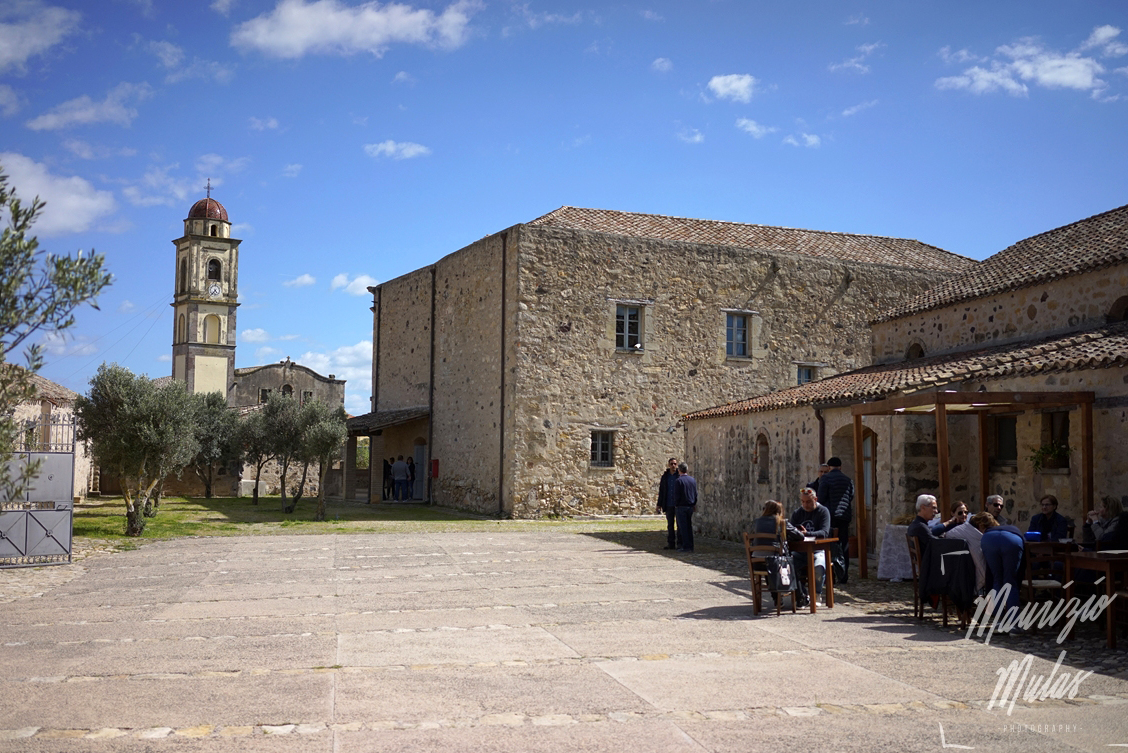

Small centre of the Marmilla, in the centre-south of Sardinia, at the foot of the Giara plateau. It lies at the foot of a splendid natural scenery, in the centre of the Marmilla. From Tuili, a small village of a thousand inhabitants, you will leave for excursions in the park of the Giara, part of which falls within its territory, including the major swamp (pauli majori) and Punta Zepparedda. The plateau alternates between cork and holm oak woods, Mediterranean maquis, centuries-old olive trees, meadows and marshes. Besides the famous little horse, you will meet weasel, hare, marten, fox and birds of prey: goshawk, peregrine falcon and buzzard. The paulis have generated ecological niches, habitats of invertebrate species dating back 200 million years. In the surrounding countryside are scattered archaeological sites, whose finds are kept in the National Archaeological Museum of Cagliari: in Santa Elisa there is a workshop to work obsidian, in Nuridda area Phoenician-Punic remains and in Santa Elisabetta a Roman settlement. In the park of Sardinia in miniature, you will take a journey through the island and history, among nuraghi and dinosaurs. In the old town centre you will find singular mansions and farmhouses with courtyards, almost all of them characterized by portals dating back to the end of the 19th century. Two elegant neoclassical buildings stand out: Villa Pitzalis and Villa Asquer, which houses the olive and oil museums, with period images, stories and work instruments, and the museum of Sardinian musical instruments. A special place is reserved for the launeddas. The village stands around the parish church of St. Peter the Apostle, built in Gothic-Catalan style and consecrated in 1489. The façade has a double inflection crowning. On the left is the square bell tower, surmounted by a small dome on an octagonal drum. The sides are supported by buttresses. In the single nave there are three chapels on each side, all barrel vaulted, except the third on the left, which has a starry vault with hanging gems: this is what remains of the fifteenth-century layout. The church houses interesting marble furnishings: balustrade of the presbytery, baroque pulpit (1783) and late baroque high altar (1800), in white marble with inlays and bas-relief decorations. The first chapel on the right houses since 1800 the imposing retable of the master of Castelsardo (or of St. Peter), a work dating back to 1500, considered the masterpiece of Sardinian Renaissance painting. It is five and a half metres high and three and a half metres wide: episodes from the lives of St. Peter the Apostle, Christ and Our Lady and dozens of saints are depicted. In the church you will also find the Pentecost retable (1534) and an organ from 1753. Also worth a visit, in the area of Santa Luisa, the little church on the Giara and in the suburbs the church of Sant'Antonio Abate, built at the end of the 16th century in Spanish colonial style. The festival in his honour at the end of J


