



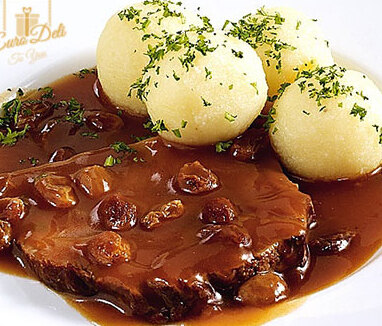
Sauerbraten, meaning ‘sour’ or ‘pickled’ roast, is more than just a dish—it's a culinary emblem of Germany. This pot roast, often revered as one of the country’s national dishes, has a lineage steeped in history and tradition. To truly appreciate this gastronomic delight, one must delve into its origins, cultural significance, and the vibrant customs that surround it.
### History and Origins The origins of Sauerbraten can be traced back to the Middle Ages, when the practice of marinating tougher cuts of meat in vinegar and wine became common as a method of preservation. This technique not only enhanced the flavor but also tenderized the meat, making it suitable for consumption. Historical records suggest that Sauerbraten was a staple during festive occasions in Germany, particularly in the regions of Rhineland and Bavaria. By the 19th century, it had firmly established itself as a beloved dish in German households, often served during family gatherings and significant celebrations.
### Art and Architecture While Sauerbraten is a feast for the palate, the surrounding architecture of its home regions is equally captivating. The Rhineland, where Sauerbraten is particularly popular, is dotted with charming half-timbered houses and historic castles, such as the Burg Eltz, which dates back to the 12th century. The region’s architectural style reflects its rich history, with influences from Romanesque to Gothic. Visitors can explore historic towns like Bacharach and Cochem, where narrow cobblestone streets and vibrant wine taverns create an atmosphere that complements the hearty flavors of Sauerbraten.
### Local Culture and Traditions The cultural significance of Sauerbraten extends beyond its taste; it is woven into the fabric of local traditions. In many areas, families have their own unique recipes that have been passed down through generations. Festivals celebrating this dish often take place during harvest season, where local communities gather to share food, music, and merriment. Events like the Rhenish Wine Festival not only showcase the region's wines but also highlight traditional dishes like Sauerbraten, bringing locals and tourists alike together in celebration.
### Gastronomy When it comes to gastronomy, Sauerbraten is often accompanied by hearty side dishes that enhance its robust flavor. Schweinenbraten, a succulent roast pork dish, frequently appears on the table alongside braised cabbage or sauerkraut, and is typically served with knoedel (dumplings) that soak up the savory juices. To wash it all down, a refreshing pilsner beer is the drink of choice, completing the authentic German dining experience. In addition to Sauerbraten, the culture is rich with other culinary delights such as Schnitzel, Bratwurst, and a variety of regional cheeses.
### Lesser-Known Curiosities While Sauerbraten is a well-known dish, there are some curious facts that many tourists might miss. For instance, did you know that the marination process can vary significantly by region? In some parts of Germany, people even marinate the meat for up to ten days to achieve the perfect balance of acidity and tenderness. Moreover, Sauerbraten is not just limited to beef; variations include venison and even horse meat, showcasing the adaptability of this traditional recipe. Some families have also been known to add unique ingredients such as chocolate or raisins to create a sweeter version of the dish, demonstrating the personal touch that many cooks bring to this classic.
### Practical Visitor Information The best time to visit the areas where Sauerbraten is a staple is during the autumn months, when local harvest festivals are in full swing, and the air is filled with the scent of spices and roasted meats. If you're planning to experience this culinary delight, be sure to check out local restaurants and family-owned eateries that offer traditional Sauerbraten made from age-old recipes. It's also wise to book ahead during festival times, as these events can draw large crowds.
For an unforgettable experience, consider pairing your visit with a local wine tour, allowing you to explore the vineyards and learn about the wines that complement the dish so beautifully.
In Germany, Sauerbraten is not just a meal; it’s a celebration of heritage, community, and the joy of togetherness. So, when you plan your trip to this charming region, immerse yourself in the local culture, savor the flavors, and share in the stories that make each dish a testament to the spirit of the people.
For a personalized itinerary that reveals the hidden gems of Sauerbraten's homeland, consider using the Secret World app to craft your unique journey.
