
🎄 Win a month in Italy for two — €10,000 · The Secret Italy Prize GO →
Savoca and the crypt of the mummies — Savoca
← Back
Other 📍 Savoca, Italy 259 views

Savoca and the crypt of the mummies

The most important part of the Capuchin Convent and Church is the crypt below, which has, moreover, made the town of Savoca famous. It was built below the Church and the overlooking small square in the early 1600s. Inside it are 37 mummies. The first dates back to 1776, of the no...

Photo · Malika B.

Savoca and the crypt of the mummies — Savoca, Italy.

Location
Savoca
Type
Other
Opening hours
Weather now
↗ Directions

About Savoca and the crypt of the mummies

Savoca and the crypt of the mummies - Savoca | Secret World Trip Planner

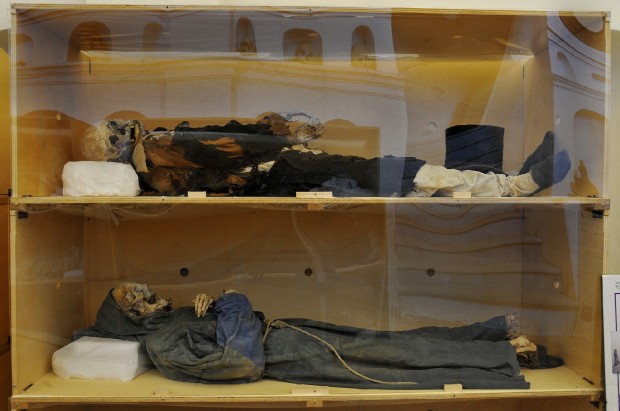
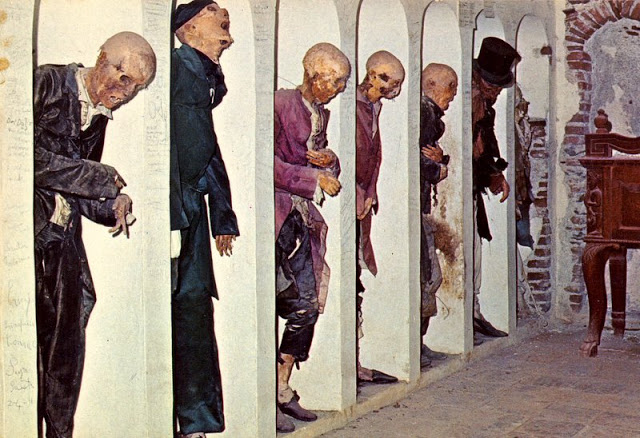
The most important part of the Capuchin Convent and Church is the crypt below, which has, moreover, made the town of Savoca famous. It was built below the Church and the overlooking small square in the early 1600s. Inside it are 37 mummies. The first dates back to 1776, of the nobleman Pietro Salvadore, and the last to 1876, that of Giuseppe Trischitta. As with the Convent of the Capuchins in Palermo, the mummies belong to the aristocracy of Savoca, such as, for example, noble patricians, lawyers, priests, monks, abbots, doctors, poets, magistrates and three children. As the mummies, at the end of the embalming process, were clothed in elegant robes, in the niches and coffins that contain them, there appears, almost like a photo, a small town of that time: the Savoca of yesteryear. Of the 37 mummies, 17 are displayed along one wall of the crypt, contained in niches, the others are kept in urns and coffins, also from the basement. An altar is also present, probably for the celebration of suffrage masses. It took about sixty days to "produce" a mummy, and the mummification process was similar throughout most of Sicily. It was a method called natural drying. The corpse initially underwent a two-day bath in a dilution of salt and vinegar. After waiting for the viscera to drain, it was taken to the crypt, where "natural" drying took place, thanks to the air currents proper to the environment. Once the mummy was obtained, it was dressed in its clothing and put on solemn display inside the crypt.
Savoca and the crypt of the mummies - Savoca | Secret World Trip Planner

That mummification had become something of a fashion in nineteenth-century Sicily is shown by the presence in Savoca itself (and in the rest of Sicily, as we shall see) of other crypts and other mummies, such as in the Mother Church of Santa Maria in Cielo Assunta, built in 1130 and now an Italian national monument, inside which are preserved other corpses of notables of the town. In 1998, during restoration work on the ruined Church of the Immaculate Conception (to be used as a municipal philharmonic center), the ancient crypt, where the friars of the Convent of the Franciscan Friars Minor and the inhabitants, themselves, of the San Rocco neighborhood were buried, was discovered under the floor of the temple.

✦ Secret World · suggested day

A perfect day in Savoca

Start with Savoca and the crypt of the mummies, then continue with nearby places selected by Secret World.

  1. 01
    Morning
    Savoca and the crypt of the mummies
    📍 Savoca
    Start here
  2. 02
    Afternoon
    📍 4.6 km away
  3. 03
    Evening
    📍 12 km away

Collect this place

Turn places you discover into stamps in your Secret Passport.

Open Secret Passport →

Keep exploring · Savoca

Frequently Asked Questions

The Capuchin Convent crypt in Savoca contains 37 mummies, with the earliest dating back to 1776 (Pietro Salvadore, a nobleman) and the most recent to 1876 (Giuseppe Trischitta). The crypt itself was built in the early 1600s beneath the Church and overlook small square.
The 37 mummies belong to Savoca's aristocracy and include noble patricians, lawyers, priests, monks, abbots, doctors, poets, magistrates, and three children. Because they were dressed in elegant robes after embalming, the crypt essentially displays a snapshot of Savoca society from that era.
The mummification process took approximately 60 days and used a method called natural drying. The corpse underwent a two-day bath in a salt and vinegar dilution, had its viscera drained, then was placed in the crypt where air currents naturally dried it; once completed, it was dressed in clothing and displayed in niches or coffins.
Of the 37 mummies, 17 are displayed in niches along one wall of the crypt, while the others are kept in urns and coffins throughout the basement. An altar is also present in the crypt, likely used for celebration of suffrage masses.
Yes, the Mother Church of Santa Maria in Cielo Assunta, built in 1130 and now an Italian national monument, also preserves other mummified corpses of notable townspeople. Mummification became fashionable in 19th-century Sicily, resulting in multiple crypts and mummies throughout the region, including other sites in Savoca itself.

Experiences nearby · Savoca

Powered by Viator

See more on Viator.com

Secret World Hidden places, real stories — plan your trip
Get the app
