



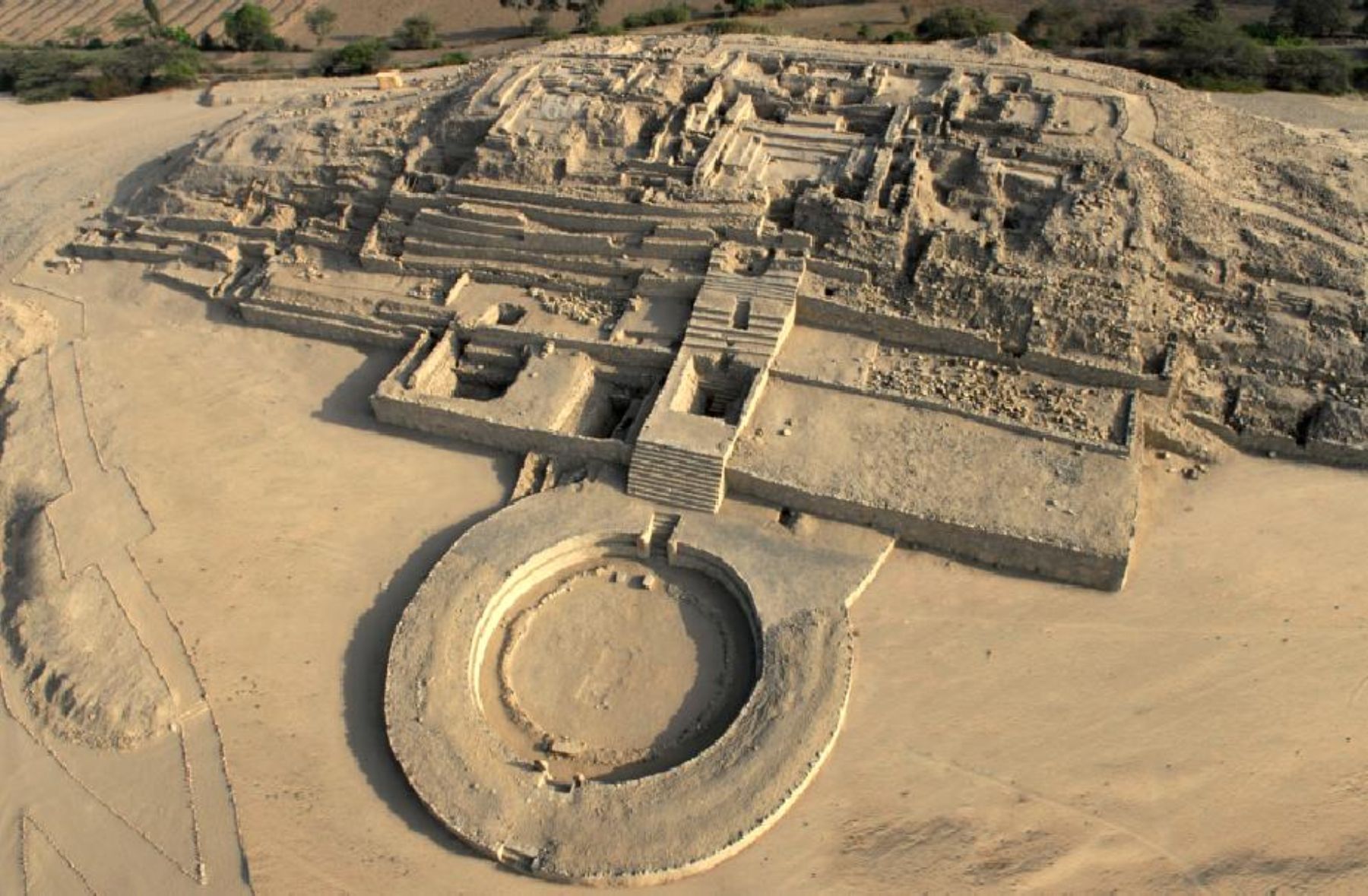
Nestled in the rugged landscapes of Peru, Sechin Bajo stands as a monumental testament to the ingenuity of ancient civilizations, believed to be the oldest man-made structure in the Americas. Dating back to around 3600 BCE, the site forms part of the larger Sechin Complex, which includes other significant archaeological sites like Sechin Alto, Cerro Sechin, and Taukachi-Konkan. The discovery of a circular stone plaza in 2008, alongside a frieze dating to 3600 BCE, unveiled the oldest examples of monumental architecture in the Americas, surpassing even the famed Norte Chico civilization known for its early urban settlements.
History and Origins The origins of Sechin Bajo are steeped in mystery and intrigue. Archaeologists believe it was constructed by the Casma culture, a society that flourished along the coastal and highland regions of northern Peru. The construction techniques of Sechin Bajo reflect a sophisticated understanding of stonework and community organization, suggesting a centralized authority capable of mobilizing labor for large-scale projects. Over the centuries, the site has transformed, with successive cultures building upon its foundations, yet it retains its status as a cornerstone of pre-Columbian history in the Americas. Key events include the unearthing of monumental structures in the early 2000s, which have since reshaped our understanding of early urban development in the region.
Art and Architecture The architectural style of Sechin Bajo is characterized by its striking use of stone, with massive blocks carefully fitted together, showcasing the remarkable craftsmanship of its builders. The circular plaza, along with the frieze depicting mythological motifs, exemplifies the artistic significance of the site. The intricate carvings on the frieze are thought to represent deities or significant cultural narratives, providing insight into the spiritual life of the Casma people. This melding of functionality and artistry not only served religious purposes but also reinforced social hierarchies and communal identity.
Local Culture and Traditions Today, the area surrounding Sechin Bajo is home to vibrant local communities that carry forward ancient traditions. Festivals often celebrate agricultural cycles, reflecting the enduring connection between the land and its people. One notable event is the Fiesta de San Juan, celebrated in June, which honors the patron saint of the local town and includes traditional music, dance, and food. The customs observed here are a rich tapestry woven from ancient practices, showcasing the resilience of the region’s cultural heritage through generations.
Gastronomy No visit to Sechin Bajo is complete without indulging in the local gastronomy. Traditional dishes such as cevichelos, a unique twist on ceviche, and pachamanca, a hearty meat and vegetable dish cooked underground with hot stones, offer a taste of the region’s culinary history. The local drink, chicha de jora, a fermented corn beverage, has been enjoyed since ancient times and is often served during festivals, symbolizing community and celebration. Visitors are encouraged to sample these dishes at local eateries for an authentic experience.
Lesser-known Curiosities While many tourists flock to more famous sites, Sechin Bajo holds its own set of lesser-known curiosities. For instance, the peculiar alignment of the structures suggests they may have had astronomical significance, potentially serving as observatories for celestial events. Additionally, the site is less crowded than other archaeological wonders, allowing for a more intimate exploration of its mysteries. Many visitors might be surprised to learn that certain stones used in construction were quarried from distant locations, indicating extensive trade networks among ancient cultures.
Practical Visitor Information The best time to visit Sechin Bajo is during the dry season, from May to October, when the weather is mild and conducive to exploration. To fully appreciate the site, consider hiring a local guide who can provide invaluable insights into the intricacies of the ruins and the surrounding landscape. Look for the circular plaza and the frieze, as these are the highlights of the site. Be sure to bring comfortable walking shoes, water, and sun protection, as the sun can be intense in this region.
For those looking to delve deeper into the wonders of Sechin Bajo and the surrounding area, planning a personalized itinerary can enhance your experience. Consider using the Secret World app to create a tailored journey that uncovers the hidden gems of this ancient landscape.
