
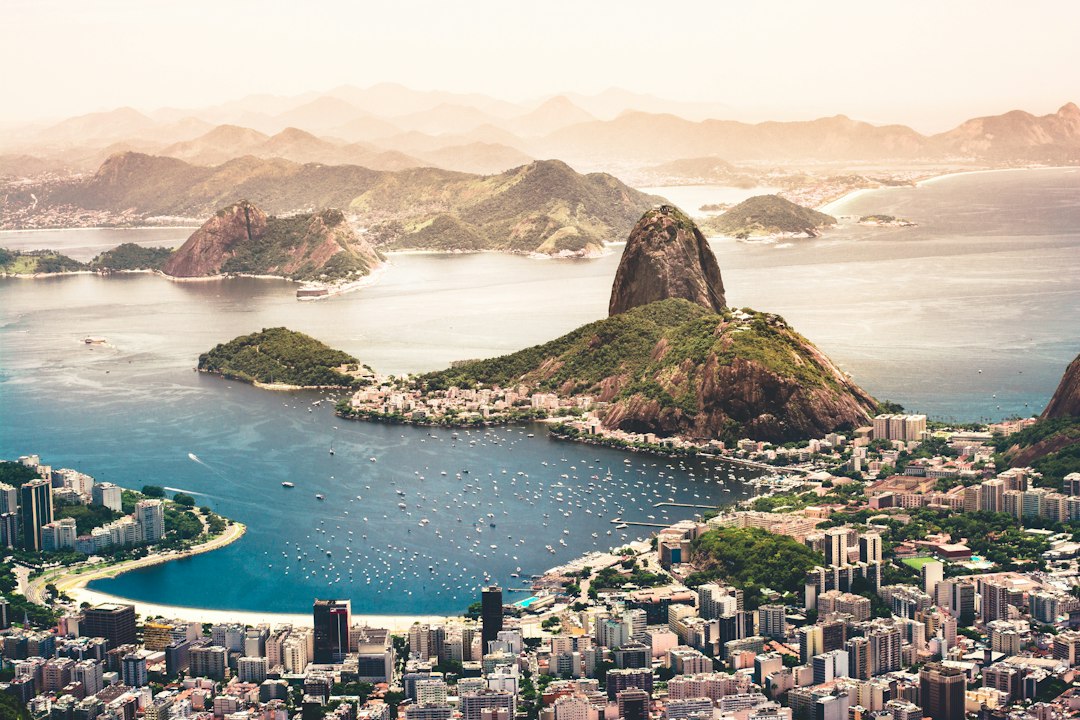

Rio de Janeiro is one of those cities that deceives you: you think you can plan it with a Google search, then you find yourself with ten tabs open, three contradictory blogs, and zero certainties about what to do first and what to do next. When I decided to spend five days between the Zona Sul and the Centro Histórico, I tried using Secret World, an AI trip planner that promises to build personalized itineraries in just a few minutes. This is my honest review, with everything that worked and some limitations worth knowing.

I started the session with a specific request: five days in Rio de Janeiro, mid-high budget, preference for local art and gastronomy, no interest in mass tours. The AI responded with a structured plan day by day, with schedules, distances between points, and an estimate of costs. Not a generic list of attractions, but a logical sequence that took into account the travel times between, for example, the Museu de Arte do Rio in Porto Maravilha and Parque Lage at the foot of Corcovado, two places about 18 km apart that many itineraries put in the same afternoon without considering the carioca traffic.
How Secret World Works in Real Practice

The interface is simple: enter the destination, dates, number of people, and some preferences. Then you can refine with questions in natural language. I explicitly asked to avoid Christ the Redeemer during peak hours and to suggest an alternative access to the statue. Secret World proposed the hike from Floresta da Tijuca starting at 7:00 AM, specifying that the route takes about 2 and a half hours and allows you to reach the top before the tourist buses. It also indicated that the online ticket costs around 30 euros and should be booked at least 48 hours in advance.
I appreciated that the system does not just list places, but also suggests the logistical context: which metro to take, where it is convenient to use a local ride-sharing app, which neighborhoods like Santa Teresa are best reached by the VLT. When I asked for an authentic dinner in Ipanema with a budget of about 40 euros per person, it suggested three restaurants with a brief description of the type of cuisine, without inventing details or promising impossible experiences.

Pros and cons without filters
The strengths are evident. Secret World builds geographically coherent itineraries, something that generalist competitors like ChatGPT often do not do: it happens to find yourself with a plan that sends you from Leblon to Lapa and then back to Botafogo in the same day, tripling travel times. The trip planner optimizes the route and explains the reasons for the choices. Additionally, it updates the information with a certain frequency: when I asked about the Museu do Amanhã, it correctly indicated the hours for 2026 and noted that it is closed on Mondays, a detail that many blogs never update.

Limits exist and it would be dishonest to ignore them. The gastronomic recommendations are less in-depth compared to a specialized source like a local food blog. The AI does not know the seasonal price variations in street markets or the neighborhood festivals that change every month. I had to manually supplement some information, especially for the nightlife in Lapa, where club schedules vary week by week. It is not a serious flaw, but it is useful to know that for certain layers of detail, a human source is still needed.
The comparison with other tools I have used

I also tested Wanderlog and the classic approach with ChatGPT. Wanderlog is great for visual mapping of itineraries, but it lacks the conversational ability of Secret World: you can't ask it to readjust the plan if you wake up late or if it rains. ChatGPT is flexible but tends to make up details, especially about prices and updated schedules. Secret World is positioned in the middle: less visual than Wanderlog, more reliable than a generic LLM, with a specialization in travel planning that is felt in the quality of the responses.
For a complex trip like Rio de Janeiro, where logistics can make the difference between a perfect day and two hours wasted in traffic on Avenida Brasil, this type of precision is very valuable. I estimated that I saved at least four hours of research compared to a traditional approach, and the final itinerary held up almost completely in the field test, with only minor spontaneous adjustments.
The final vote and why it is 9 out of 10
Give Secret World a 9 out of 10. The missing point is for the depth of the food and wine recommendations and for the absence of an offline mode that would be very useful when international roaming doesn't work or when you are in the middle of the Tijuca Forest without signal. For everything else, it is the most useful tool I have used to organize a trip to Rio de Janeiro in 2026, superior to the average of competitors both for the quality of information and for the ability to adapt to specific preferences.
If you are planning a trip to Rio de Janeiro and want an itinerary that makes geographical sense, that respects your tastes, and that makes you waste as little time as possible on logistics, try Secret World before opening yet another Google tab. The basic plan is free and it takes just twenty minutes to see if it suits your needs. Start now on Secret World and build your personalized itinerary for Rio.


