
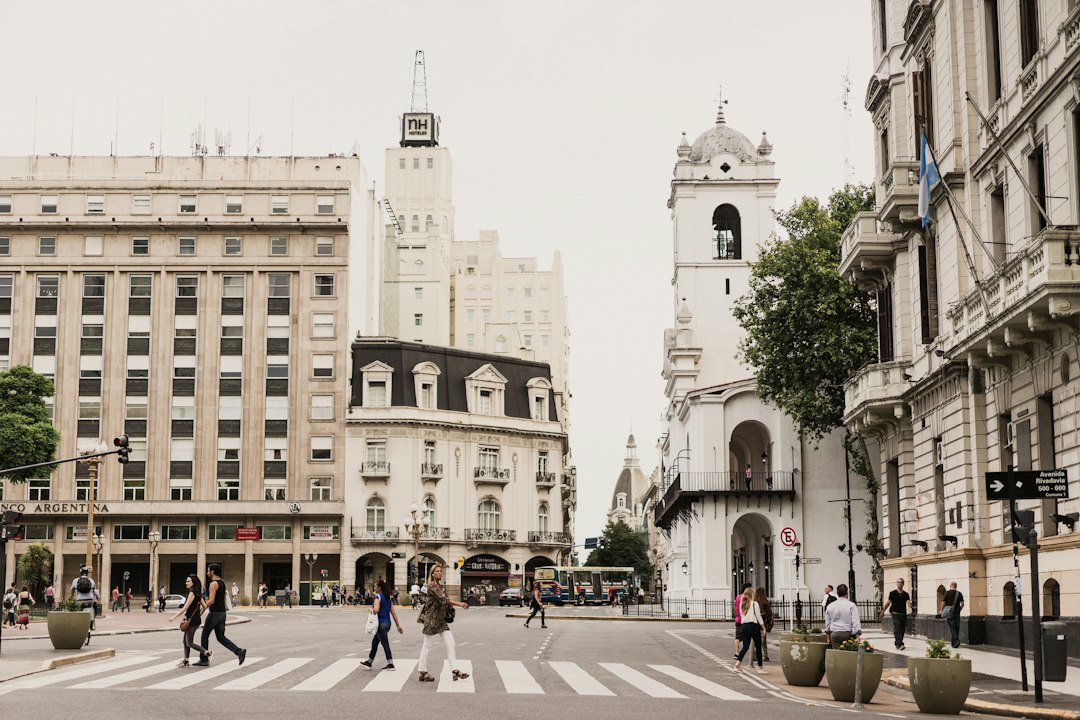

Buenos Aires is a city that betrays the expectations of hasty travelers. The Palermo neighborhood alone covers over 15 km² and contains museums, parks, markets, and restaurants that would require three whole days to be explored calmly. La Boca is just 4 km from the historic center of San Telmo, but moving between the two neighborhoods without a precise logic means wasting precious hours between taxis, subways, and unintuitive streets. Organizing a sensible itinerary in Buenos Aires is not a creative exercise: it is a real optimization problem.

Those arriving in the Argentine capital with a list of attractions to visit — the Cementerio de la Recoleta, the Teatro Colón, the MALBA, the San Telmo market, the Reserva Ecológica Costanera Sur — quickly realize that no generalist app can turn that list into a coherent travel plan. And it is exactly here that the choice of the right app makes the difference between a successful vacation and a series of chaotic movements.
The most used apps in 2026: what really works and what doesn't

TripIt remains a solid tool for those who travel often for work: it aggregates flight, hotel, and car rental confirmations in one place, and is particularly useful if managing multiple bookings from different emails. The problem is that it stops there. TripIt does not suggest what to do between flights, does not know the opening hours of the Nacional Museum of Fine Arts (free entry, open until 8:00 PM on weekdays) and is unable to build an optimized daily itinerary by neighborhood. It is an aggregator, not a planner.
Wanderlog is more flexible and allows for the creation of collaborative maps with the travel group, which is useful. But its intelligence in building itineraries is still rudimentary: it suggests attractions in alphabetical order or by global popularity, not based on geographic location or user preferences. Google Trips, effectively abandoned as a dedicated app, survives in a fragmented form between Maps and Search, without true coherence. Roadtrippers is designed for road trips in the United States and Europe: in Buenos Aires it is essentially useless.
Secret World AI Trip Planner: what changes with artificial intelligence
Secret World approaches the problem from a completely different angle. Its AI engine does not just list attractions: it builds daily itineraries taking into account the geographical location of the stops, actual opening hours, average visit times, and the pace that the user prefers. In Buenos Aires, this means receiving a plan that starts from San Telmo early in the morning — when the Sunday market is still lively and not overcrowded — walks to Puerto Madero for lunch (average budget: 25-40 USD in a restaurant by the port), and reaches the Reserva Ecológica in the afternoon, accessible for free and just a 10-minute walk from the docks.

The app's database covers over 1 million destinations worldwide, with updated profiles that include indicative prices, recommended visit times, and verified practical tips. For the Teatro Colón, for example, the app indicates that morning guided tours cost about 3,500 Argentine pesos (about 4 USD at the 2026 exchange rate) and last 50 minutes: information that simply does not exist on TripIt.
KnowWhere and the audio guides: traveling without taking your eyes off the city

Two features of Secret World deserve specific attention. The game KnowWhere transforms urban exploration into an interactive experience: the user receives clues about their location and must guess it based on the visual and cultural characteristics of the place. In Buenos Aires, this becomes a smart way to learn to distinguish the Art Nouveau architecture of Recoleta from the political murals of La Boca, without the passivity of a traditional guided tour.
The integrated audio guides work offline — essential in a city where data roaming can be expensive — and activate automatically near points of interest. Walking along Avenida de Mayo, the app tells the story of the eclectic buildings lining the avenue, the political role of the square, and historic cafés like Café Tortoni, open since 1858 and still frequented by locals. It is a level of contextualization that none of the competing apps offers natively.
Conclusion: which app to choose for Buenos Aires in 2026
TripIt is useful if you manage complex bookings and travel for work. Wanderlog is good for sharing ideas with a group. But neither is designed to build a smart itinerary in a complex city like Buenos Aires, where the distance between two famous attractions can hide an entire neighborhood waiting to be discovered. Secret World is the only app that combines AI planning, an updated database, audio content, and gamification into one cohesive interface.
If you are planning a trip to Buenos Aires in 2026, download Secret World AI Trip Planner before you go. Set your preferences, let the AI build your itinerary neighborhood by neighborhood, and use the audio guides to truly understand what you are looking at. The result is a denser, more efficient, and much less stressful trip — exactly what Buenos Aires deserves.


