



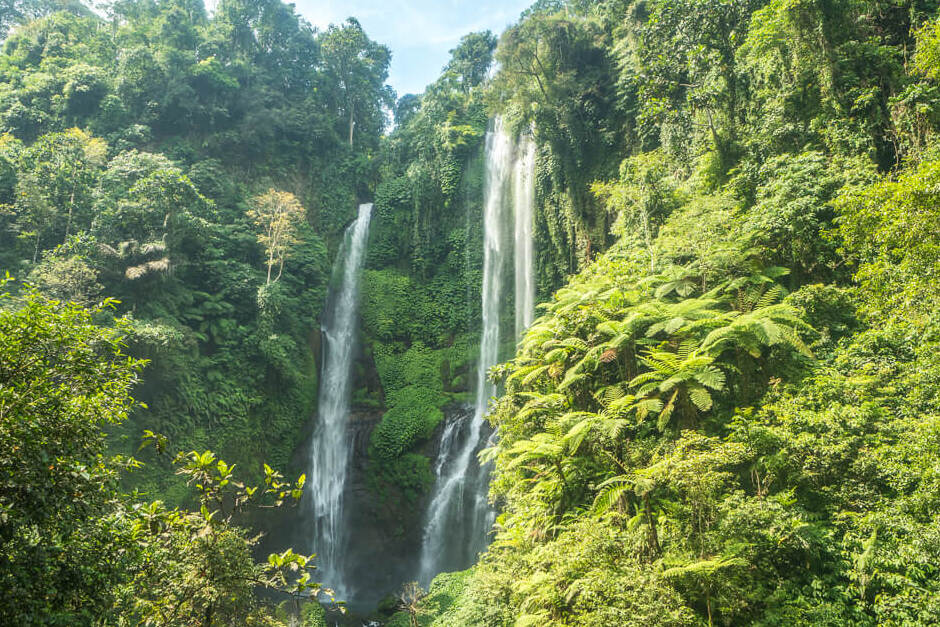
Nestled in the lush, verdant landscapes of northern Bali, Sekumpul Waterfall, or Air Terjun Sekumpul, beckons adventurers and nature lovers alike with its breathtaking beauty. This majestic site is not just a single waterfall but a collection of seven stunning cascades, each offering a unique spectacle that captivates visitors. Standing amidst a rich tapestry of greenery, Sekumpul feels like a portal to a forgotten era, a realm where nature reigns supreme.

Historical Origins
While Sekumpul itself is a natural wonder, the region surrounding it has a rich history. The local area is steeped in Balinese culture, reflecting a blend of Hindu influences and indigenous beliefs. The Bali Aga, the island's original inhabitants, have revered these lands for centuries, intertwining water sources with spiritual significance. The waterfalls, seen as sacred, were historically important for local ceremonies and agricultural practices, providing water for irrigation to the terraced rice paddies that define Bali’s lush landscape.

Though specific historical events linked to Sekumpul are scarce, the area has long been a part of the Bali narrative, where the natural world holds a place of honor. The preservation of such sites is essential not only for environmental reasons but also for maintaining the cultural heritage of the Balinese people.
Art and Architecture
Sekumpul Waterfall is not a man-made structure, but its surrounding environment is a canvas of natural artistry. The architecture of the site is defined by the dramatic cliffs and the flow of water that creates an extraordinary visual display. The waterfalls themselves, cascading down from heights of about 80 meters, mimic the delicate drapery of a mosquito net, particularly the second waterfall, which is perceived as more ethereal.
The beauty of Sekumpul has inspired local artists, particularly those who create traditional Bali paintings and wood carvings. These artworks often draw upon the imagery of the waterfall and its surrounding nature, capturing the enchanting essence of this paradise. Visitors can find unique pieces in local markets, each telling a story of the region’s natural beauty.
Local Culture and Traditions
The area around Sekumpul is rich in Balinese culture and traditions. The local village, Sekumpul, is known for its warm hospitality and vibrant community life. Festivals play a significant role in the cultural fabric of the village, with ceremonies often held to honor the water and the spirits believed to reside within it.
One of the most notable celebrations is Galungan, which occurs every 210 days, marking the victory of dharma (good) over adharma (evil). During this time, the community gathers to offer prayers at local temples, many of which are situated near water sources, symbolizing purification and life. Visitors may witness these customs firsthand, enriching their experience of Sekumpul and its surrounding area.
Gastronomy
No visit to Sekumpul is complete without indulging in the local gastronomic delights. Traditional Balinese cuisine is a vibrant tapestry of flavors, with rice as a staple. Close to Sekumpul, visitors can savor dishes like Nasi Campur, a mixed rice dish served with various sides, including grilled chicken, fried tempeh, and spicy sambal.
For a refreshing drink, try Es Teh Manis, a sweet iced tea that perfectly complements the tropical climate. The use of fresh, locally sourced ingredients is a hallmark of Balinese cuisine, making every meal an authentic experience.
Lesser-Known Curiosities
While many tourists flock to Sekumpul for its aesthetic allure, few know about the hidden trekking paths that lead to spectacular viewpoints of the waterfalls. These trails wind through lush jungles and terraced farms, offering glimpses of local wildlife, including vibrant birds and playful monkeys.
Another intriguing aspect is the ongoing conservation efforts by local communities aimed at protecting the natural environment around Sekumpul. Initiatives focus on sustainable tourism practices to preserve the waterfalls and their surroundings for future generations. Visitors are encouraged to respect these efforts, ensuring that the magic of Sekumpul remains intact.
Practical Visitor Information
The best time to visit Sekumpul Waterfall is during the dry season, from April to September, when the weather is more stable and the trails are easier to navigate. Early mornings are particularly enchanting, as the mist rises from the falls, creating a mystical atmosphere.
To reach Sekumpul, a moderate trek of about 30-45 minutes is required, so sturdy shoes and water are essential. Along the way, take the opportunity to engage with local villagers, who can share stories and insights about the area.
Visitors should not miss the chance to explore the surrounding landscapes, including lush rice paddies and quaint villages, which further enrich the experience.
For a seamless adventure in Bali, consider using the Secret World app to craft a personalized itinerary that captures the essence of your visit to Sekumpul Waterfall and beyond.
