


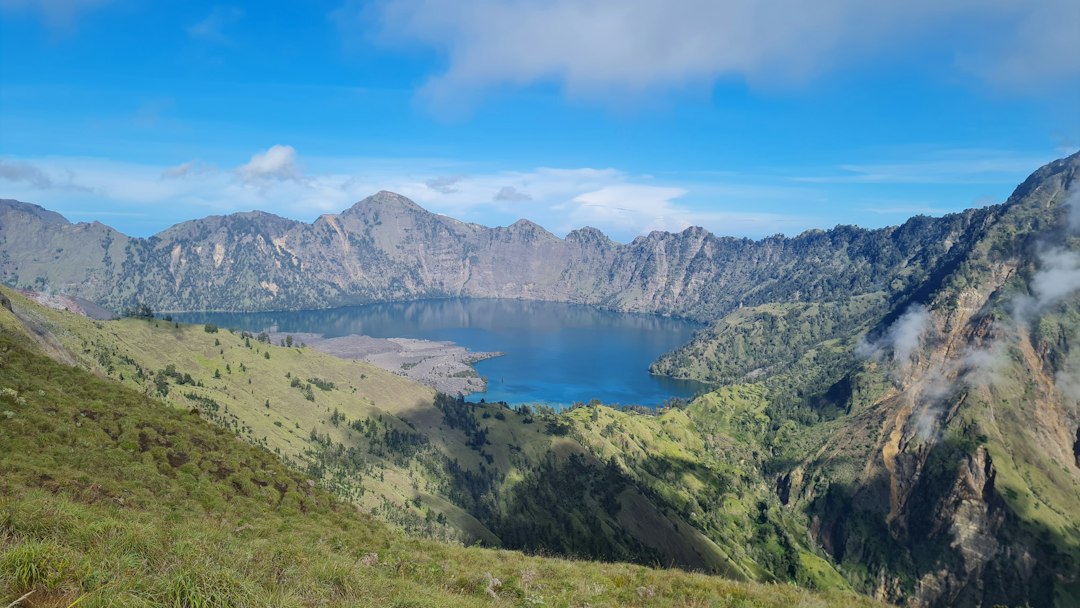
At a 2,641 meters above sea level, Mount Rinjani dominates the island of Lombok with a presence that can be felt even from the beaches of the northern coast. But it is only by reaching the edge of the crater, the Senaru Crater Rim, that the landscape reveals its most extraordinary nature: a caldera lake of intense turquoise color, the Segara Anak, which extends for about 11 square kilometers at an altitude of about 2,000 meters, with a secondary volcanic cone in the center — Gunung Baru — that continues to grow and emit fumaroles visible to the naked eye.
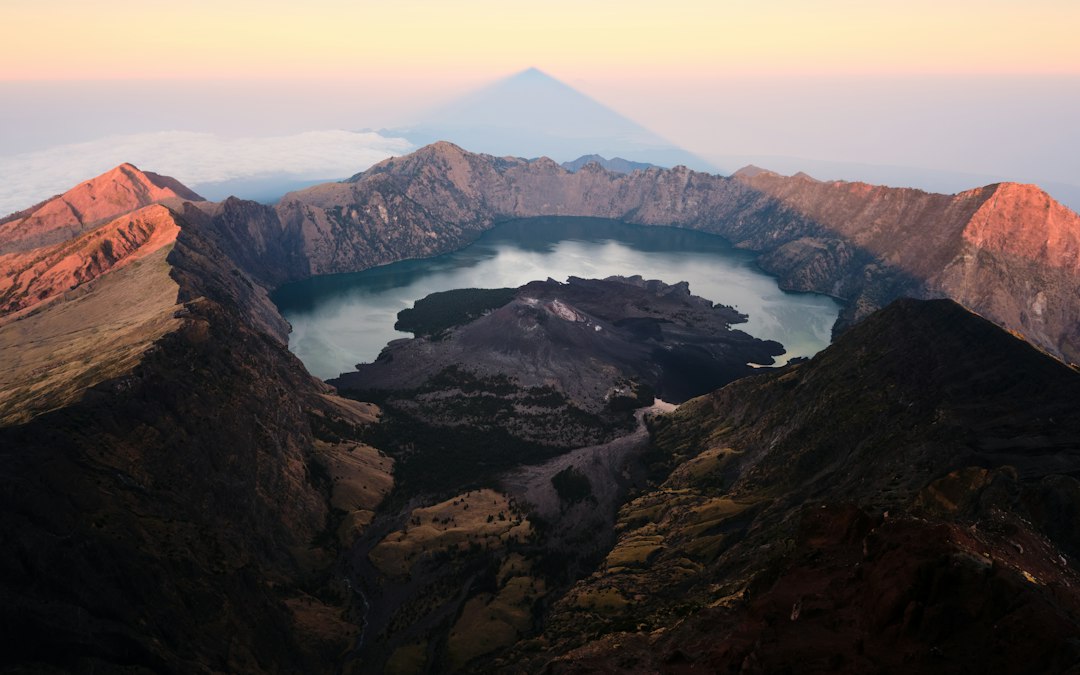
The most commonly used starting point for this ascent is the village of Senaru, in the Tanjung region, in northern Lombok. From here, the official route begins, which, in three days of trekking, takes visitors to the edge of the caldera. It is not a walk in the park: the elevation gain is challenging, the trails cross dense tropical forests, high-altitude savannas, and rocky sections that require good physical preparation. But the visual reward, once overlooking the crater, is one that remains etched in memory.
The Segara Anak Lake and the Volcano within a Volcano
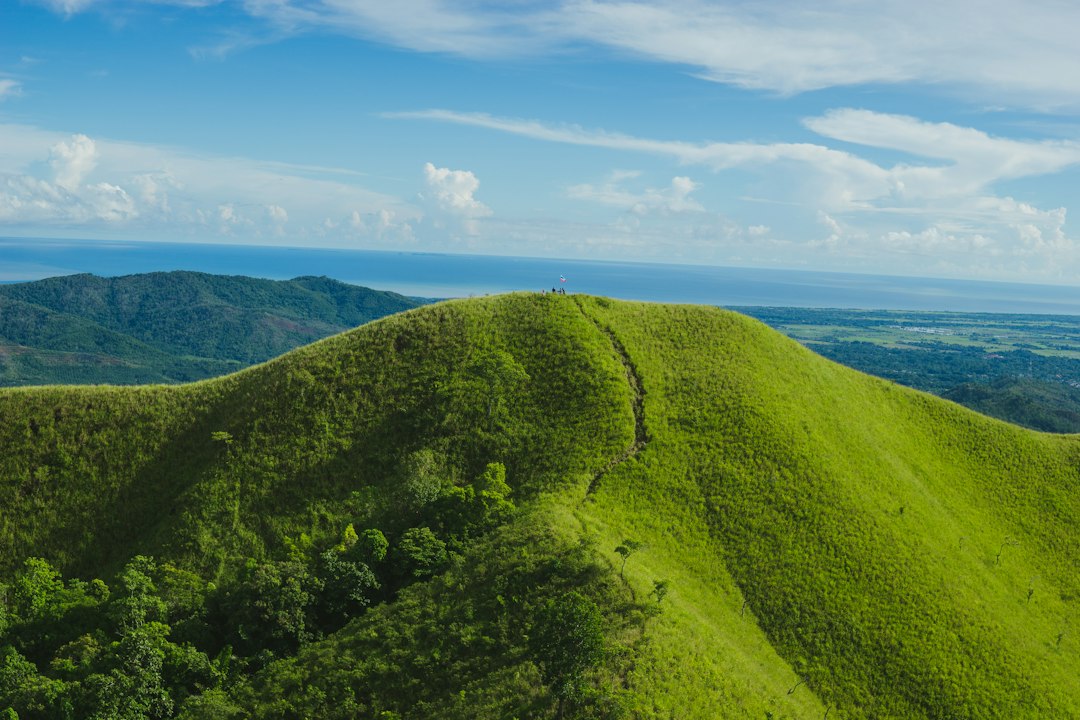
The name Segara Anak literally means "child of the sea" in the Sasak language, and looking at the lake from above, one understands why: that expanse of turquoise water, framed by the vertical walls of the caldera, has something oceanic in its silent immensity. The color is due to the presence of sulfur and dissolved volcanic minerals in the water, and it varies with the light of day — greener in the early morning, more intensely blue in the central hours.
In the center of the lake rises the Gunung Baru Jari, the "new volcano," formed after a major eruption in 1994 and still active. Its fumaroles rise visibly even from the edge of the crater, several kilometers away. Those who descend to the shores of the lake — an additional hike that requires more hours of walking — can observe the hot springs that flow directly onto the volcanic beach, mixing hot and cold water in natural pools used for centuries by Sasak pilgrims for purifying rituals.
The sacred meaning of Rinjani for the Sasak and Balinese
Rinjani is not just a tourist destination: it is a sacred mountain for two distinct religious communities. For the Muslim Sasak of Lombok, Lake Segara Anak is a place of prayer and offerings. For the Hindu Balinese, Rinjani is considered the abode of the gods, and every year groups of pilgrims from Bali cross the sea to reach the crater's edge and make offerings on its shores.
This overlap of devotions is physically perceived along the trail: small shrines decorated with flowers and fabrics can be found, and during certain times of the year, the number of pilgrims exceeds that of sporty trekkers. Walking in this context requires a particular respect for the places and for the people who visit them with ritual intentions.
How to organize the trek from Senaru
The trek to the Senaru Crater Rim requires a local guide registered with the Rinjani Trek Centre in Senaru, which manages access to the national park. The village agencies offer packages ranging from two to four days that include a guide, porters, tents, and meals: prices typically range from 80 to 150 euros per person for a standard three-day package, depending on the season and the number of participants.
The best time to climb is between April and October, during the dry season. In the months of the rainy season — from November to March — the park is often closed for safety reasons, as the trails become dangerously slippery and clouds consistently cover the crater rim. Those arriving in Senaru can reach it from Mataram, the capital of Lombok, in about two hours by car, or from Bangsal, the port for the Gili Islands, in about an hour. It is advisable to stay in Senaru the night before departure to start the hike at dawn, when the air is cooler and visibility of the crater is generally better.
What to bring and what to expect on the trail
Temperatures at the crater's edge often drop below 10 degrees Celsius at night, even in the warmest months. A suitable sleeping bag and thermal layers are essential, as well as sturdy-soled hiking shoes. The first day of ascent passes through a humid tropical forest where local gray monkeys and numerous species of endemic birds from Lombok can be spotted.
The last stretch before the edge, on loose and steep volcanic terrain, is the most physically demanding but also the most thrilling: each step brings you closer to that horizon line beyond which the landscape changes completely. When the crater appears for the first time, many hikers stop in silence. Not out of exhaustion, but because certain landscapes simply demand to be observed.


