



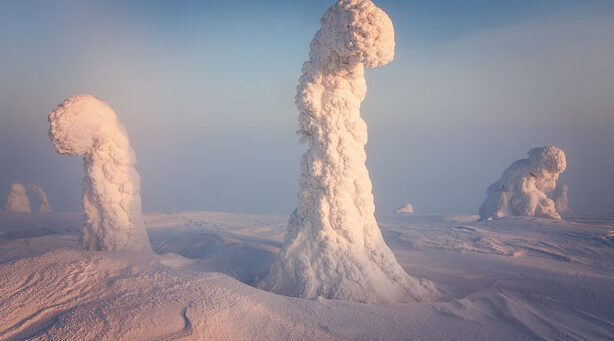
In the heart of Finland, where the land stretches under an endless blanket of snow and the sky reflects hues of the Arctic dawn, the Sentinels of the Arctic stand guard. These are not warriors of flesh and blood, but rather towering trees enveloped in layers of heavy snow and frost, turning them into monumental sculptures of nature. The sight is ethereal, resembling an army of silent giants, each uniquely shaped by the whims of the northern wind and the weight of the snow.
The region where these sentinels reside has a history as rich and layered as the snow that covers it. The area, nestled near the coordinates 61.92411, 25.748151, has been home to the Sami people for thousands of years. Known as the only indigenous people of the European Union, the Sami have traversed these lands since time immemorial, herding reindeer and following the rhythms of nature. Their deep connection with the environment is reflected in their traditions and stories, which are interwoven with the landscape itself.
The architectural style of nearby settlements is a testament to human resilience against the harsh Arctic conditions. Traditional Sami structures, such as the 'kota' (a type of tent similar in shape to a teepee), are ingeniously designed to withstand extreme weather while offering warmth and shelter. In more modern times, the influence of Nordic minimalism is apparent, with structures that blend seamlessly into the snowy backdrop, using materials like wood and stone to create warmth amidst the cold.
Culturally, the area is a tapestry of traditions and celebrations, each carrying the essence of the Arctic. The Juhannus, or Midsummer Festival, invites locals and visitors alike to celebrate the midnight sun with bonfires and music, a stark contrast to the winter's short, dimly lit days. Another significant event is the Sami National Day on February 6th, which celebrates Sami heritage with traditional dress, music, and reindeer races. These festivals offer a glimpse into the vibrant spirit that thrives even in the coldest months.
Gastronomy in this part of Finland is a reflection of its environment, rich in robust flavors and hearty ingredients. Reindeer meat, a staple of Sami cuisine, is often prepared in stews or smoked, offering a taste that is both rustic and refined. Accompanying the meat are locally sourced berries like lingonberries and cloudberries, which add a burst of tartness to the otherwise savory dishes. For a warming drink, locals turn to glögi, a spiced mulled wine that is especially popular during the winter months.
For those willing to look beyond the obvious, the Sentinels hold stories not commonly told. The phenomenon of these snow-covered trees is called tykky in Finnish, a natural occurrence where the combination of freezing temperatures, high humidity, and strong winds cause snow to freeze onto the trees in thick layers. This creates the ghostly figures that captivate all who see them. In the past, these formations were used as navigational markers by the Sami, guiding them through the winter wilderness.
Visiting this otherworldly landscape requires preparation, as the Arctic climate can be unforgiving. The best time to witness the Sentinels is during the deep winter months, from December to March, when the snow is at its thickest. Layers of warm clothing, waterproof boots, and a good pair of gloves are essential. For photographers, the low winter sun and long twilight hours provide magical lighting conditions, perfect for capturing the eerie beauty of the snow-laden trees.
While the Sentinels of the Arctic may initially appear as mere curiosities of nature, they embody the spirit of the region—a testament to survival, adaptation, and the silent beauty of the northern wilderness. As you stand amidst these giants, the crisp air filling your lungs and the snow crunching underfoot, you become part of a timeless tableau that has captured the imagination of all who have ventured to this remote corner of the world.
