
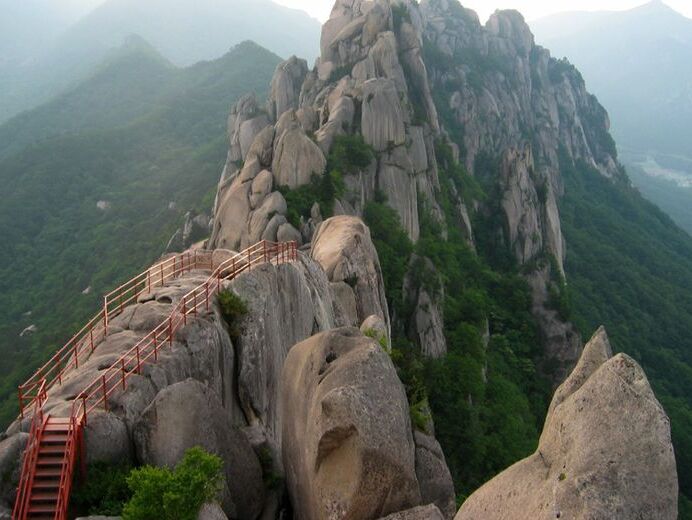

Nestled in the heart of Gangwon Province, Seoraksan National Park is a captivating blend of natural beauty and cultural richness, drawing adventurers and history enthusiasts alike. This UNESCO Biosphere Reserve, known for its rugged peaks and lush valleys, is not only about the breathtaking vistas but also a gateway to a fascinating historical and cultural journey.
The history of Seoraksan is as ancient as the mountains themselves. During the Silla Dynasty (57 BC – 935 AD), the mountain was considered sacred, a spiritual center for Buddhists. Temples like Sinheungsa, which dates back to 652 AD, were established here, serving as places of worship and meditation. The park was designated as a natural reserve in 1965, reflecting its environmental significance, and gained national park status in 1970, ensuring the protection of its diverse ecosystems and historical sites.
As you wander through the park, the art and architecture stand as a testament to its historical significance. Sinheungsa Temple is a must-visit, showcasing traditional Korean Buddhist architecture. The temple complex is home to the Great Unification Buddha, a 14.6-meter-tall bronze statue that exudes serenity. This modern addition, completed in 1997, serves as a symbol of peace and unification. The temple's intricate wooden carvings and vibrant paintings offer a glimpse into the artistic talents that have been nurtured over centuries.
The local culture of the Seoraksan region is deeply intertwined with nature. The park hosts numerous festivals, such as the annual Seorak Cultural Festival, which celebrates the harmony of nature and culture. During this event, locals and visitors participate in traditional music performances, folk dances, and local artisan exhibitions, fostering a deep appreciation for the region's cultural heritage. The park's connection to Buddhism is also evident in its serene atmosphere, where the sound of gongs from temples often punctuates the tranquil silence of the mountains.
Gastronomy in the Seoraksan area is a reflection of its mountainous geography and rich cultural tapestry. Yangyang, the nearby county, is known for its seafood, courtesy of the East Sea, and mountain vegetables. Dishes such as ojingeo sundae (squid stuffed with a mixture of noodles and vegetables) and sanchae bibimbap (rice mixed with mountain vegetables) offer a taste of the region's bounty. These dishes highlight the locals' ingenuity in using available natural resources to create flavorful and nutritious meals.
Beyond the well-trodden paths, Seoraksan holds lesser-known curiosities that add layers to its allure. One such gem is the Biryong Falls, where legends speak of dragons that flew from the falls to the heavens. The name itself translates to "flying dragon," and the spot offers a mystical aura that captivates those who visit. Another hidden treasure is the Gwongeumseong Fortress, a mountaintop ruin that requires a challenging hike but rewards with panoramic views and a sense of historical mystery, as its origins remain largely unknown.
For practical visitor information, the best time to visit Seoraksan National Park is during the fall months of October and November. This period transforms the landscape into a canvas of fiery reds and golds, providing an unmatched backdrop for hiking. However, spring also offers its own charm with blooming wildflowers and mild weather. Visitors should be prepared for the park’s varied terrains by wearing appropriate hiking gear and checking weather conditions before heading out.
When planning your visit, it's essential to start early in the day to avoid the crowds and make the most of the daylight. Given the park's vastness, it's recommended to prioritize a few key attractions, like Ulsanbawi Rock, which offers a challenging but rewarding climb and unparalleled views. Always carry water and snacks, as facilities within the park are limited. Lastly, be respectful of the natural environment and adhere to park rules, ensuring that this stunning landscape remains pristine for future generations.
In Seoraksan National Park, the intertwining of natural splendor and cultural depth creates an experience that is as enriching as it is awe-inspiring. Whether you're trekking through its trails, soaking in its spiritual ambience, or savoring its culinary delights, Seoraksan promises an unforgettable journey into the heart of South Korea's mountainous soul.


