



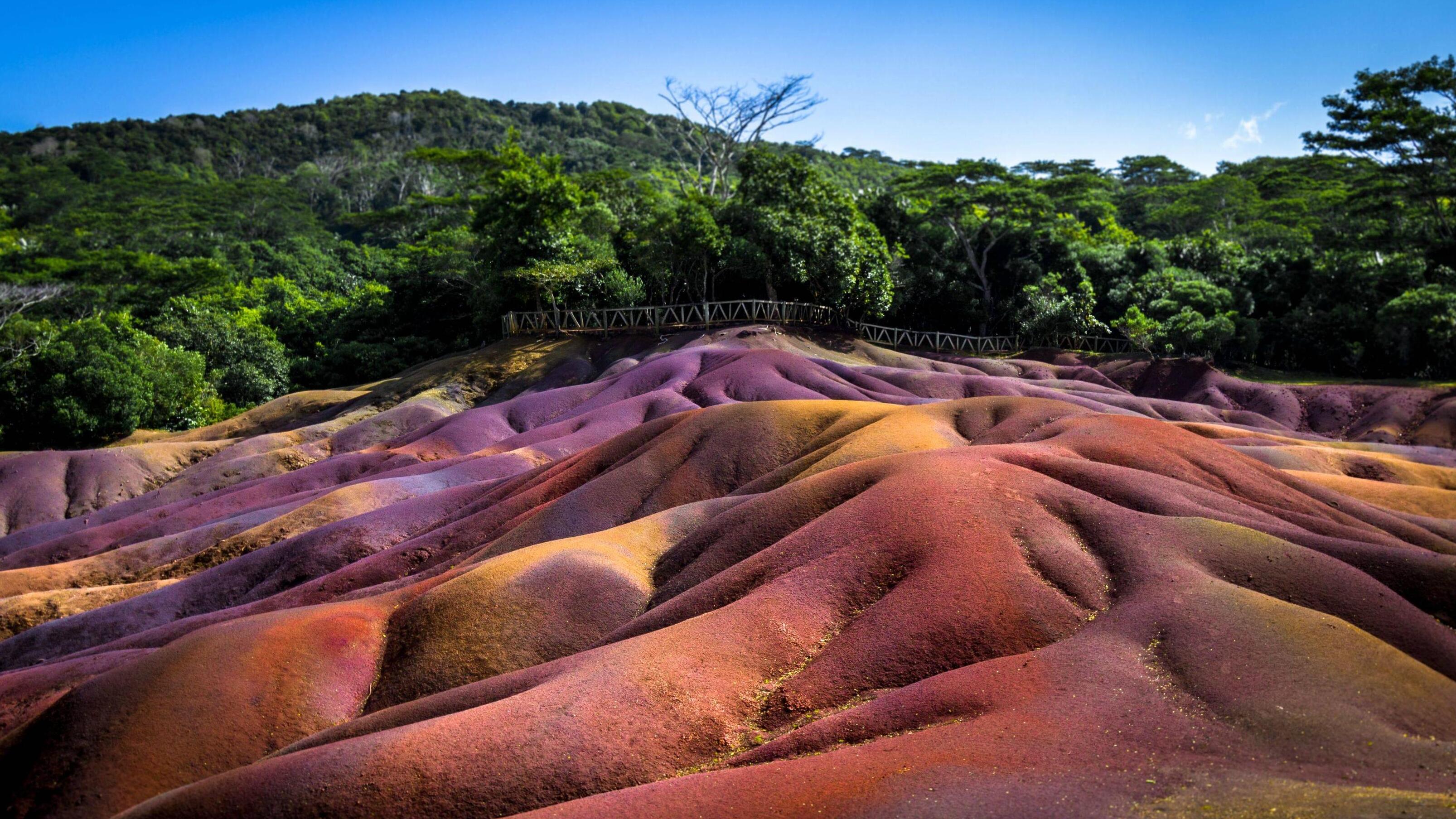
Nestled in the heart of Mauritius, the Seven-Coloured Earth is a breathtaking natural phenomenon that captivates visitors with its vibrant hues. This geological marvel, located near the village of Chamarel, showcases a palette of seven distinct colors—red, brown, violet, green, blue, purple, and yellow—resulting from the transformation of volcanic rock into clay minerals over time. Each shade is a testament to the island's rich geological history and the volcanic activity that shaped its landforms.
### History and Origins The story of the Seven-Coloured Earth begins with the island's volcanic activity, which dates back millions of years. The Mauritius we know today was formed by a series of volcanic eruptions, with the last major activity occurring around 2 million years ago. The unique colors of the dunes emerged as basaltic lava cooled and weathered into clay minerals, a process that continues to evolve. This area was relatively unknown until the late 20th century when it gained popularity among visitors and became a cherished part of Mauritian heritage.
### Art and Architecture While the Seven-Coloured Earth is primarily a natural attraction, its surrounding area reflects the rich cultural tapestry of Mauritius. The nearby Chamarel village features traditional Mauritian architecture, with colorful wooden houses and lush tropical gardens. The Chamarel Waterfall, cascading nearby, adds to the picturesque scenery, embodying the island's artistry in nature. The combination of vibrant landscapes and local craftsmanship creates a stunning backdrop that elevates the experience of visiting the dunes.
### Local Culture and Traditions The cultural significance of the Seven-Coloured Earth extends beyond its visual appeal. Locals celebrate their heritage through various festivals, including Divali, the Hindu festival of lights, where families illuminate their homes with oil lamps. The island's diverse culture is a blend of African, Indian, Chinese, and European influences, reflected in the warm hospitality of its people. Visitors may also encounter local customs, such as the traditional sega dance, which tells stories of Mauritian history and is often performed at festivals.
### Gastronomy No visit to the Seven-Coloured Earth would be complete without indulging in the local gastronomy. The area is known for its unique Mauritian dishes, such as dholl puri (a flatbread filled with ground split peas), gateaux piments (spicy lentil cakes), and the ever-popular rougaille, a spicy tomato-based stew. Pair your meal with a refreshing glass of alouda, a local drink made with milk, basil seeds, and agar-agar, or opt for a local rum, which is an integral part of Mauritian heritage.
### Lesser-Known Curiosities While many tourists flock to see the Seven-Coloured Earth, few know that the colors of the dunes can change slightly depending on the time of day and weather conditions. Early morning or late afternoon provides the best light for capturing the vibrant shades in photographs. Additionally, the site is home to several endemic plants and animals, some of which are unique to Mauritius and contribute to its ecological diversity. A visit to the nearby Chamarel Rhumerie, a rum distillery, offers a unique twist, showcasing the craftsmanship behind Mauritian rum, made from locally grown sugarcane.
### Practical Visitor Information The best time to visit the Seven-Coloured Earth is during the dry season, from May to December, when the weather is cooler and less humid. Arrive early in the morning to avoid crowds and enjoy the tranquility of the landscape. Be sure to wear comfortable shoes, as the terrain can be uneven. Look for informational plaques that provide insights into the geological processes and cultural significance of the area.
In conclusion, the Seven-Coloured Earth is not just a visual feast; it is a vibrant celebration of Mauritian culture, history, and nature. Whether you're captivated by its stunning colors, intrigued by its geological history, or enriched by the local traditions, this natural wonder promises an unforgettable experience. To plan your personalized itinerary and explore all that Mauritius has to offer, consider using the Secret World app for tailored suggestions.
