
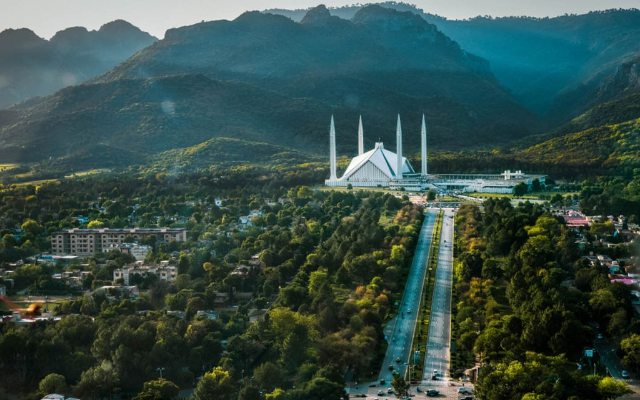

Shah Faisal Mosque in Islamabad is a remarkable example of modern architectural design blended with Islamic cultural heritage. Not only is it the largest mosque in Pakistan, but it also ranks as the fourth largest in the world. Located against the picturesque backdrop of the Margalla Hills, the mosque's unique structure is inspired by a Bedouin tent, distinguishing it from more traditional mosque designs.
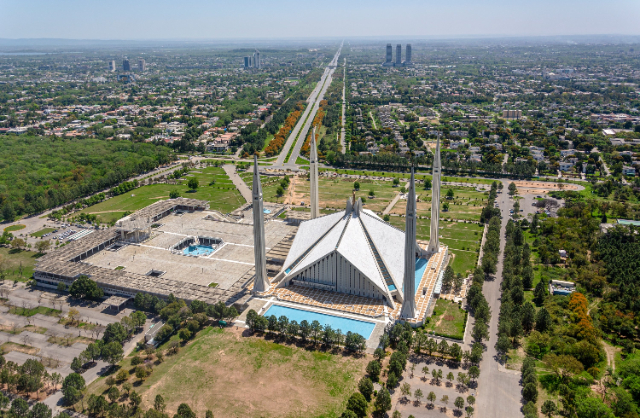
The mosque was designed by the Turkish architect Vedat Dalokay and was completed in 1986. Its distinct appearance comes from its eight-sided, shell-shaped roofs and the absence of a traditional dome, a common feature in Islamic architecture. Instead, the design incorporates four towering minarets, each standing 260 feet tall, which symbolize the innovative blend of traditional Islamic architecture with contemporary design.
The main prayer hall can accommodate up to 10,000 worshippers, with additional space in the surrounding grounds for over 200,000 people during significant events. This expansive capacity makes it not only a spiritual center but also a place for major community gatherings.
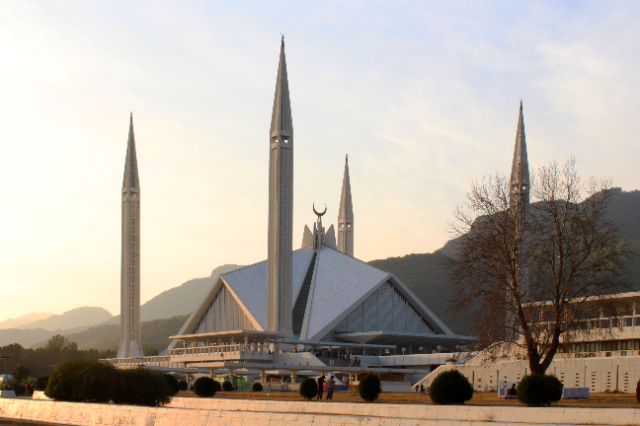
The mosque was named after King Faisal bin Abdul-Aziz of Saudi Arabia, who financed its construction as a gift to the people of Pakistan and a symbol of the friendship between the two nations. Today, Shah Faisal Mosque is not only a place of worship but also a major tourist attraction, reflecting Pakistan's rich Islamic heritage and its modern architectural pursuits. It embodies a blend of the cultural richness of the Islamic world with the forward-thinking vision of modern architecture.


