



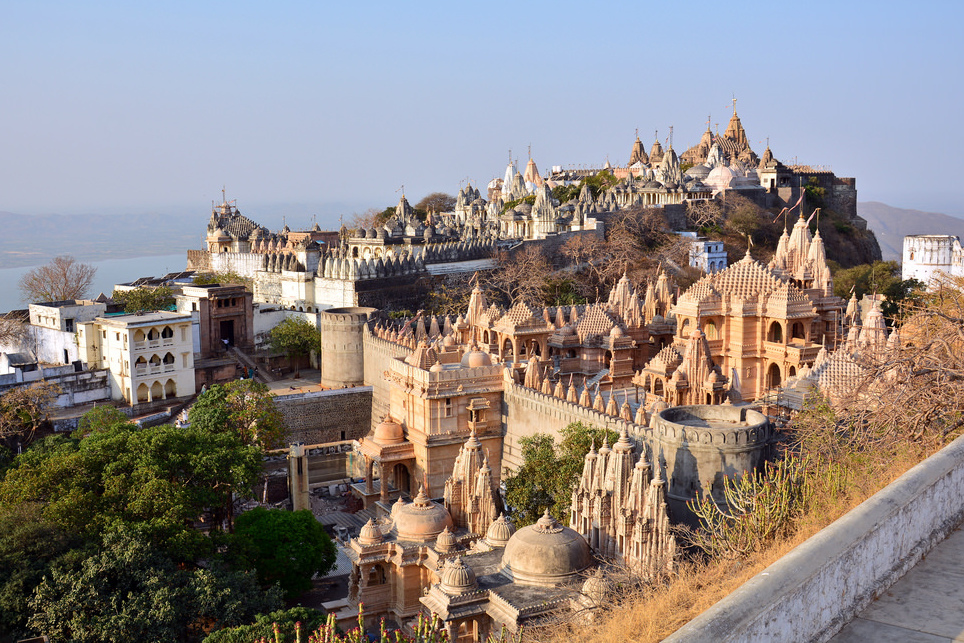
Perched majestically atop Shatrunjaya Hill, the temple complex of Palitana is a testament to the spiritual devotion and architectural brilliance of the Jain community. This sacred site, nestled in the Indian state of Gujarat, draws pilgrims and history enthusiasts alike, offering a glimpse into centuries of religious fervor and artistry. Climbing nearly 4,000 steps to reach these heights is a journey of both physical endurance and spiritual elevation.
The history of the Shatrunjaya Hill Temple is steeped in the annals of time, tracing back to the 11th century when the first temples were believed to be constructed. However, the region's significance predates these structures, with references in ancient Jain texts to Rishabhadeva, the first Tirthankara, who is said to have meditated here. Over the centuries, various dynasties, particularly the Solanki and Vaghela rulers, patronized the site, leading to the proliferation of over 800 shrines by the 16th century. Significant renovations and additions were made during the 19th century under the aegis of wealthy Jain merchants, who considered it an honor to contribute to the sanctity and splendor of this pivotal pilgrimage site.
The art and architecture of the Shatrunjaya Temple Complex are nothing short of breathtaking. The structures are a symphony in marble, each temple adorned with intricate carvings that tell stories of Jain deities, celestial beings, and mythical narratives. The architectural style is predominantly Nagara, characterized by its detailed spires and elaborate domes. The main temple dedicated to Rishabhadeva stands out with its ornate façade and intricate marble work. Each temple is a marvel, with mandapas (pillared halls) and garbhagrihas (sanctum sanctorums) that echo the chants of visiting devotees. The balance of symmetry and detail in these temples showcases the zenith of Jain craftsmanship.
The local culture around Shatrunjaya is deeply intertwined with Jain traditions. The town of Palitana itself transforms during the festival of Kartik Purnima, which falls in November, when thousands of pilgrims ascend the hill in a grand procession. This festival is marked by rituals, prayers, and a shared sense of community. The Jains strictly adhere to principles of non-violence and vegetarianism, which are reflected in their daily lives and interactions with the environment.
Gastronomy in Palitana is a delightful exploration of Jain culinary practices. The town offers a variety of vegetarian dishes that adhere to Jain dietary laws, which exclude root vegetables and emphasize seasonal produce. Local favorites include khichdi, a comforting rice and lentil dish, and undhiyu, a mixed vegetable curry that bursts with flavor. Refreshing drinks like chhaas (buttermilk) are popular, especially after the arduous climb to the temples.
Among the lesser-known curiosities of Shatrunjaya is the belief that no one, not even the priests, resides on the hill overnight, as it is considered a realm of the divine. The hill is believed to have 108 separate tirthas (sacred places), each with its own spiritual significance, adding layers of mystique and reverence. The view from the summit, offering a panoramic vista of the surrounding countryside, is said to be particularly enchanting at sunrise, casting a golden hue across the marble temples.
When planning a visit to Shatrunjaya, timing is crucial. The best months to explore the temple complex are between October and March, when the weather is cooler and more conducive to the climb. Visitors are advised to start their ascent early in the morning to avoid the midday sun. Comfortable footwear and ample water are essentials for the journey. As you climb, take moments to appreciate the detailed art and the serene ambiance that envelops the hill. Keep an eye out for the Adinath Temple, the most significant among the cluster, and the breathtaking artistry of the Chaumukh Temple.
A trip to Shatrunjaya Hill Temple is more than just a pilgrimage; it is an immersion into an ancient world where spirituality, history, and art converge in a setting that defies the passage of time. Here, atop a sacred hill, one can truly appreciate the depth and beauty of Jain heritage.
