


Thirty-two stone pillars emerge from the still water of the Zayandeh River, and beneath them, time seems to flow more slowly. The Si-o-se Pol — which in Persian literally means bridge of thirty-three arches — stretches for 295 meters across the river that runs through Esfahan, connecting the two banks with a rhythmic sequence of arches that reflect in the water like a perfect optical illusion. Walking on this bridge is not simply crossing it: it is immersing oneself in an architecture that has transformed an infrastructure into a place of daily life.

Built in the early 17th century, during the reign of Shah Abbas I of the Safavid dynasty, the bridge was completed around 1602 based on the design of the architect and general Allahverdi Khan, one of the most influential figures of the Safavid court. It is not just a simple viaduct: the Si-o-se Pol also functions as a regulatable dam, with a system of locks that allows control of the flow of the Zayandeh. This dual function — bridge and dam — makes it a masterpiece of hydraulic engineering of its time, still perfectly readable in its structure today.
An architecture to observe up close
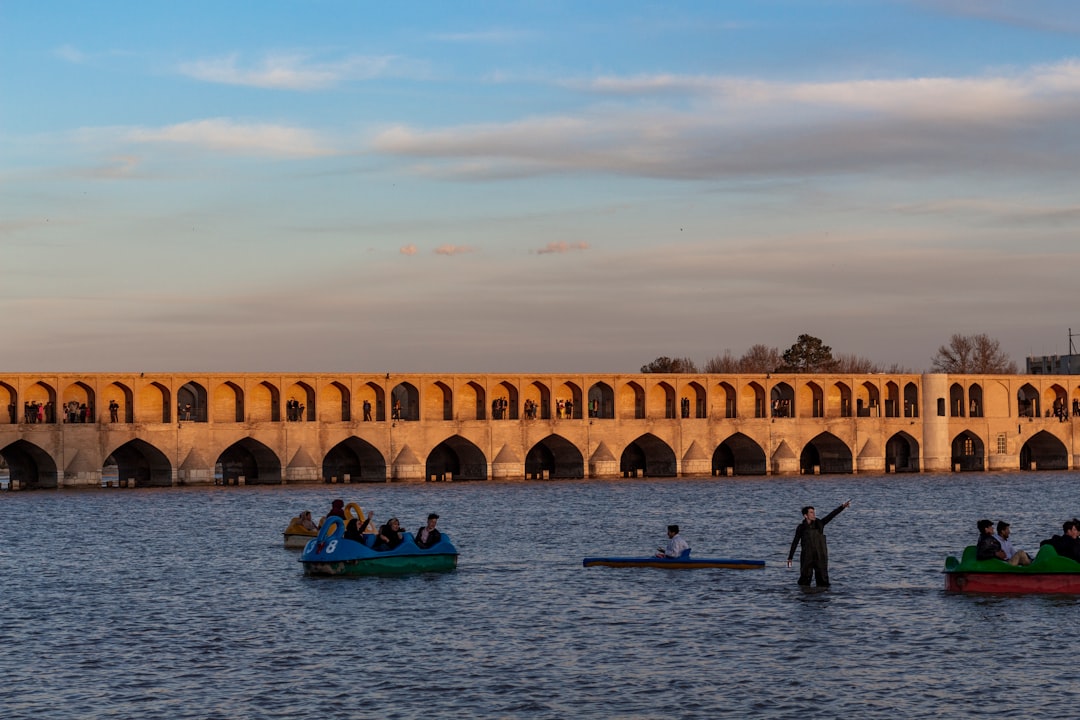
Approaching the bridge, the first thing that strikes is the almost obsessive symmetry of the arches. The 33 arches repeat over two overlapping levels, creating shaded galleries that run along the entire length of the structure. In the hottest hours, these corridors become a natural refuge: Iranian families sit on the steps, young people lean against the parapets, someone sings softly accompanied by a setar. The bridge is not a monument to admire from a distance — it is a lived space, and this vitality is an integral part of its beauty.
Descending to the lower level, one finds the spaces originally intended for tea rooms and meeting places, partially still in use today. The orange-ochre brick walls show the wear of the centuries, but also an impressive structural solidity. Observing the bottom of the river — when the Zayandeh has water, which in recent years has not always been guaranteed due to drought — one can see the bases of the pillars sinking into the current, built with a foundation technique that has withstood four hundred years of seasonal floods.

The sunset over the Zayandeh: a sensory experience
The best time to visit the Si-o-se Pol is in the late afternoon, about an hour before sunset. The slanting light of the Iranian sun transforms the bricks into ancient gold, and the arches cast long and precise shadows on the water below. At this moment, the bridge fills with residents who stroll, meet, and sit on the steps leading down to the river. It is not a scene designed for tourists: it is the daily life of Isfahan unfolding on a 17th-century stage.

On summer evenings, the Si-o-se Pol is artificially illuminated, and the reflection of the lights on the water creates a remarkable scenic effect. However, it is the natural light of the sunset that returns the true atmosphere of the place, the one that merchants and Safavid courtiers likely knew when they crossed the bridge centuries ago. Bring a camera, but also allow yourself a few minutes without a screen in front of your eyes.
How to get there and practical advice

The Si-o-se Pol is located in the center of Esfahan, reachable on foot from the grand bazaar and Naqsh-e Jahan Square in about twenty minutes. The entrance to the bridge is free and accessible at any time of the day, even at night. There is no entrance ticket to purchase. The minimum time for a satisfactory visit is about 45 minutes, but many visitors also stay for an hour and a half, especially if they want to explore both levels and sit in the lower galleries.
A practical warning: in recent years, the Zayandeh River has suffered from severe water shortages, and it is not uncommon to find the riverbed almost completely dry. This does not diminish the architectural value of the bridge, but it changes the visual experience. Before leaving, it is worth checking the seasonal conditions of the river. Avoid the central hours of the day in summer, when the heat can be intense and the flat light does not do justice to the stone. Dressing respectfully according to local customs is recommended, as throughout Iran.
The context of Esfahan: a city that amplifies the bridge
The Si-o-se Pol is not isolated: it is part of a city that under the Safavids became one of the most refined capitals of the Islamic world. A few kilometers away is the Khaju Bridge, also Safavid and also serving as a dam, but with more elaborate internal decorative paintings. Visiting both allows one to understand how the Safavid dynasty conceived public architecture: not as mere utility, but as an extension of the civil and cultural life of the city. Esfahan deserves at least three days, and the Si-o-se Pol is the place to understand why this city has remained in the memory of those who visited it.


