



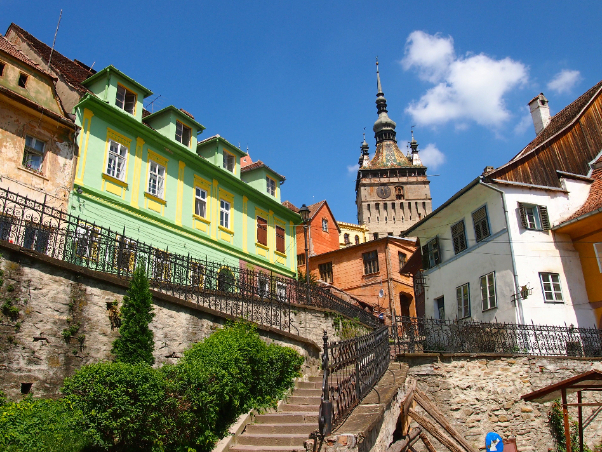
Nestled in the heart of Transylvania, the enchanting town of Sighisoara offers a captivating tapestry of history, culture, and architectural beauty. With a skyline punctuated by medieval towers and pastel-colored houses, Sighisoara is more than just the birthplace of the infamous Vlad the Impaler, better known as Count Dracula; it is a living testament to centuries of rich history and tradition.

History and Origins
Founded in the 12th century by German settlers known as the Saxons, Sighisoara emerged as a fortified town under the Hungarian Kingdom. These settlers were invited to defend the frontier, and their influence is evident in the town's layout and architecture. In 1280, the settlement was first mentioned as Castrum Sex, and by the 14th century, Sighisoara had blossomed into a prosperous trading center. Its significance was further cemented when it became a free royal city in 1510. The 15th century saw the birth of Vlad Tepes, or Vlad the Impaler, whose association with the Dracula legend draws visitors from around the globe. Yet, beyond the folklore, Sighisoara’s historical narrative is one of resilience and cultural fusion.

Art and Architecture
A stroll through Sighisoara is akin to stepping back in time. The town is one of the best-preserved medieval cities in Europe and a UNESCO World Heritage Site. Its architectural style is predominantly Gothic, with elements of Renaissance and Baroque. The iconic Clock Tower, dating back to the 14th century, is a masterpiece, adorned with colorful tiles and a mechanism that includes figures representing days of the week. The Church on the Hill, accessible via a covered wooden staircase known as the Schoolboys' Stairway, houses an impressive collection of ancient frescoes and a medieval crypt. Art lovers will appreciate the vibrant colors and intricate designs that reflect the town’s historic prosperity and cultural significance.
Local Culture and Traditions
Sighisoara is a hub of cultural traditions that have stood the test of time. The Medieval Festival, held annually at the end of July, transforms the town into a lively tapestry of music, dance, and medieval costumes. It is a grand celebration of the town’s heritage, attracting performers and artisans from across Europe. The Saxon influence is still palpable, with locals partaking in traditional crafts like pottery and weaving. The town also observes religious and seasonal festivals with fervor, offering visitors a glimpse into the customs that shape this community.
Gastronomy
A visit to Sighisoara is incomplete without sampling the local Transylvanian cuisine. The region's gastronomy is a delightful blend of Saxon, Hungarian, and Romanian influences. Traditional dishes such as mititei (grilled sausages) and sarmale (cabbage rolls) are local favorites, often accompanied by mămăligă (a creamy polenta). For dessert, indulge in papanasi, a delicious fried doughnut topped with sour cream and jam. Pair these culinary delights with palincă, a potent fruit brandy that warms the soul.
Lesser-known Curiosities
Beyond the well-trodden paths, Sighisoara harbors secrets that most tourists overlook. The town's cemetery, located near the Church on the Hill, offers a serene walk through history, with gravestones dating back to the 17th century. The Vlad Dracul House, where Vlad the Impaler was born, now functions as a restaurant, allowing guests to dine in a setting steeped in history. Additionally, the town hosts a unique collection of ironwork in the Museum of Weapons, showcasing the craftsmanship of local blacksmiths from centuries past.
Practical Visitor Information
To fully appreciate Sighisoara’s charm, plan your visit during the spring or early autumn when the weather is mild, and the landscape is in full bloom. The Medieval Festival in July is a highlight, though it draws large crowds. For a more tranquil experience, consider visiting in May or September. Wear comfortable shoes for exploring the cobblestone streets and be sure to climb the Clock Tower for panoramic views of the town and surrounding countryside. Engage with locals to learn about their stories, adding depth to your journey through this mesmerizing medieval gem.
Sighisoara is a destination that captivates with its blend of history, art, and enduring traditions. Whether you are drawn by the allure of Dracula or the promise of medieval enchantment, this Transylvanian town offers an unforgettable experience, rich in stories waiting to be discovered.
