


The water still flows today through the same stone channels built in the 5th century AD, bringing refreshment among the gardens that surround the rock of Sigiriya. This is not a romantic coincidence: it is hydraulic engineering of extraordinary precision, surviving over fifteen hundred years of monsoons, invasions, and abandonment. Walking along the tree-lined avenues that lead to the base of the rock, one has the concrete feeling of traversing a path designed with precise intention, not simply grown over time.

Sigiriya was built at the behest of King Kashyapa I, who reigned from 477 to 495 AD. After taking power under violent circumstances — according to historical chronicles, he had his father King Dhatusena walled up alive — he chose this granite rock, about 180 meters high, as the site for his fortress-palace. The gardens that surround it, laid out over an area of about 1.6 square kilometers, are considered by archaeologists to be among the oldest landscape gardens in the world still partially identifiable in their original structure.
A water system that defies the centuries
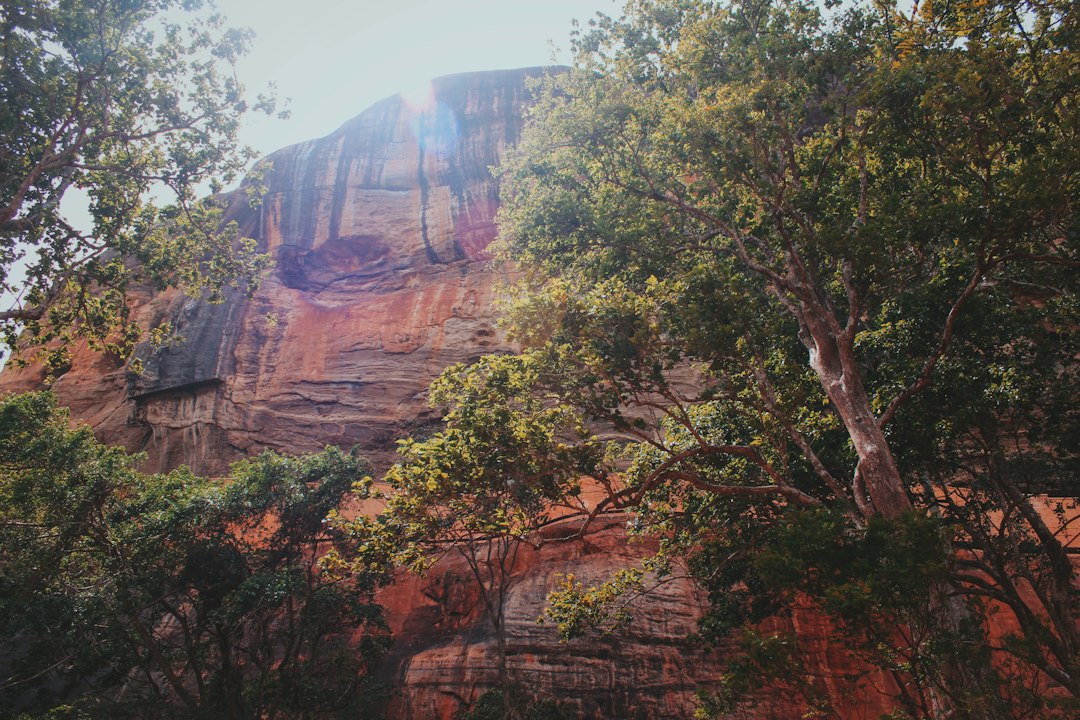
What strikes you the most, as you approach the site, are the symmetrical water basins arranged along the central axis of the main avenue. These pools, carved into the rock and lined with bricks, were fed by a system of underground and surface pipes that utilized the natural pressure of water collected from the slopes of the rock. During the rainy season, the mechanism still partially activates, making it visible to the attentive visitor how the original design functioned.
The water gardens of Sigiriya are divided into three main sections: the water gardens to the west, the rock gardens on the slopes of the rock, and the terraced gardens that ascend towards the summit. Each area has a different function — representative, agricultural, defensive — and their overall reading reveals a sophisticated urban planning that one would not expect from such a remote and ancient site.

The terraces and the rock garden
Ascending towards the base of the rock, one crosses the terraced gardens, where large granite boulders have been integrated into the landscape with an almost modern sensitivity. Some of these boulders have been carved to create seats, basins, or flat surfaces that likely served as spaces for meditation or representation. The inscriptions found on some of these rocks — part of the so-called Sigiri Graffiti, a collection of writings left by visitors between the 6th and 14th centuries — testify that the site was frequented and admired even after the abandonment of the royal palace.

Among the most fascinating physical details that the visitor can directly observe are the pressure fountains still functioning in the western water gardens: during the rainy season, water naturally rises through the stone jets without any mechanical mechanism, thanks to hydrostatic pressure. It is a rare and concrete spectacle, not a modern reconstruction.
The frescoes and the Lion

About halfway up the climb, protected by a natural cave, are the famous rock paintings of Sigiriya: female figures in still vibrant colors, painted with mineral pigments that have withstood the tropical humidity for fifteen centuries. The exact number of original figures is debated, but today about twenty are visible. The painting technique, which uses a base of lime and clay, is comparable to the contemporary frescoes of southern India.
A little higher up, the famous Lion's Gate — from which the site takes its popular name of Lion Rock — still shows the front paws of a colossal lion carved into the rock, which once formed the monumental entrance to the final stretch of the staircase. The head and body of the lion have been lost over the centuries, but the remaining paws still give an idea of the imposing scale of the original work.
Practical tips for the visit
The most useful advice is to arrive at the opening of the site, around 7:00 in the morning. The climb to the summit takes about 45 minutes under normal conditions, but with the afternoon heat and the crowd of organized groups, it becomes significantly more tiring and less enjoyable. The entrance ticket for foreign visitors is around 30 US dollars — one of the highest fees in Sri Lanka — and includes access to all levels of the site. Bringing enough water is essential: refreshment points are limited at the entrance. Those who suffer from vertigo should know that some sections of the climb involve exposed metal stairs and narrow passages along the vertical rock wall.
Spending at least three hours on the visit allows for a calm exploration of both the gardens at the lower level — often overlooked by hurried tourists — and the summit with the remains of the royal palace. The water gardens deserve a long stop: it is in those quiet avenues, between the reflecting pools and the stone channels, that one can best perceive the original vision of Kashyapa I.


