
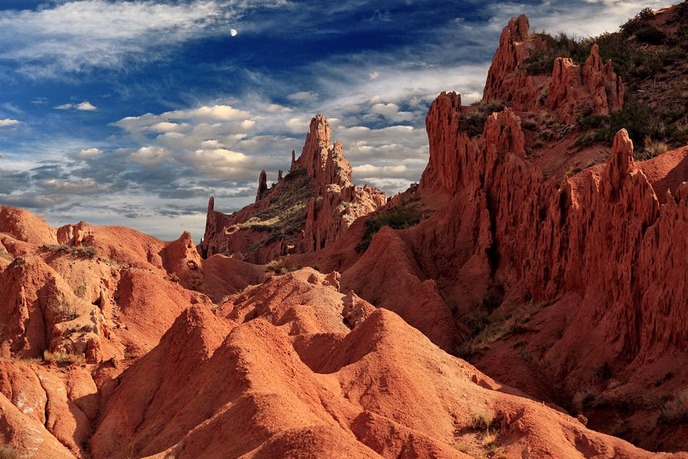

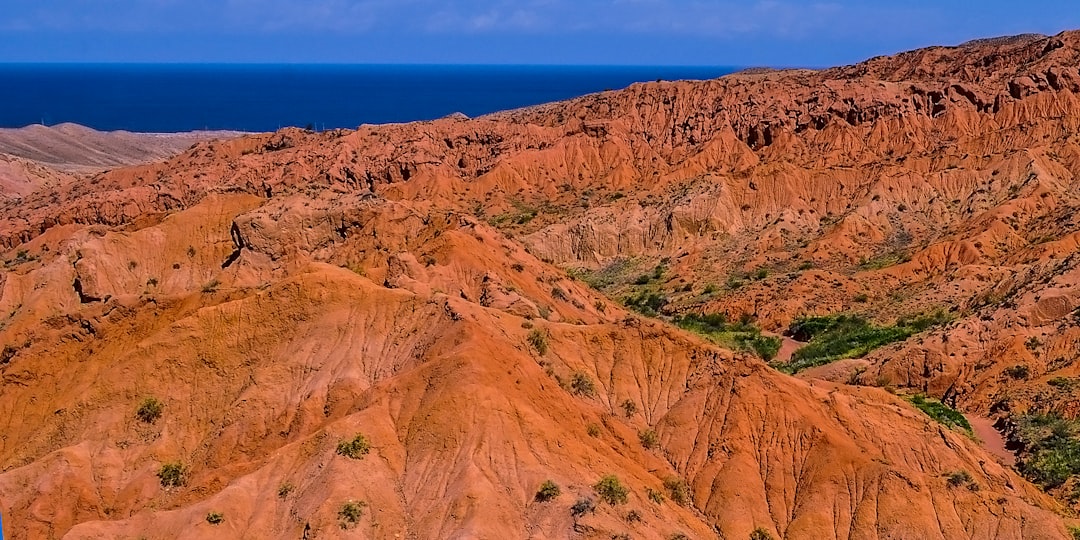
Nestled in the rugged landscapes of Kyrgyzstan, Skazka Canyon, or Fairy Tale Canyon, beckons travelers with its surreal beauty and intricate geological formations. Located near the southern shore of Issyk-Kul Lake, this enchanting destination is a testament to the natural artistry of erosion and time, where each twist and turn reveals a new spectacle in shades of red, orange, and yellow.
The history of Skazka Canyon is woven into the broader tapestry of Central Asian geography. The Tien Shan Mountains, of which the canyon is a part, have been a cradle of human and natural history for millennia. While the canyon itself does not boast human-made historical structures, it stands as a silent observer of the countless caravans that once traversed the Silk Road. This ancient trade route facilitated cultural exchanges between East and West, leaving an indelible mark on the region's character and heritage.
Architecturally, Skazka Canyon is a masterpiece sculpted by nature rather than human hands. The canyon's formations, some resembling animals, towers, and castles, inspire awe and spark imagination. These natural sculptures, created by the forces of wind and water eroding the soft sandstone over millions of years, offer a unique backdrop that rivals the most elaborate man-made creations. The colors of the canyon shift with the changing sun, offering a living canvas that photographers and nature enthusiasts find irresistible.
The local culture around Skazka Canyon is deeply tied to the nomadic traditions of the Kyrgyz people. While the canyon itself is not a site of cultural festivals, its proximity to villages where age-old customs are preserved allows visitors to experience authentic Kyrgyz hospitality. Traditional yurts dot the landscape, offering a glimpse into a way of life that has remained relatively unchanged for centuries. Visitors may encounter the Kyrgyz horse games, a thrilling spectacle of equestrian skill that reflects the nomadic spirit.
Gastronomy in the region is as rich and varied as the landscape. Visitors to the area can savor dishes such as beshbarmak, the national dish of Kyrgyzstan, which consists of boiled meat served over homemade noodles. Another local favorite is laghman, a hand-pulled noodle dish with a spicy meat sauce. Refreshing drinks like kymyz, a fermented mare's milk, offer a taste of the traditional diet that has sustained the Kyrgyz people for generations.
Among the lesser-known curiosities of Skazka Canyon is the story of its name. "Skazka" means "fairy tale" in Russian, a nod to the whimsical shapes that seem to leap from the pages of folklore. The canyon’s formations have inspired countless legends and tales passed down through generations. Locals often share stories of how the rocks came to be, weaving narratives that blend myth and reality. The canyon's hidden nooks and crannies also house a surprising diversity of flora, which somehow thrive in this arid environment, adding splashes of green to the vibrant earth tones.
For those planning a visit, the best time to explore Skazka Canyon is between May and October, when the weather is mild and the skies are clear. The chill that sets in during the winter months can make travel challenging, especially in the high-altitude regions surrounding the canyon. To fully experience the canyon, it’s advisable to wear sturdy walking shoes and bring plenty of water, as the terrain can be rugged and the sun intense.
A visit to Skazka Canyon is not just about admiring its physical beauty but also about immersing oneself in the profound silence that envelops the landscape. As you wander through its labyrinthine paths, listening to the whispers of the wind through the rocks, you begin to understand why this place is called the Fairy Tale Canyon. Each vista, each shadow cast by the setting sun, tells a story that transcends time and invites you to become a part of its eternal narrative.


