



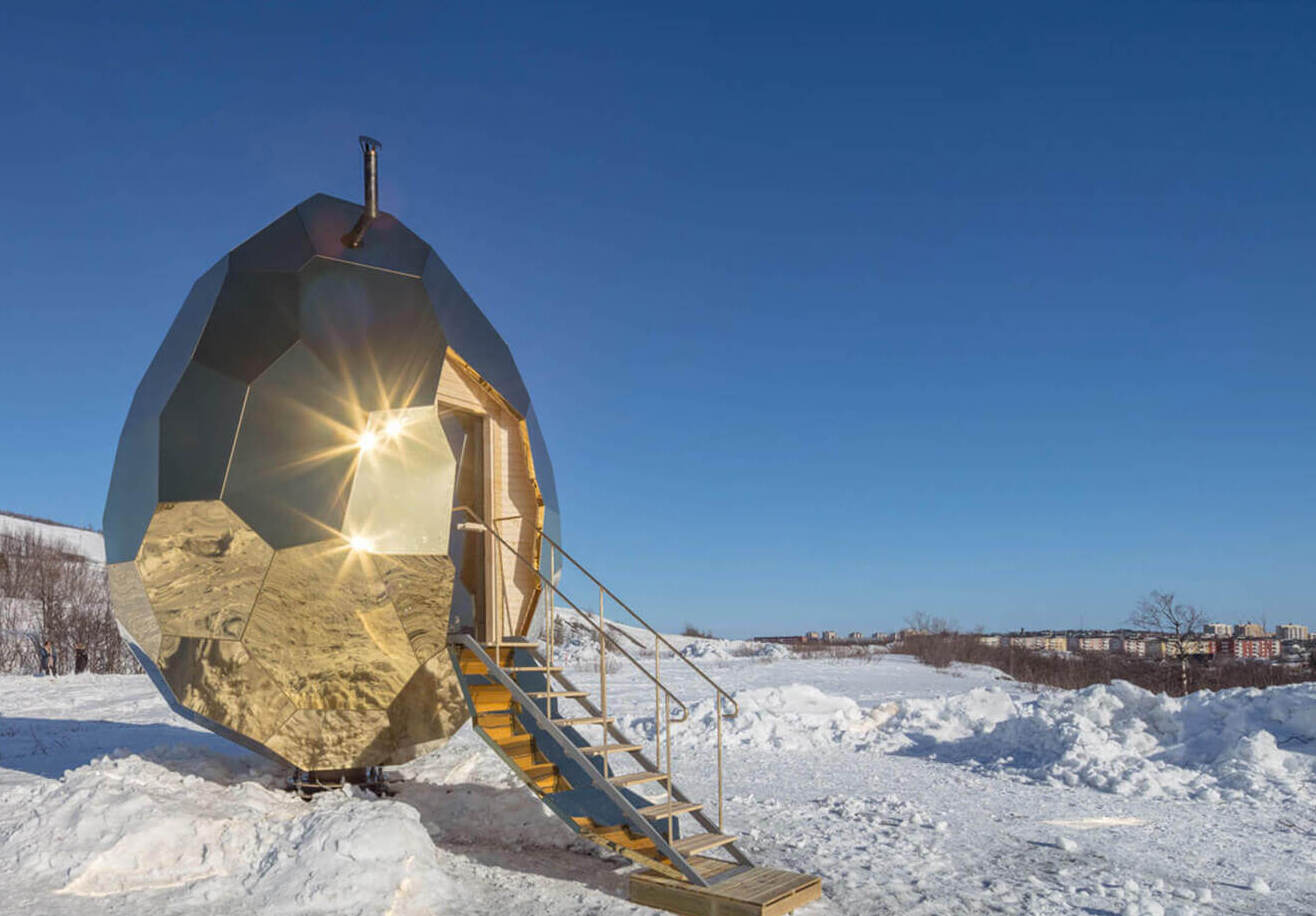
In the heart of Kiruna, Sweden's northernmost town, a striking architectural marvel stands as a testament to resilience and transformation: the Solar Egg. This egg-shaped sauna, designed by the innovative architects Bigert & Bergström, embodies the spirit of a town at a crossroads, reflecting both its rich heritage and its uncertain future.
### History and Origins
Founded in 1900, Kiruna's history is intricately tied to the iron ore mining industry, which has been the lifeblood of the town for over a century. The discovery of rich iron deposits led to an influx of miners and their families, transforming a small settlement into a bustling town. However, as the years rolled on, the very foundation of Kiruna began to crack—quite literally. The Luossavaara-Kiirunavaara AB (LKAB) mine, the world's largest underground iron ore mine, created subsidence issues, threatening the structural integrity of the town.
In the early 2000s, it became clear that Kiruna would need to relocate to ensure the safety of its residents and the continuity of its mining operations. This monumental decision, which involved moving entire neighborhoods, has made Kiruna a unique case study in urban planning and community resilience. The Solar Egg symbolizes this rebirth, offering a space for reflection and community bonding amidst the upheaval.
### Art and Architecture
Crafted from stainless steel, the Solar Egg is not just a sauna; it is a sculptural representation of rebirth and nurture. The egg's golden mirror surface reflects the surrounding landscapes, including the enchanting Lapland wilderness, seamlessly blending art with nature.
Inside, the sauna boasts a traditional wooden interior, exuding warmth and comfort. The centerpiece—a heart-shaped stove, designed to echo the town’s deep ties to its community—provides the heat necessary for a quintessential sauna experience. This architectural piece is significant not only for its aesthetic appeal but also for its ability to foster connections among those who gather within its warm embrace.
### Local Culture and Traditions
Kiruna's culture is deeply rooted in both Sami traditions and Swedish customs. The Sami people, the indigenous inhabitants of the region, have significantly influenced local customs, particularly in relation to nature and sustainability. The Kiruna Market, held annually, showcases Sami arts, crafts, and traditional foods, inviting both locals and visitors to experience this vibrant culture.
In the winter, Kiruna hosts the Kiruna Snow Festival, where the town transforms into a winter wonderland, featuring ice sculpting competitions and traditional Swedish music performances. This festival celebrates not only the beauty of winter but also the spirit of community, bringing together residents and tourists alike.
### Gastronomy
The culinary scene in Kiruna reflects its northern location and the influence of Sami culture. Visitors can indulge in traditional dishes such as reindeer stew, often served with creamy mashed potatoes and lingonberry sauce. Another local favorite is smoked fish, particularly salmon, which showcases the region's bountiful waters.
For those with a sweet tooth, cloudberry jam is a must-try. This distinctive berry, native to the region, is often used as a topping for traditional Swedish pancakes or served with vanilla ice cream. Pair your meal with Swedish glögg, a spiced mulled wine, perfect for warming up after a day in the snowy landscapes.
### Lesser-known Curiosities
While the Solar Egg is a highlight, there are numerous hidden gems in Kiruna. Few know that the Kiruna Church, completed in 1912, is one of Sweden's largest wooden buildings and is often referred to as the "most beautiful church in Sweden." Its striking architecture, resembling a traditional Sami tent, is a testament to the town's cultural heritage.
Another intriguing fact is that Kiruna is home to the Esrange Space Center, one of Europe’s leading spaceports. This facility conducts rocket launches and scientific research, connecting Kiruna to the cosmos in a way few other towns can claim.
### Practical Visitor Information
The best time to visit Kiruna is during the winter months, from December to March, when the town is blanketed in snow, and visitors can enjoy activities such as dog sledding and viewing the mesmerizing Northern Lights. Summer, with its midnight sun, offers a different allure, perfect for hiking and exploring the surrounding nature.
When visiting the Solar Egg, be sure to bring a towel and enjoy the traditional sauna experience. Reservations are recommended, especially during peak tourist seasons. As you soak in the warmth and beauty of this remarkable structure, take a moment to reflect on the history and resilience of Kiruna itself.
Whether you're drawn by the architecture, the culture, or the stunning natural beauty, Kiruna promises an unforgettable journey. For a personalized itinerary tailored to your interests, consider using the Secret World app to plan your adventure.
