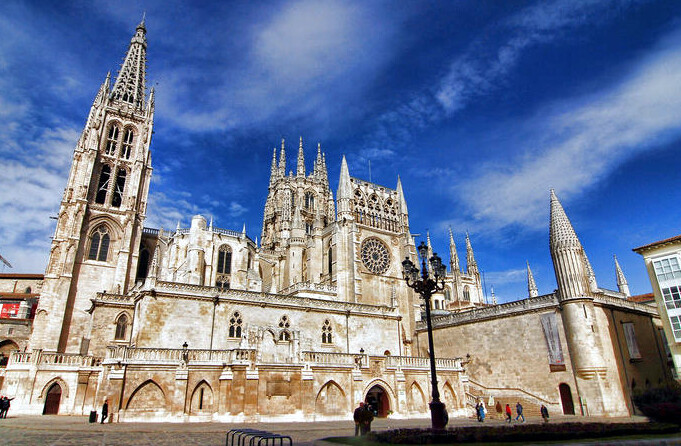

Majestically rising against the skyline of Burgos, the Burgos Cathedral is an emblem of Gothic architecture and historical significance in Spain. This majestic structure, officially known as Catedral de Santa María, is a testament to centuries of dedication and artistry, making it one of the most important religious buildings in the country.
### History and Origins The roots of the Burgos Cathedral trace back to the early 13th century, specifically around 1221, when King Ferdinand III of Castile commissioned its construction. This ambitious project aimed to replace the older Romanesque cathedral that had stood at the site since the 11th century. The cathedral's design reflects the Gothic style, which was sweeping through Europe at the time, emphasizing height and light through vast stained-glass windows.
The construction was not linear. After a significant hiatus of nearly two centuries, it resumed in 1473 under the guidance of architects Juan de Colonia and later his son Simón de Colonia, who introduced the stunning nave and transept. The cathedral was finally consecrated in 1567, although various modifications continued well into the 17th century.
### Art and Architecture The Burgos Cathedral is celebrated for its remarkable Gothic architecture, characterized by soaring spires, intricate facades, and an expansive interior bathed in colored light from its stained-glass windows. The cathedral's most striking feature is its twin towers, which reach a height of 82 meters, dominating the skyline and symbolizing the city’s spiritual aspirations.
Inside, visitors can marvel at the Capilla del Condestable, adorned with exquisite Renaissance decorations and the tomb of Constable of Castile, Iñigo López de Mendoza, and his wife. The high altar, crafted in the Baroque style, is another highlight, showcasing the artistic evolution from Gothic to Baroque within the cathedral's walls. The retablo, an elaborate altarpiece, is an assembly of wood and gold that captivates visitors with its intricate details and religious significance.
### Local Culture and Traditions The Burgos Cathedral is not merely a historical monument; it is a vibrant part of the local culture. The annual Fiestas de la Virgen de Burgos, celebrated in September, sees locals and visitors alike participating in religious processions that honor the city's patron saint, the Virgin Mary. This festival features traditional music, dance, and the sharing of local delicacies, reinforcing community ties and cultural heritage.
Moreover, the cathedral serves as a backdrop for various local traditions, including the annual celebration of Holy Week, during which solemn processions wind their way through the streets, reflecting the deep-rooted Catholic traditions of the region.
### Gastronomy No visit to Burgos would be complete without indulging in its culinary offerings. The region is famous for its morcilla de Burgos, a blood sausage made with rice and spices that has gained recognition beyond Spain. Pair it with a local tinto de verano—a refreshing wine cocktail for a true taste of Burgos.
The area is also renowned for its queso de Burgos, a fresh cheese that is often served with honey or incorporated into various dishes. Don’t miss the opportunity to try the lentejas de La Bañeza, lentils that are celebrated for their unique flavor and are often featured in local stews.
### Lesser-Known Curiosities Despite its grandeur, the Burgos Cathedral houses several lesser-known treasures. One such gem is the Cloister of the Cathedral, a serene space filled with intricate stone carvings that depict biblical stories and local flora. Visitors often overlook this peaceful haven, which offers a moment of reflection away from the bustling tourist spots.
Additionally, the cathedral is home to a curious legend about the Cruz de la Muerte, or the Cross of Death, which supposedly marks the spot where the faithful would pray for the souls of the deceased. Many locals still visit this sacred spot, believing it brings peace to the departed.
### Practical Visitor Information The best time to visit the Burgos Cathedral is from April to June and September to November, when the weather is pleasant, and tourist crowds are manageable. Arriving early in the morning or later in the afternoon can also help you avoid the busiest times.
When visiting, don’t forget to look for the stained-glass windows that narrate biblical stories and the organ, one of the largest in Spain, which often hosts concerts. A guided tour can provide deeper insights, often uncovering stories and details that might be missed otherwise.
In conclusion, the Burgos Cathedral stands as a monument to historical resilience, artistic brilliance, and cultural significance. With its breathtaking architecture and rich traditions, a visit here promises to be an unforgettable experience. For a personalized itinerary that captures the essence of Burgos, consider using the Secret World app to explore this enchanting city.
