


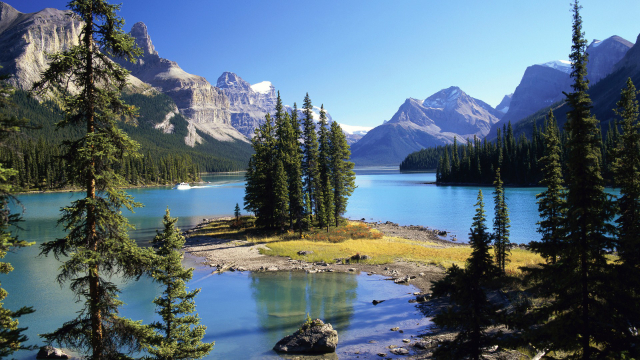
Nestled amidst the dramatic natural beauty of Jasper National Park in Alberta, Canada, Spirit Island is a serene oasis that evokes a profound sense of wonder and reverence. This tiny tied island, located in the turquoise expanse of Maligne Lake, is a symbol of the pristine wilderness that defines the Canadian Rockies. As one embarks on the journey to reach this secluded spot, the ethereal landscape reveals a tapestry of history, culture, and natural splendor.
The origins of Spirit Island are steeped in Indigenous lore. The island holds a sacred place in the hearts of the Stoney Nakoda First Nation, who have inhabited the region for centuries. They regard the island as a spiritual site, integral to their cultural narratives and traditions. Historically, Maligne Lake and its surroundings were used as hunting grounds and sites for spiritual ceremonies. The name "Maligne" itself, meaning "wicked" or "bad" in French, was given by early European explorers, perhaps referring to the turbulent waters or challenging terrain they encountered.
Architecturally, Spirit Island is not defined by human structures but by its majestic natural form. The island is adorned with a cluster of trees that stand against the backdrop of snow-capped peaks and clear blue waters. This picturesque scene has inspired countless artists and photographers, most famously Peter Gales, whose iconic photograph of the island in the 1960s brought it global recognition. The landscape itself, with its towering peaks and crystal-clear lake, serves as a living canvas, ever-changing with the seasons and light.
The cultural significance of Spirit Island extends beyond its Indigenous roots. It has become a symbol of the untouched beauty of Jasper National Park, a UNESCO World Heritage Site. Visitors are often struck by the quietude and spiritual resonance of the place, which contrasts sharply with the bustling tourism of Jasper townsite. The island holds no festivals or human-made cultural events; instead, its culture is one of respect for the land and the stories it holds.
While Spirit Island does not have a cuisine of its own, the region around Jasper offers a taste of traditional Canadian flavors. Local eateries often serve dishes featuring game meats like elk and bison, as well as the fresh fish from the surrounding lakes. Poutine, a Canadian classic made with fries, cheese curds, and gravy, is a must-try for visitors. For those looking to warm up after a day exploring, a hot cup of Canadian maple syrup tea provides a comforting taste of local tradition.
One lesser-known curiosity about Spirit Island is its inaccessibility by road. The island is located 14 kilometers from the docks of Maligne Lake, accessible only by boat tour or kayak. This remoteness adds to its allure, making the journey part of the experience. Despite its fame, many visitors are surprised to learn that the island is not open for disembarkation; instead, boats pull up for a short viewing, allowing the island to maintain its untouched beauty.
For those planning to visit, the best time to experience Spirit Island is between June and September when the weather is mild and the lake is navigable. Early mornings offer a chance to see the island bathed in the soft light of dawn, while late afternoons provide dramatic shadow play on the surrounding mountains. Visitors should dress in layers, as weather in the Rockies can change quickly. Bringing a camera is essential, as the vistas are nothing short of spectacular.
Spirit Island is more than just a photographic icon; it is a place that embodies the spirit of the wilderness and the enduring stories of those who have called this land home. Its beauty is timeless, inviting travelers to pause, reflect, and connect with the natural world in its most pristine form.
