
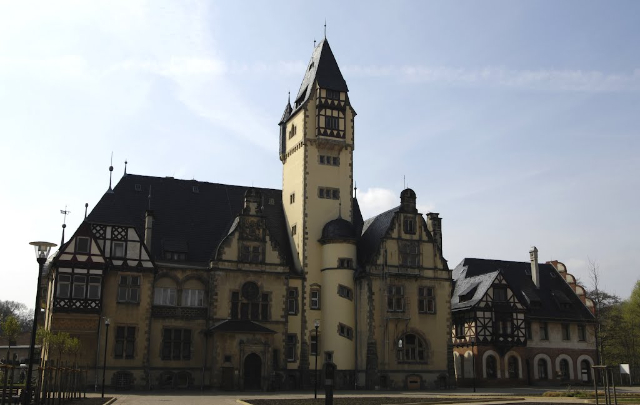

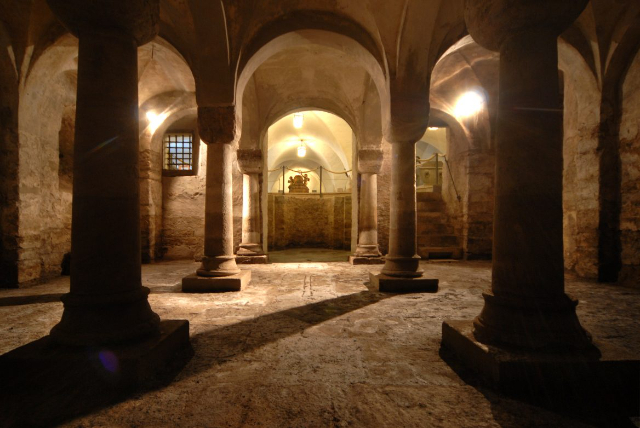
St. Wiperti is a church dedicated to St. Wigbert and St. James. It is considered an architectural masterpiece of the Romanesque, and the church and the crypt testify to its important past as the royal court of the Saxon-Ottonian ruling dynasty. The Church with its over 1000-year-old crypt is one of the last remains of this important Ottonian dominion. For Henry I (919-936) and his son Otto I the Great (936-973), Quedlinburg was the place where they celebrated Eastern most often. In Quedlinburg it was again the area in and around Church St. Wiperti, where they resided. Later on, a free canonical convent was built on this square, which was converted into a premonstratensian monastery in the 12th century. After the Reformation, which led to the dissolution of the monastery, the church was used as a Protestant parish church until the 19th century. It was then turned into a barn and later abused by the SS.
In the 1950s it was restored as a church and since then it has been used as a Catholic parish church in the summer months.


