
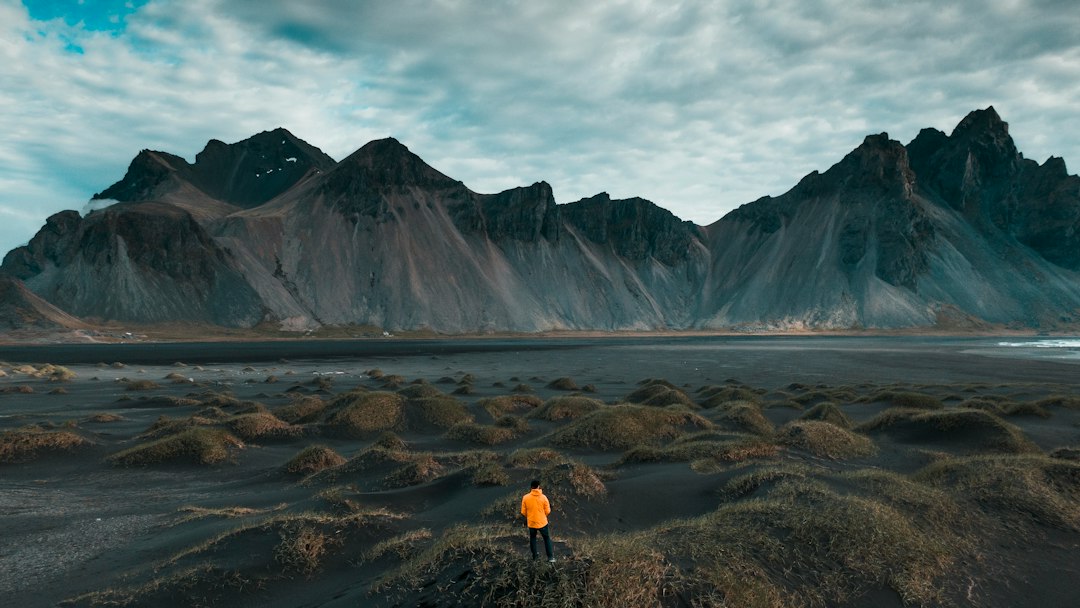

The sand is so dark that it seems to absorb light. At Stokksnes, on the southeastern coast of Iceland, the volcanic black stretches for kilometers along the Atlantic shore, while behind it rise the jagged spires of Vestrahorn, a massif of gabbro and granite that reaches 454 meters in height. It is a landscape that is not easily forgotten: the combination of the pointed mountain and the expanse of dark sand creates an almost alien scenery, far from the more beaten tourist circuits of the island.
Stokksnes is located a few kilometers from Höfn, a small fishing town in southeastern Iceland, along the famous Ring Road. Despite its relatively accessible location, the beach remains less frequented compared to other iconic destinations like Reynisfjara or the Jökulsárlón lagoon. The reason is simple: to access it, one must cross a private stretch owned by a local farm, the Viking Café, where an entrance fee of about 700 Icelandic crowns per person is charged. A small barrier that discourages hasty passersby but, in fact, preserves the integrity of the place.
The colors of the water and sand
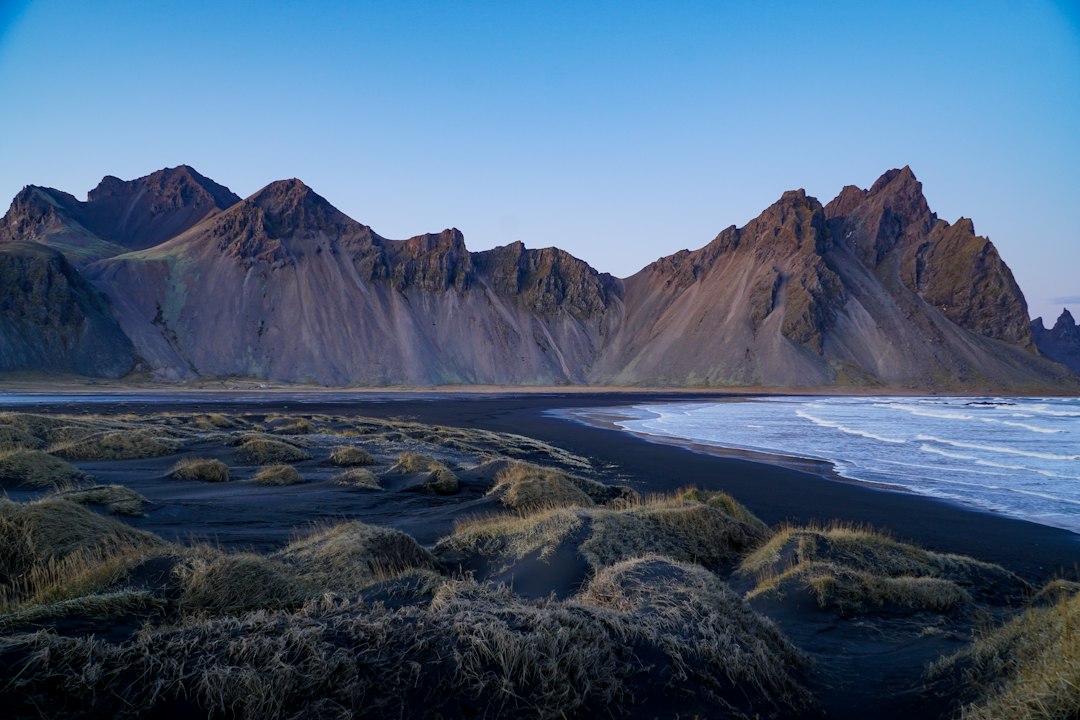
The ocean that laps at Stokksnes has nothing of the Caribbean transparency. The waters of the northern Atlantic here take on shades that range from steel gray to dark green, almost emerald on days with partially cloudy skies, with silvery reflections when the low sun filters through the clouds. The waves come in force, often high and unpredictable, bringing with them white foam that sharply contrasts with the black of the shore.
The volcanic sand of Stokksnes has a particular texture: it is fine but heavy, compact underfoot, and leaves a thin dark patina on the fingers. Walking along the shoreline, one notices small fragments of lava rock smoothed by the action of the sea, mixed with shells and seaweed. On windy days — frequent in this part of Iceland — the sand rises in low clouds that create an almost cinematic effect, especially with Vestrahorn in the background.
The unique atmosphere of the place
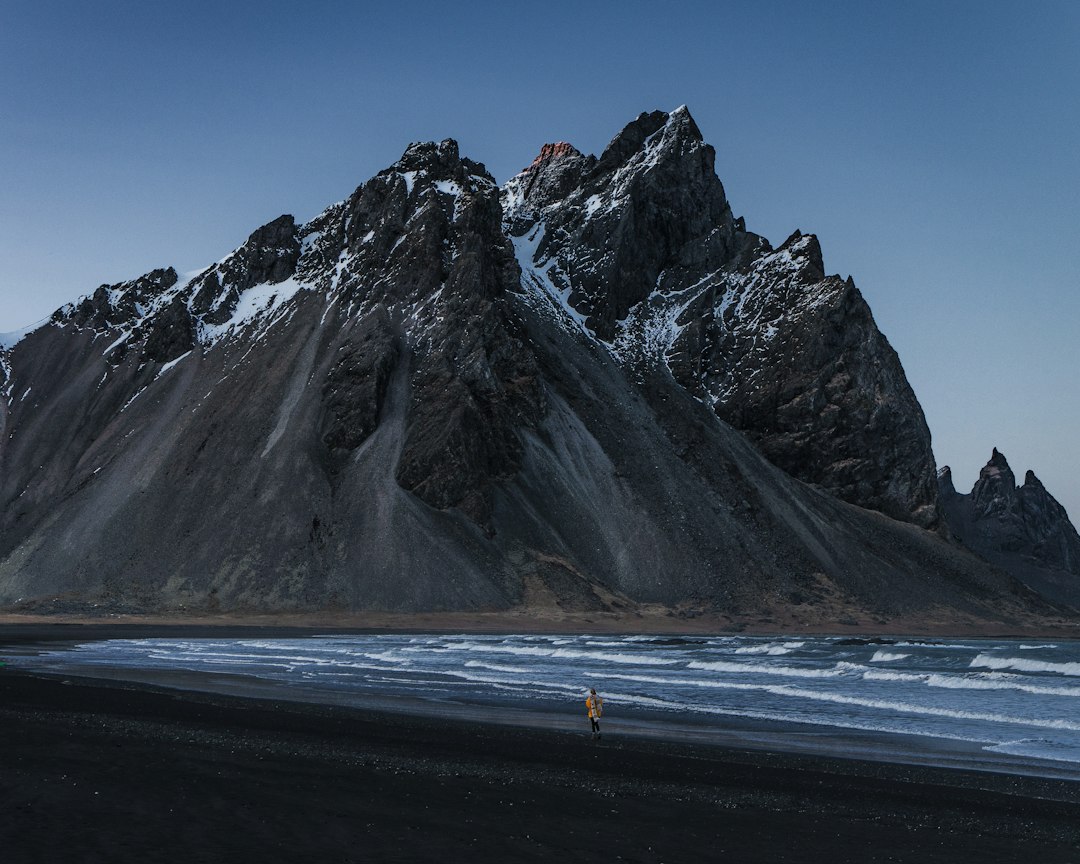
There is something suspended in the air at Stokksnes. The silence, interrupted only by the wind and the sound of the waves, is a physical presence. The beach is long and open, without artificial structures interrupting the view. In spring and autumn, when the Icelandic light is slanting even at midday, the shadows cast by the rocks and the black sand dunes create geometries that change from hour to hour.
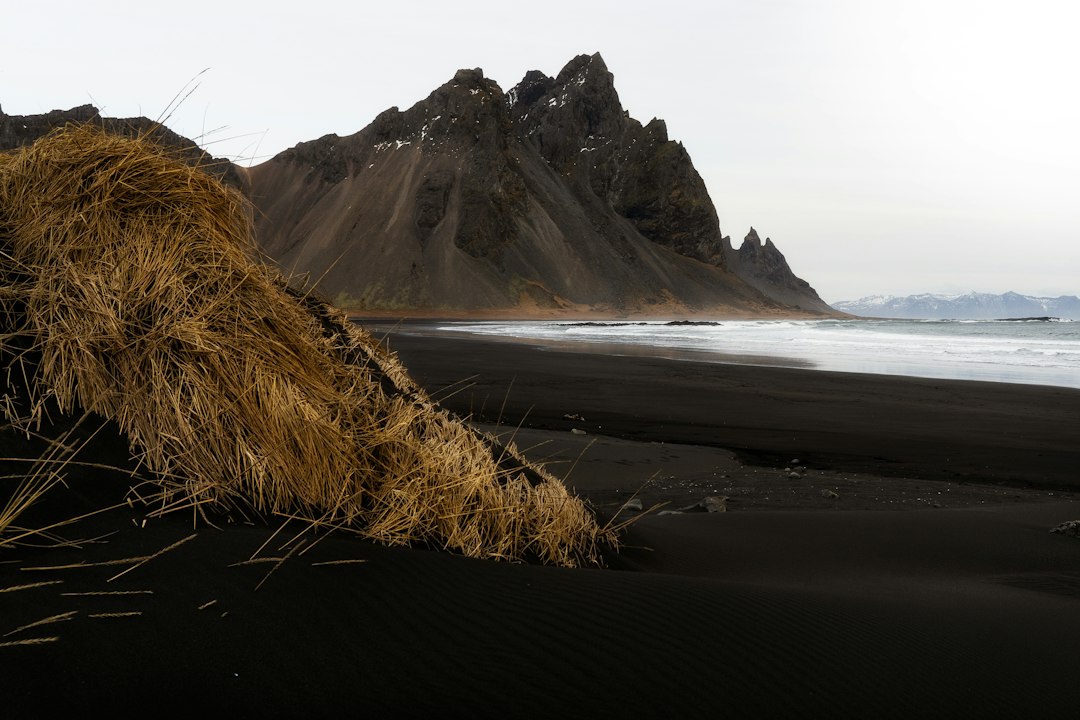
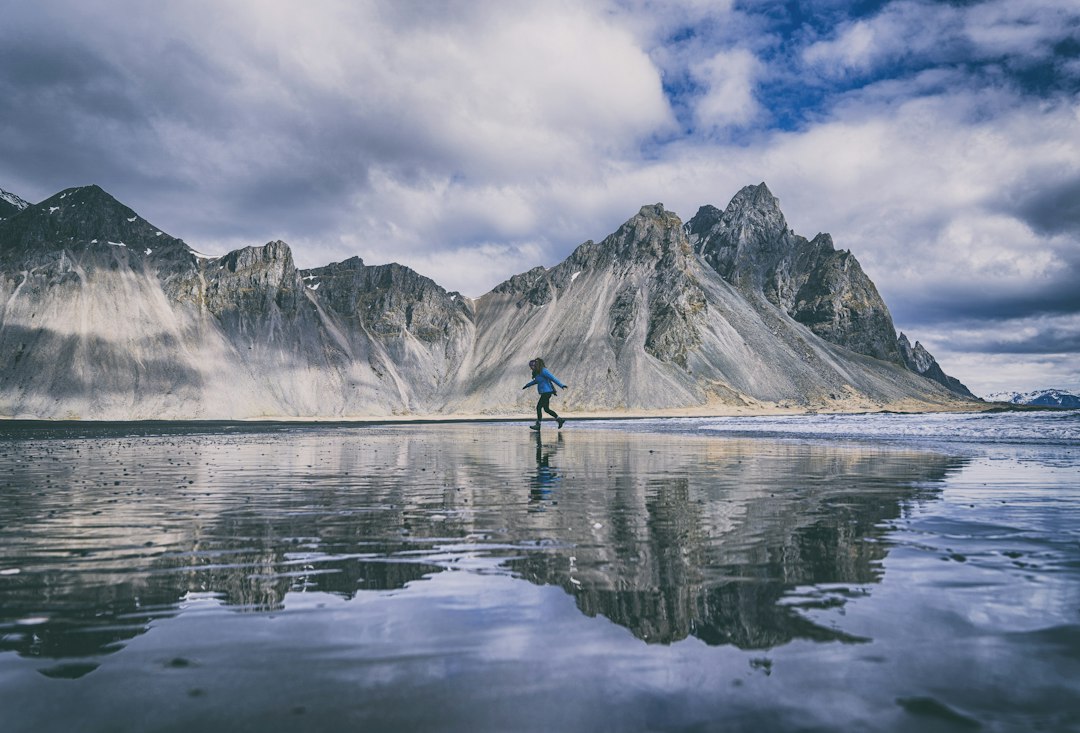
The Vestrahorn dominates the scene with an almost overwhelming presence in the best sense of the term. Its dark, vertical rock walls are reflected in the pools of water that form on the beach during low tide, creating a mirror effect highly sought after by landscape photographers. It is no coincidence that Stokksnes is considered one of the most appreciated photographic locations in all of Iceland, frequented by professionals who spend entire nights there during the season of perpetual light.
How to organize the visit
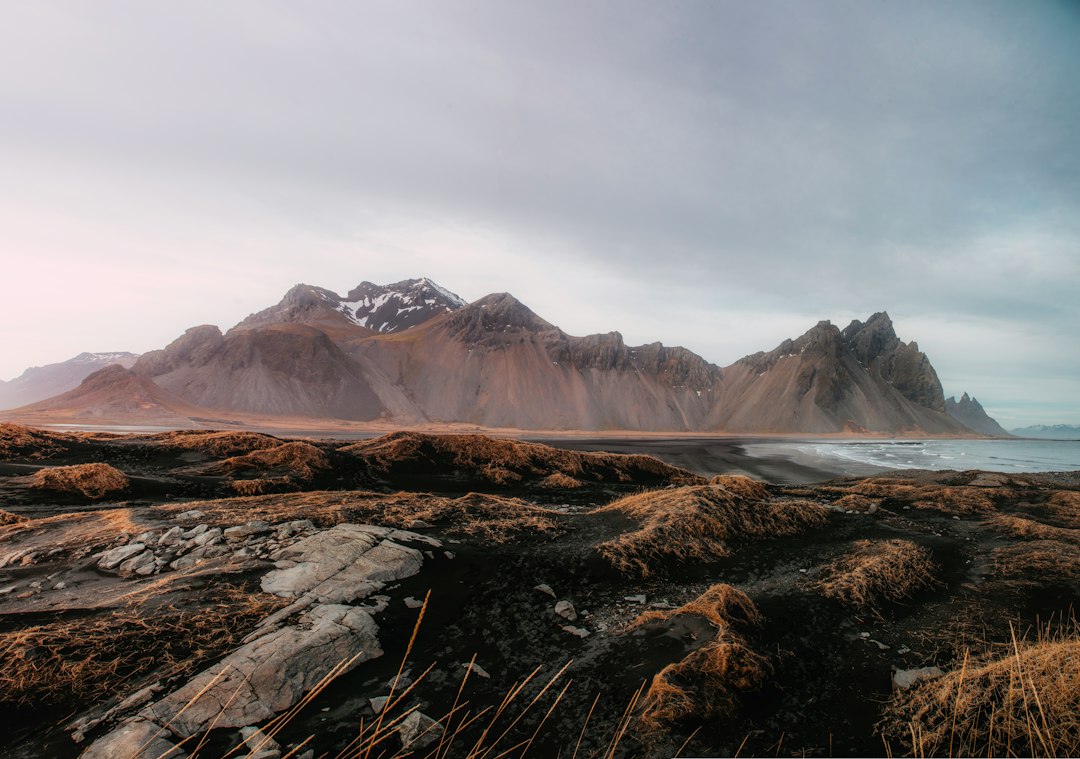
The best time to visit Stokksnes depends on what you are looking for. Dawn and sunset offer the most dramatic light, with Vestrahorn taking on orange and purple hues. In summer, with the white nights, it is possible to photograph the mountain illuminated by a twilight light that never completely sets. In winter, with luck and clear skies, it is possible to witness the northern lights above the dark silhouette of the mountain.
To reach Stokksnes, take the Ring Road until about 15 kilometers east of Höfn, following the signs for the Viking Café. The toll payment is made directly at the facility, which also has a small bar. It is advisable to wear waterproof shoes and layered clothing: the wind can be intense in any season and the perceived temperature drops quickly near the shore. Avoid getting too close to the water: the waves at Stokksnes are unpredictable and the beach does not have lifeguards. A complete visit, with a walk along the shore and time to observe the landscape, requires at least two hours.
Why the trip is worth it
Stokksnes does not offer services, has no accommodations in the immediate vicinity, and does not propose organized activities. What it offers is rare: a coastal landscape of extraordinary visual coherence, where every element — the mountain, the sand, the water, the sky — seems part of a studied composition. It is a place that works in any weather condition, even in the rain, when the low clouds envelop the peaks of Vestrahorn and the beach takes on an even darker and more evocative atmosphere.
Those traveling along the Ring Road and stopping in Höfn to visit the glaciers of Vatnajökull would do well to reserve a few hours for this beach as well. The distance between the two destinations is minimal, but the landscape encountered is completely different: not ice and white, but rock and black, with the ocean serving as a boundary between the land and the rest of the world.


