
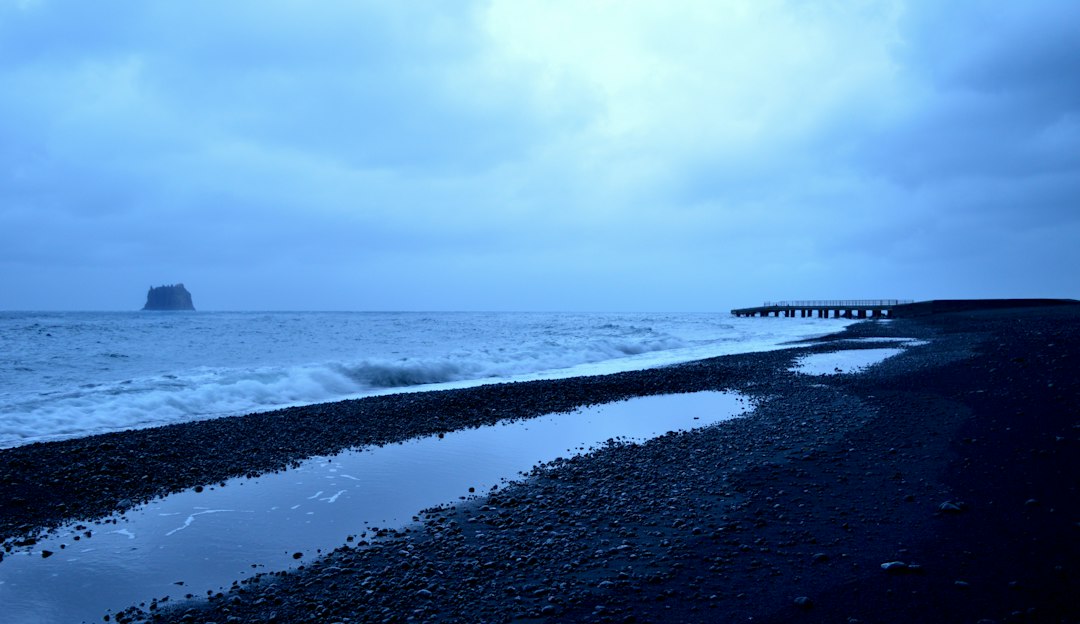

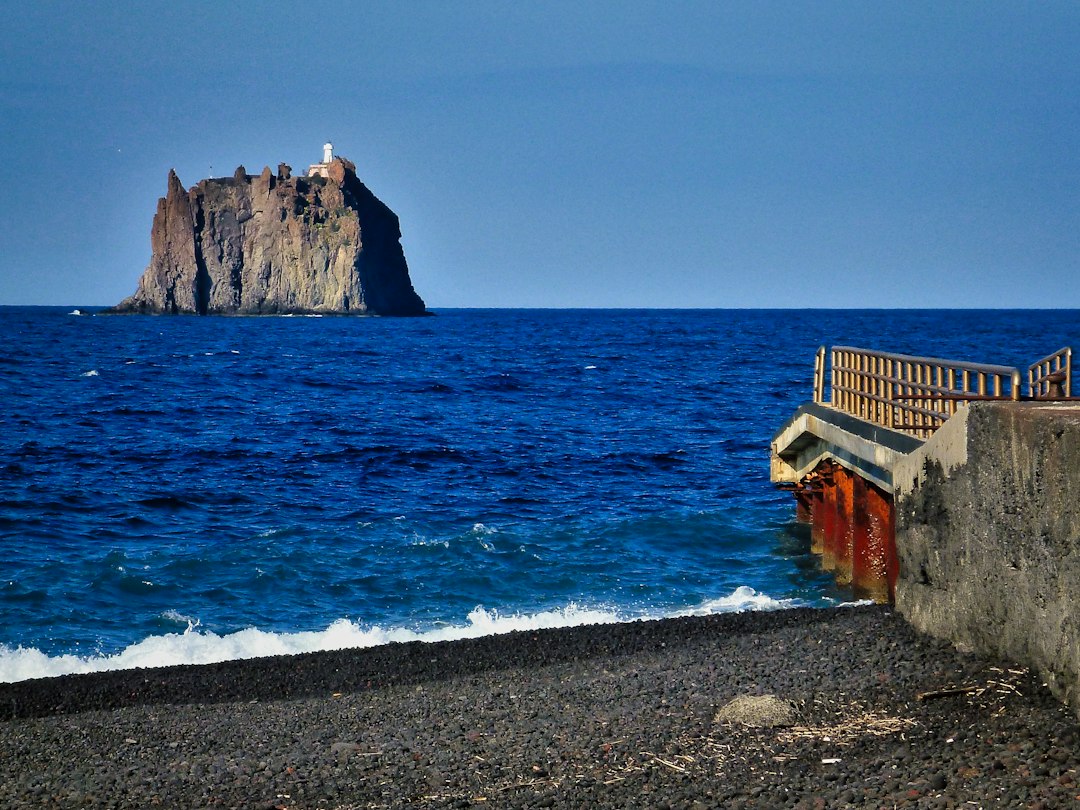
Emerging from the sea like a tooth of black rock, sharp and solitary, a few kilometers from the coast of Stromboli. Strombolicchio is a volcanic stack about 49 meters above sea level, what remains of an ancient eruptive conduit now extinct, while the larger volcano behind it continues to erupt with almost metronomic regularity. It is not a place that one reaches by chance: you have to want it, take a boat, face the open sea of the Tyrrhenian, and approach that column of basalt rock that seems planted in the blue like a monolith forgotten by geological times.
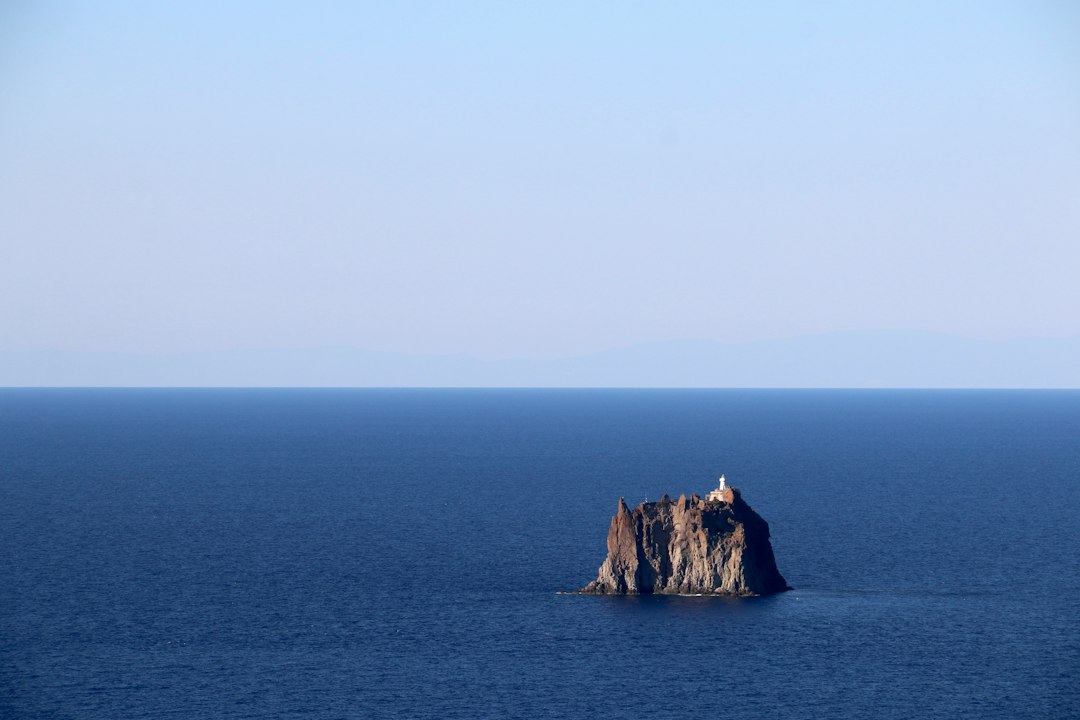
Its origin dates back to much older eras compared to the current cone of Stromboli: scholars consider it a volcanic remnant, a neck — that is, the solidified core of an old magmatic chimney — that marine erosion has progressively isolated from the main island. At the top, still visible, there is a small automatic lighthouse that signals the presence of the rock to passing boats, and the remains of a staircase carved into the rock that in the past allowed the lighthouse keepers to ascend. Today that staircase is accessible only in favorable sea conditions, and the experience of climbing those dark stones, with the salty wind in your face and the smoking volcano in the background, is something that is hard to forget.
The faraglione seen up close: rock, sea, and fire
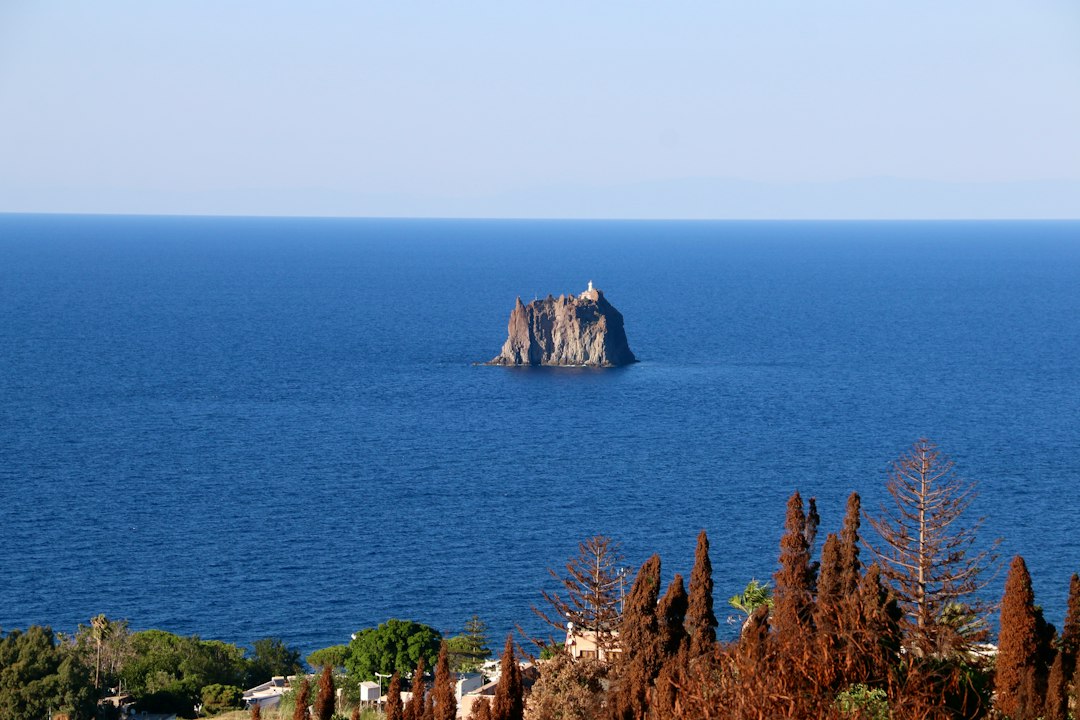
Approaching Strombolicchio by boat means entering a landscape that has the consistency of a geological dream. The basalt rock is tinged with shades ranging from anthracite gray to glossy black, with reddish streaks where iron oxidation has left its mark. On the lower edges, lapped by the waves, algae and limpets grow, and it is not uncommon to spot royal gulls nesting on the more sheltered outcrops. The water around the rock is of surprising transparency, with bottoms that quickly slope down to considerable depths.
From the sea, the perspective on Stromboli changes radically. The cone of the volcano — which rises to about 924 meters above sea level — appears in all its grandeur, and in the evening hours, one can observe projections of glowing lava from the Sciara del Fuoco, the lava flow channel on the northwestern slope of the island. This lateral and close-up view is impossible to obtain from the mainland or the beaches of the island itself: it is the exclusive privilege of those who are out at sea, at the height of Strombolicchio.
How to reach Strombolicchio
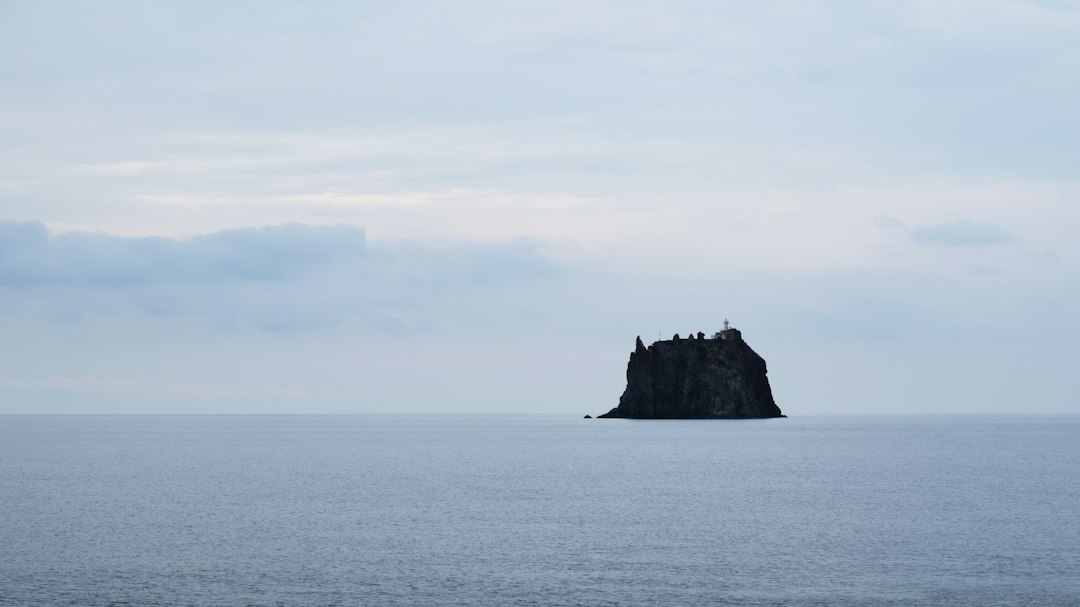
There is no dedicated ferry service to the rock. The most common way to reach it is to rent a boat with a skipper departing from the port of Stromboli, or to join one of the boat excursions organized by the numerous local operators present on the island. Typical tours last between two and four hours, often combining a visit to Strombolicchio with navigation along the Sciara del Fuoco during the night hours, when the eruptions are more visible. Prices vary depending on the season and the number of participants, but a shared excursion generally costs around 25-40 euros per person.
It is essential to check the weather conditions before departing: the southern Tyrrhenian Sea can become rough even in summer, and in case of strong winds, many operators cancel outings for safety reasons. The best season runs from May to September, with July and August offering the most stable sea conditions but also the highest influx of tourists. Booking at least one day in advance is advisable during peak months.
The Night Experience: Lava and Stars
If there is a moment when Strombolicchio reveals its most extraordinary character, it is at night. With the sky free of light pollution — Stromboli is a small and sparsely populated island, with a population of a few hundred residents — the stars multiply above while the volcano produces its orange glows at regular intervals, every twenty or thirty minutes on average, although the activity can vary considerably.
Floating by boat next to the dark rock, with the silence of the sea broken only by the distant crackling of the Strombolian explosions and the lava sliding into the sea along the Sciara del Fuoco, is an experience that puts human time in perspective compared to that of the Earth. Bringing binoculars is a practical tip that makes a huge difference: it allows you to distinguish the details of the flows and pyroclastic projections that appear as mere bright spots to the naked eye. A light jacket is equally necessary, because even on summer nights the sea temperature drops significantly after sunset.
What to know before leaving
Stromboli can be reached by hydrofoil or ferry from Milazzo, in Sicily, or from Naples with seasonal services. The crossing from Milazzo takes about two and a half hours by hydrofoil. There are no reliable ATMs on the island, so it is advisable to bring enough cash to cover excursions, meals, and accommodation. Nautical operators are mainly located near the port and along the Ficogrande beach, and many display their outing schedules directly on outdoor bulletin boards.
Strombolicchio is not a postcard destination built for tourism: it is a fragment of living geology, a privileged observation point on one of the most active volcanoes in Europe. Those who arrive expecting comfort will be disappointed; those who arrive willing to accept nature on its terms will find something that is hard to replicate elsewhere in the Mediterranean.


