
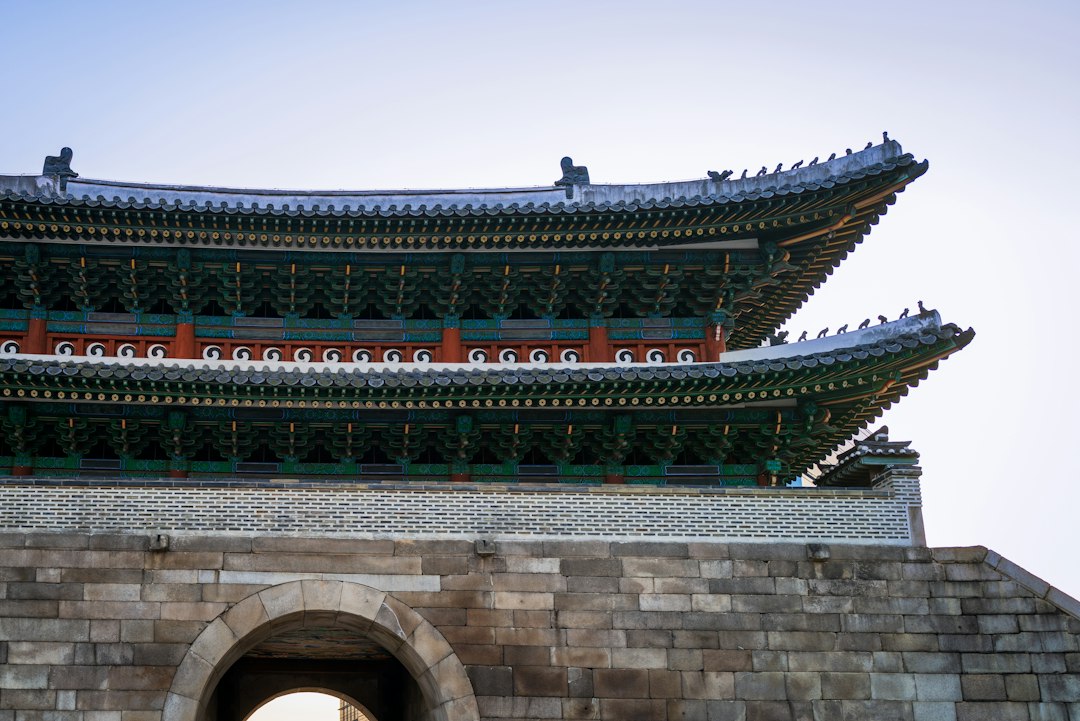

Built for the first time in 1398, during the reign of King Taejo, founder of the Joseon dynasty, Sungnyemun Gate — also known as Namdaemun, literally "Great South Gate" — still stands today in the heart of Seoul as a block of gray stone and dark wood that defies the centuries. Looking at it from below, one immediately notices the jarring contrast: around it flow cars, glass skyscrapers rise, and pedestrians move quickly with smartphones in hand. Yet the two-story structure with the curved roof in dancheong style — decorated with geometric and floral patterns painted in red, blue, and green — seems indifferent to all this movement.
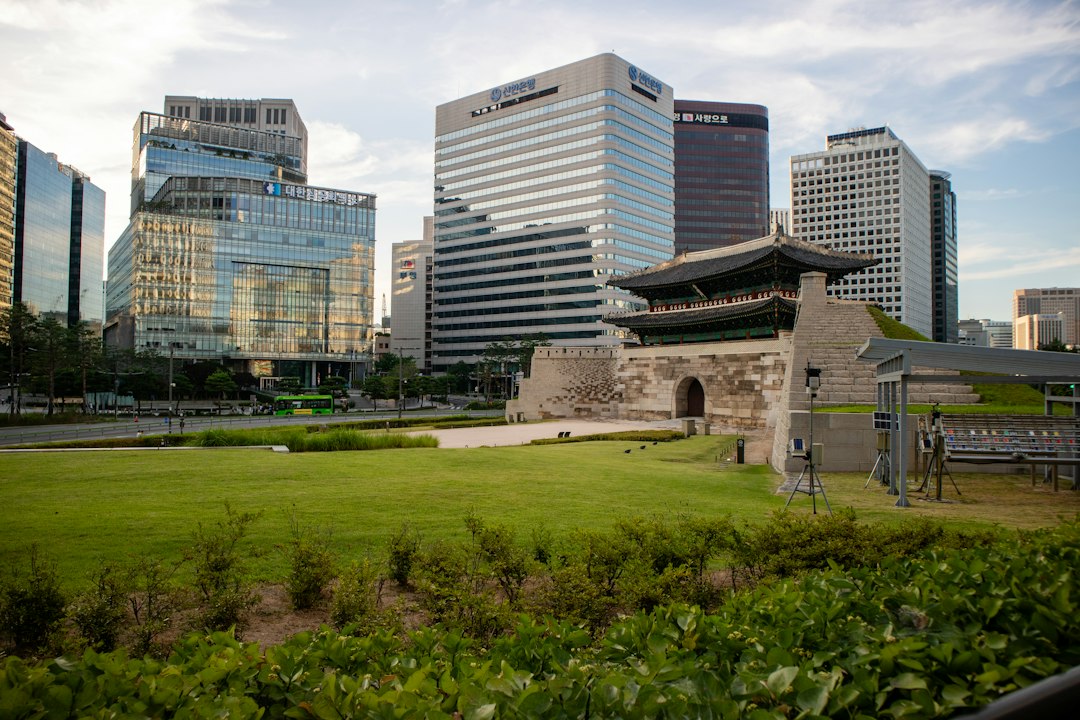
Sungnyemun is the National Treasure number 1 of South Korea, a designation that is not only symbolic but reflects its position in the hierarchy of Korean cultural heritage. The gate was originally part of the city walls of Seoul, which extended for about 18 kilometers around the Joseon capital. For centuries it represented the official southern entrance to the city, crossed by merchants, diplomats, and travelers from all over the kingdom. Today that function has faded, but the historical weight of the structure remains tangible in every beam of wood.
A long and painful restoration
In 2008, an arson fire devastated the upper wooden structure of the gate, reducing much of the pavilion to ashes in a few hours. It was a national trauma: images of the burning gate circulated around the world and Koreans experienced the loss as a collective wound. The government immediately initiated a restoration project that lasted five years, completed in 2013, using traditional techniques and materials: Korean pine wood, handmade ceramic tiles, and natural pigments for the dancheong decorations.
The result is a structure that seeks to faithfully replicate the original appearance of the gate, although experts have raised some technical criticisms regarding the quality of some materials used. Visiting the site today, one can closely observe the painted decorations on the ceiling of the upper pavilion: the vibrant colors — cinnabar red, emerald green, cobalt blue — are the product of that meticulous reconstruction, and tell a decorative style that dates back to the Joseon era.
The structure to observe carefully
Approaching the door means discovering details that photographs do not convey. The base in gray stone — the original one, which survived the fire — is made up of large squared blocks that form a central arch through which carts once passed. The arch has an imposing opening, wide enough to allow a cart pulled by oxen to pass through. Above it, the pavilion develops over two levels with overlapping gabled roofs, the ends of which curve upwards in the classic architectural style of East Asia.
Looking at the wooden beams that support the roof, one can notice the gongpo, the complex interlocking brackets that distribute the weight of the structure without the use of metal nails — a refined carpentry technique that testifies to the technical level of Joseon artisans. It is one of those details worth actively seeking out, because it tells more than any caption why this door is considered a masterpiece of traditional Korean architecture.
The context of the Namdaemun market
A few steps from the gate lies the Namdaemun Market, one of the largest and most vibrant open-air markets in Seoul, active for over 600 years. The combination of visiting the gate and taking a stroll through the market makes for a complete experience: one moves from medieval architecture to contemporary daily life within a hundred meters. The market offers fabrics, clothing, spices, street food, and kitchen items at competitive prices.
The food alone is a valid reason to stop: the gimmari stalls — fried glass rice rolls filled with noodles — and roasted chestnuts in the cold months are permanent fixtures. The atmosphere is chaotic and noisy, a deliberate contrast to the silent composure of the gate.
Practical information for the visit
Access to the Sungnyemun Gate is free and the structure is visible at any time, as it is located in an open space in the center of a square. To visit the interior of the pavilion during public opening times, it is advisable to check the updated hours on the official website of Korean cultural heritage, as they may vary seasonally. The best time to photograph it is early in the morning, before traffic and tourists crowd the square, or at sunset when the artificial lights illuminate the roof decorations.
To reach the gate, the simplest solution is the Seoul subway: the Hoehyeon station on line 4 (blue) is just a few minutes' walk away. Avoid the weekend afternoon if you want a quiet view of the structure: the adjacent market attracts considerable crowds. A visit to the gate alone takes about 20-30 minutes, but by combining it with the market, you can easily spend half a day in the area.


