
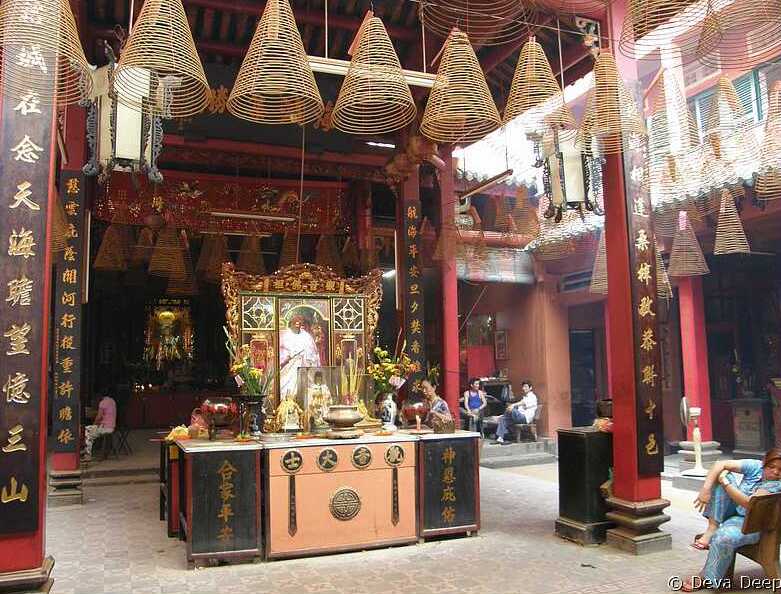

Nestled in the heart of Ho Chi Minh City, Tam Son Hoi Quan Pagoda is a vibrant testament to Vietnam's rich cultural tapestry. Constructed in 1839, this sacred site is dedicated to Me Sanh, the Goddess of Fertility, attracting worshippers, particularly women seeking blessings for conception. The pagoda's historical significance is intertwined with the rise of Chinese communities in Vietnam, particularly the Teochew and Hakka, who sought a spiritual refuge amidst their bustling lives.
From the moment you step through its ornate entrance, you're greeted by an array of intricate architectural details that reflect a blend of Chinese and Vietnamese styles. The pagoda's facade is adorned with colorful ceramic tiles and meticulously crafted wooden sculptures, showcasing the artistic prowess of the artisans of the time. One of the standout features is the altarpiece dedicated to Me Sanh, which is surrounded by vibrant murals depicting serene landscapes and mythical creatures, creating a tranquil atmosphere conducive to prayer and reflection.
As you explore the interior, the walls narrate stories of nature's beauty through various paintings, each brushstroke revealing the deep connection between the community and the divine. The artistic significance of the pagoda goes beyond aesthetics; it serves as a cultural repository, preserving the spiritual narratives and traditions of the local populace.
Local customs thrive in this sacred space, with many visitors participating in the traditional practice of offering incense and fruits at Me Sanh's altar. Festivals such as the Lunar New Year see the pagoda bustling with activity, as families gather to pray for prosperity and health. The air fills with the fragrant scent of incense, while the sound of bells ringing creates a harmonious ambiance that enhances the spiritual experience.
Gastronomy in the surrounding area is equally enticing. Just a stone's throw from the pagoda, visitors can indulge in traditional Vietnamese delicacies like pho and banh mi. Street vendors often sell sticky rice and sugarcane juice, offering sustenance to those who’ve come to reflect and pray. These culinary delights not only satisfy hunger but also connect visitors to the local culture, enriching their overall experience.
For those looking to delve deeper, there are lesser-known curiosities that await discovery. One of the most enchanting aspects of the pagoda is the hidden garden tucked behind the main hall. This peaceful enclave is often overlooked by tourists, providing a serene spot for meditation amid the hustle and bustle of the city. Additionally, the pagoda is said to host a spirit that watches over the grounds, adding an air of mystique to the already sacred space.
Timing your visit can greatly enhance your experience. The best time to explore Tam Son Hoi Quan Pagoda is during the early morning or late afternoon when the sunlight bathes the structure in a warm glow. Weekdays are typically less crowded, allowing for a more intimate connection with the site. Remember to dress modestly out of respect for the sacredness of the location.
When visiting, look for the intricate dragon motifs that are prevalent throughout the pagoda's design. These symbols of power and nobility are not merely decorative; they embody the protective spirit of the building. Engaging with local worshippers can also provide insights into the rich traditions and personal stories that fill the air with reverence.
In conclusion, Tam Son Hoi Quan Pagoda is more than just a religious site; it is a vibrant tapestry of history, art, and culture that resonates deeply within the community. Whether you seek spiritual solace or a glimpse into Vietnam's cultural heritage, this pagoda offers a profound experience.
Consider using the Secret World app to create a personalized itinerary that includes this remarkable site.


