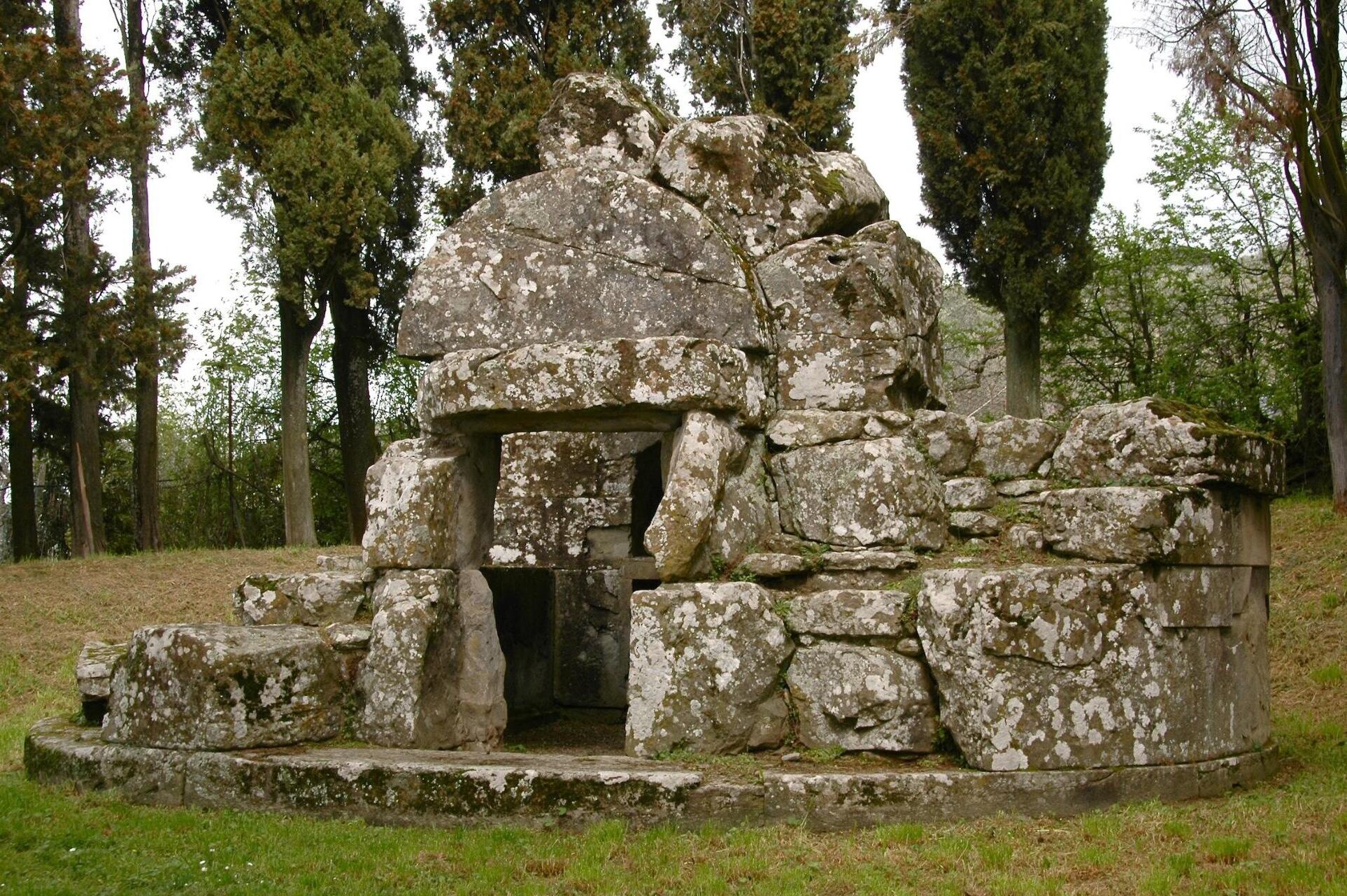

Nestled on the gentle slopes of Cortona, surrounded by lush olive groves and breathtaking vistas, lies the enigmatic Tanella of Pythagoras. This ancient monument, a small tumulus dating back to the Hellenistic period around the 2nd century BC, has captivated visitors with its storied past and architectural elegance for centuries.
### History and Origins
The Tanella of Pythagoras has intrigued scholars and travelers alike since its rediscovery in the 1500s. Histories trace the first significant mention of this site to Giorgio Vasari, the renowned painter and architect, who visited in 1566. Vasari speculated that it could be the tomb of Archimedes, the famed mathematician, due to its classical design. However, over the years, local lore has attributed the structure to other legendary figures, such as Ulysses and Pythagoras himself, reflecting the blending of myth and history that permeates the region.
The monument's progressive deterioration began in the 16th century, exacerbated by the passage of French troops during the Napoleonic Wars in the 19th century. Despite facing the ravages of time, it was officially recognized in the 20th century when Maria Laparelli Pitti donated it to the Etruscan Academy in 1929. Today, it stands as a testament to the rich historical tapestry of Tuscany, evoking the grandeur of ancient civilizations.
### Art and Architecture
Architecturally, the Tanella is a marvel of Hellenistic design. Its construction features a circular base topped by a series of carefully arranged blocks, creating a striking visual symmetry. The interior comprises a short dromos leading into a small rectangular chamber, which is elegantly covered by a barrel vault. This design not only served a functional purpose but also reflected the artistic sensibilities of the time, emphasizing harmony and proportion.
The monument's artistic significance is further underscored by its connection to burial practices of the era. The meticulous construction techniques hint at the advanced engineering skills possessed by the ancient builders, while the choice of materials and design elements speaks to the cultural influences that permeated Etruscan and Greek societies.
### Local Culture and Traditions
The region surrounding the Tanella is steeped in rich local traditions and customs. Cortona itself is known for its vibrant festivals, such as the Cortona Antiquaria, held every month from April to October, celebrating the town's artistic heritage and antique culture. The Cortona Wine Festival, held in September, showcases the area's exceptional wines, inviting locals and visitors to partake in tastings and culinary experiences.
As you explore the area, you may also encounter traditional Tuscan customs, such as the annual grape harvest, where families come together to celebrate the fruits of their labor. These events not only highlight the region's agricultural richness but also foster a sense of community and connection to the land.
### Gastronomy
No visit to Cortona would be complete without indulging in its gastronomic offerings. The region is celebrated for its extra virgin olive oil, produced from the very groves that surround the Tanella. This oil is a staple of Tuscan cuisine, enhancing dishes such as bruschetta, pasta al pomodoro, and the famed pici, a thick homemade pasta that pairs beautifully with rich sauces.
Local wines, particularly Vino Nobile di Montepulciano, are also a highlight, crafted from grapes grown in the nearby hills. Visitors can savor these wines at local enotecas or during vineyard tours, where they can learn about the intricate process of winemaking.
### Lesser-Known Curiosities
Amidst its history and beauty, the Tanella of Pythagoras holds several lesser-known curiosities that often go unnoticed. For instance, the tumulus is aligned with celestial events, prompting speculation about its potential use for astronomical observations by ancient civilizations. Additionally, the site is home to various local legends, including tales of hidden treasure and the spirits of ancient philosophers wandering the hills.
Another intriguing aspect is the natural setting of the Tanella. The surrounding olive groves not only provide a picturesque backdrop but also serve as an important ecological habitat, attracting diverse wildlife. This connection between history and nature enriches the visitor experience, offering a serene escape from the hustle and bustle of modern life.
### Practical Visitor Information
For those eager to explore the Tanella of Pythagoras, the best times to visit are during the spring and fall when the weather is mild, and the landscapes are painted in vibrant hues. Whether you choose to arrive by car or embark on one of the scenic trekking routes, the journey is as rewarding as the destination itself.
Upon arrival, take a moment to appreciate the intricate details of the structure and the surrounding landscape. Bring along a camera to capture the stunning views of Cortona and the expansive Val di Chiana, and consider wearing comfortable footwear for the trails.
As you plan your visit, don't forget to immerse yourself in the local culture by sampling the regional cuisine and participating in any festivals that may coincide with your trip.
Exploring the Tanella of Pythagoras is sure to be an unforgettable experience that intertwines history, culture, and nature. For a personalized itinerary that highlights the best of this mystical region, consider using the Secret World app to craft your perfect adventure.
