



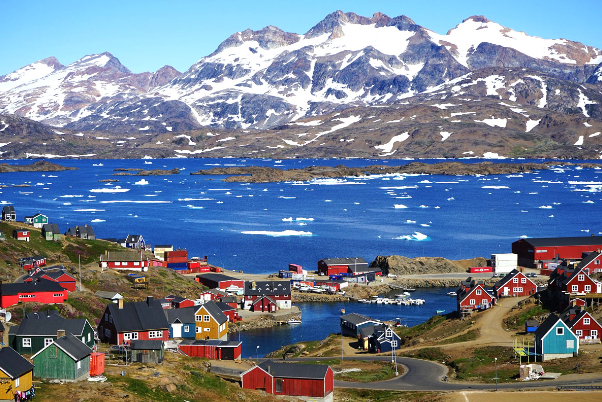
Tasiilaq, nestled in the dramatic landscapes of southeastern Greenland, is a destination of stark beauty and rich cultural heritage. With its roots tracing back to ancient Inuit settlements and a history as vibrant as the northern lights that dance across its skies, Tasiilaq offers a journey through time and tradition.
History and Origins The area around Tasiilaq has been inhabited for thousands of years, originally by the Inuit peoples who migrated from what is now Canada. The town itself was founded in 1894 by Danish explorer Gustav Holm, marking the beginning of its recorded history. Originally named Ammassalik, after the nearby fjord, the town quickly became a hub for trade and exploration. It served as a pivotal point for many Arctic expeditions due to its strategic location and access to the inland ice.
Art and Architecture Tasiilaq is a canvas of traditional Greenlandic architecture, characterized by vibrant wooden houses that stand out against the stark white of the snowy landscape. These structures, often painted in bright reds, yellows, and blues, reflect a practical yet cheerful adaptation to the harsh climate. The town is also home to several artists who draw inspiration from their surroundings, creating works that depict both the beauty and challenges of life in Greenland. The East Greenland Museum showcases a collection of local artifacts and contemporary art, offering insight into the region’s artistic evolution.
Local Culture and Traditions Cultural life in Tasiilaq revolves around the rhythms of nature and the strong community bonds. The town celebrates several festivals throughout the year, with Kalaallit Nunaat National Day on June 21st being particularly significant. This day marks the summer solstice and is celebrated with music, dance, and traditional games. The local language, East Greenlandic, is an integral part of daily life, and efforts are made to preserve it along with other indigenous traditions.
Gastronomy The cuisine in Tasiilaq is a testament to the resourcefulness of its people. Traditional dishes often feature locally sourced ingredients such as fish, seal, and reindeer. Suaasat, a hearty soup made with seal meat, and mattak, raw whale skin and blubber, are staples that offer a taste of Greenland’s unique culinary heritage. These dishes are typically prepared using methods passed down through generations, emphasizing the community’s connection to the land and sea.
Lesser-known Curiosities While many visitors come for the breathtaking landscapes, few know about the flower valley, a lush contrast to the icy surroundings. This hidden gem blooms with Arctic wildflowers in the summer months, offering a rare glimpse of Greenland’s softer side. Additionally, the town’s proximity to the Mittivakkat Glacier makes it a fascinating spot for scientific research, providing crucial data on climate change.
Practical Visitor Information The best time to visit Tasiilaq is from June to September, when the weather is milder and the days are longer, allowing for more exploration. Visitors should be prepared for rapidly changing weather conditions and are advised to engage with local guides for a deeper understanding of the environment and culture. Don’t miss the opportunity to witness the northern lights in the winter months, a spectacle that draws travelers from around the world.
Discover the hidden wonders of Tasiilaq by planning your trip with the Secret World app for a personalized AI itinerary.
