


The water that laps the beach of Cathedral Cove changes color depending on the time: intense turquoise in the morning, almost emerald in the afternoon, with golden hues as the sun descends towards the horizon of the Coromandel Peninsula. It is here, in the bay of Hahei, on the east coast of New Zealand's North Island, that Te Hoho Rock is located, a limestone formation sculpted by the sea over millennia, with a natural arch large enough to walk through to pass from one bay to another.

The beach is accessible only on foot or by sea: there are no roads leading directly to the cove. The main walking trail starts from the Hahei parking lot and covers about 2.5 kilometers in each direction, with a moderate elevation gain through typical New Zealand coastal vegetation. This limited access helps to keep the atmosphere of the beach surprisingly intact compared to other destinations in the region.
The white sand and the rock arch

The sand of Cathedral Cove is white-cream, fine and compact near the shore, where the water compresses it with each wave. Walking towards Te Hoho Rock, one notices how the white limestone visually merges with the sand, creating an almost unreal chromatic continuity. The arch itself is several meters high and wide enough to allow the passage of small boats in calm sea conditions.
Walking through the arch takes you from Cathedral Cove to the adjacent beach, which is smaller and often less crowded. The contrast is immediate: on one side an open and bright bay, on the other a more sheltered space, with the rock creating a sense of natural protection. The limestone walls around the arch show horizontal streaks that testify to the different geological layers deposited over time, visible to the naked eye without the need for special equipment.

The color of the water and the atmosphere of the bay
The water of Cathedral Cove is notoriously clear, with visibility on windless days exceeding several meters in depth. The coloration varies from light turquoise in the shallows to darker blue further out, where the seabed drops off quickly. This transparency makes the bay popular for snorkeling, with underwater rock formations hosting local marine life.
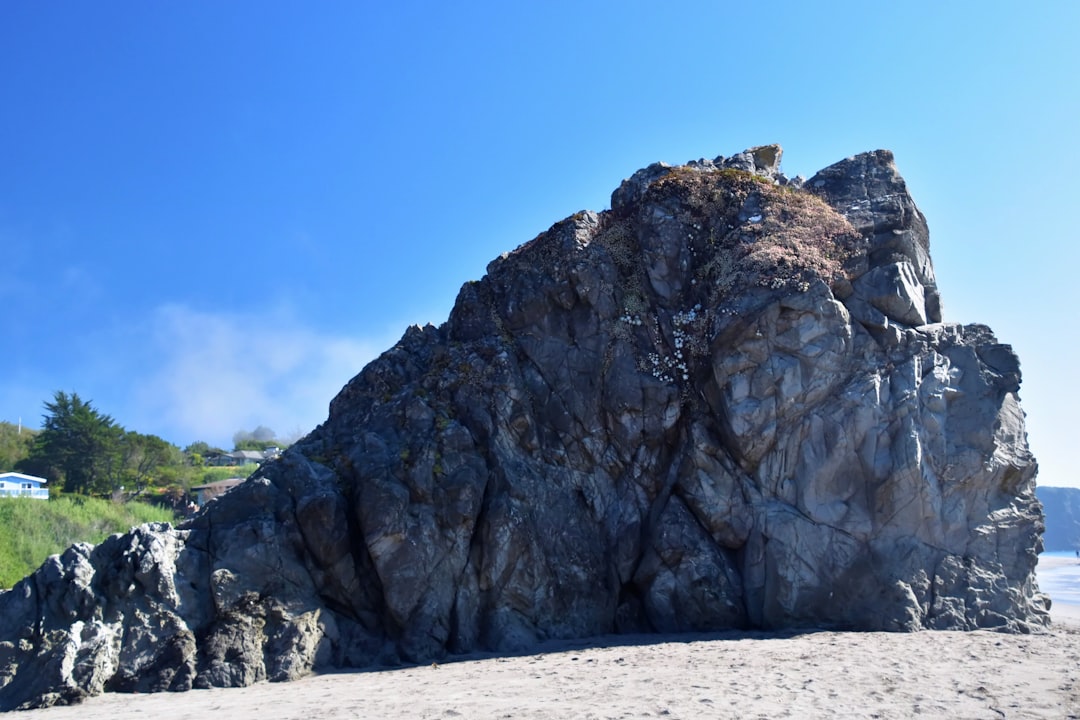
The atmosphere changes significantly throughout the day. In the early morning hours, the beach is often deserted or nearly so, with the low light casting long shadows on the sand and the rock arch. In the late afternoon, when many hikers have already made their way back to the parking lot, a similar tranquility is regained. The Coromandel Peninsula generally has a temperate climate, with the southern summers — from December to February — offering the best conditions for swimming and visiting the beach.
How to get there and practical advice

The parking lot in Hahei is located about 175 kilometers from Auckland, with a route that follows the east coast through Thames and Whitianga. The final stretch to Hahei is on narrow secondary roads, so it is advisable to drive carefully, especially during the peak season when traffic increases. Since 2021, during the summer months, parking directly in Hahei is subject to restrictions and at certain times it is mandatory to use shuttles or alternative parking: it is useful to check the updated provisions on the DOC website, the New Zealand Department of Conservation, before departing.
As an alternative to the walking trail, several local companies offer kayaking or boat tours from Hahei directly to the bay, with travel times much shorter than trekking. The trail typically takes 45-60 minutes one way at a leisurely pace. The most useful advice is to arrive by 8 in the morning during peak months, or in the late afternoon after 4: these are the time windows when the beach is less crowded and the light is more favorable for photographing the arch. Bringing enough water for the hike is essential, as there are no refill points along the trail.
What to observe on site
In addition to the main arch of Te Hoho Rock, it is worth pausing to observe the small caves that open at the base of the limestone cliffs on either side of the beach. Some are only accessible at low tide, and inside, the rock takes on ochre and orange hues due to the presence of iron minerals. The contrast with the dominant white of the main formation is one of the most distinctive visual details of the entire bay.
The vegetation that descends to the beach includes pohutukawa trees, a native New Zealand species that blooms in intense red from November to January, adding another chromatic element to the landscape. The branches of these trees often extend towards the beach, creating natural shaded areas, useful during the central hours of the day when the sun is high and reflects intensely on the light sand.


