


A gray rock outcrop emerges from the vegetation like a balcony suspended over the Pacific. At Pedra do Telégrafo, on the far western outskirts of Rio de Janeiro, the sunset is not a spectacle curated for tourists: it is something that happens as the sun slowly slips behind the horizon of the Atlantic Ocean, tinting an expanse of Atlantic Forest in orange and purple that seems never-ending. We are in Barra de Guaratiba, a neighborhood that most visitors to Rio will never reach, far from the circuits of the South Zone, far from Ipanema and Christ the Redeemer.
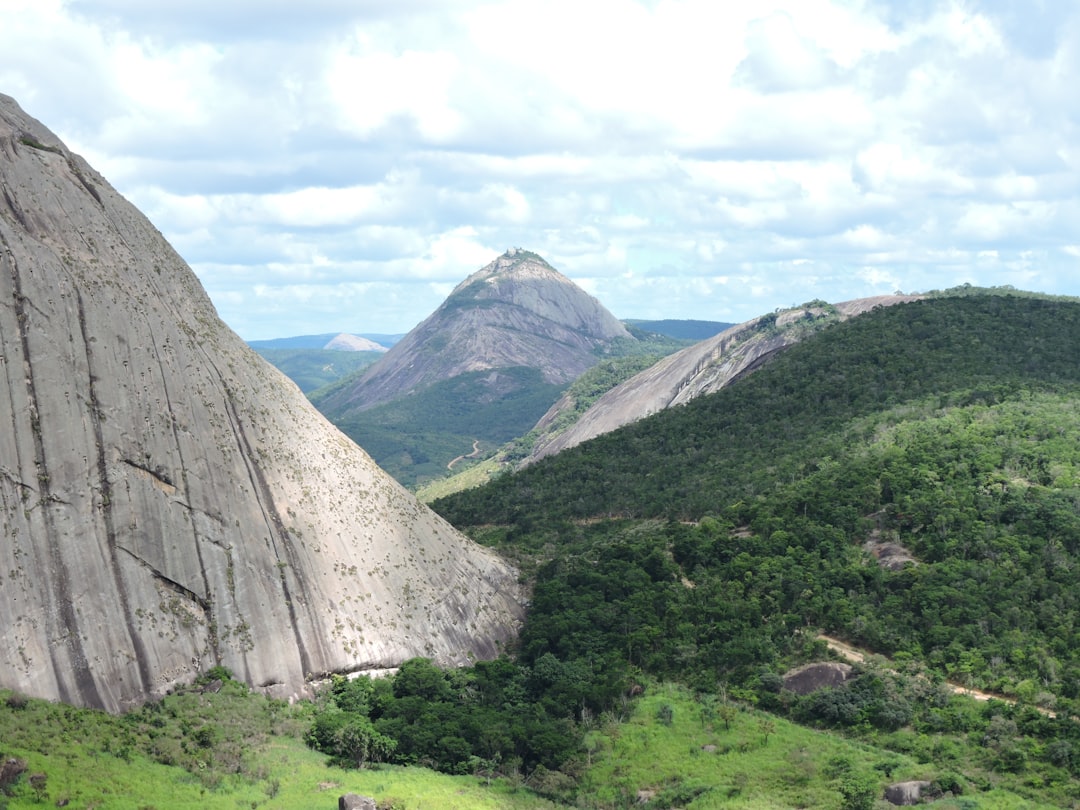
The trail — the path — that leads to the rock crosses a stretch of Atlantic rainforest, one of the most threatened ecosystems on the planet, which here survives in a still intact form. The route is about 4 kilometers round trip, with a moderate elevation gain, and typically takes between one and a half to two hours of total walking. It is not a challenging route for experienced hikers, but it requires suitable shoes and caution in the more slippery sections, especially after rain.
The rock and the view that awaits you

The Pedra do Telégrafo owes its name to the ancient visual signaling system that the Portuguese installed in these coastal promontories in past centuries to communicate between strategic points of the bay. The rock itself is a granite formation that juts out beyond the vegetation, offering a 180-degree view of the Atlantic coast: to the left, the Restinga de Marambaia, a long strip of sand that closes the Baía de Sepetiba, to the right, the jagged line of the coast towards Guaratiba. Below, only forest and sea.
What many visitors discover only upon arrival is that the rock allows for one of the most iconic photographs of Brazil: leaning over the edge of the boulder, with the void of the forest below, creates the optical illusion of being suspended in mid-air hundreds of meters high. In reality, the actual drop is much more contained, but the visual effect — amplified by the angle of the camera — has made this place famous on social media. It is worth knowing this detail before arriving: the line for the photo shoot on weekends can be long.

The sunset: why it is worth the trip
The best time to be on Pedra do Telégrafo is in the last two hours of daylight. The orientation of the promontory towards the west-southwest means that the sun sets directly over the ocean, with no buildings or infrastructure interrupting the horizon line. The light changes rapidly: first it golds the surface of the sea, then it ignites the treetops, and finally gives way to a sky that in the winter months — from May to September, when the air is drier — can become a deep and almost unreal red.

Unlike Mirante Dona Marta or Pão de Açúcar, there are no paid telescopes here, nor street vendors, nor an organized structure. The silence — interrupted only by the wind and the calls of the forest birds — is an integral part of the experience. Those who arrive expecting a tourist infrastructure will be surprised by the simplicity of the place.
How to get there and practical advice
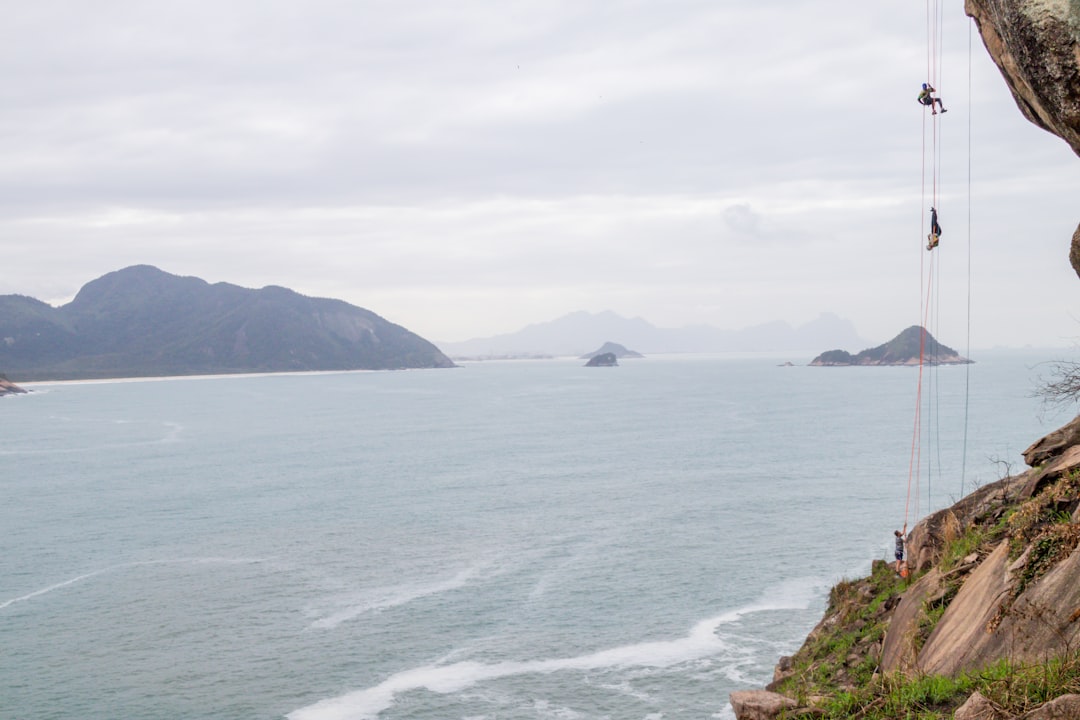
Reaching Barra de Guaratiba from Ipanema or downtown Rio takes about an hour and a half by car, or a combination of buses that can take up to two hours. The most convenient option is to rent a car or book an Uber, as public transport to this area is limited and infrequent, especially in the late afternoon when you would want to return after sunset. Access to the trail is free and does not require a reservation, but it is advisable to check the weather conditions before leaving: the Atlantic forest is subject to sudden rains that make the trails slippery and dangerous.
Bringing at least one and a half liters of water per person is essential, as well as insect repellent and closed-toe hiking shoes. Avoid weekend mornings if you are looking for tranquility: the site has gained popularity in recent years and on sunny Saturdays it can be crowded. Arriving at the trail around 3:30-4:00 PM allows you to walk through the forest at a leisurely pace and to be on the rock at least an hour before sunset, the time when the light is already beautiful but the crowd has thinned out.
Why leave the conventional tourist circuit
Rio de Janeiro is a city that tends to concentrate its visitors in a few square kilometers between Copacabana, Ipanema, and the historic center. Pedra do Telégrafo represents something different: a corner of the city that still belongs to the locals who live there, to the runners of the neighborhood, to the families who come to spend the afternoon. It is not a secret place — its fame has grown significantly in recent years — but it still retains an authentic dimension that the major tourist attractions have long lost.
Returning to Rio after sunset, with the forest quickly darkening and the first lights of the city beginning to turn on in the distance, is an experience that stays with you. Not because it is spectacular in an exaggerated way, but because it is real: a piece of Brazil that has not been built to be visited, and that is precisely why it is worth reaching.


