
← Back

Temple of Amun

6G4V+4C6, Siwa, Matrouh Governorate 5011632, Egypt ★★★★☆ 250 views
Elena Cortes
Siwa
🏆 AI Trip Planner 2026

Get the free app

Discover the best of Siwa with Secret World — the AI trip planner with 1M+ destinations. Get personalized itineraries, hidden gems and local tips. Free on iOS & Android.

🧠 AI Itineraries 🎒 Trip Toolkit 🎮 KnowWhere Game 🎧 Audio Guides 📹 Videos
Scan to download iOS / Android
Scan for AppGallery Huawei users

About Temple of Amun

Temple of Amun - Siwa | Secret World Trip Planner

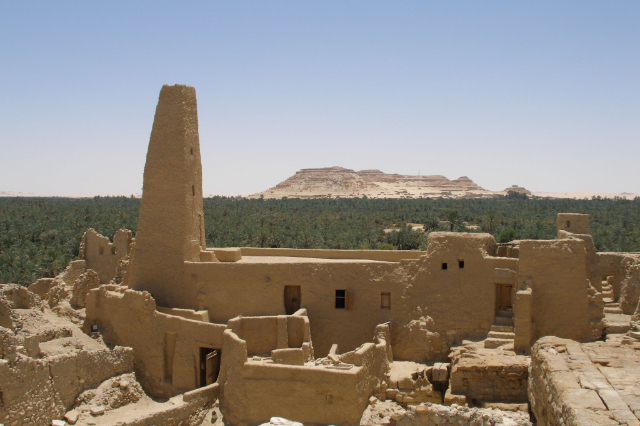
The remains of the famous Temple of Amun at Siwa in Egypt represents what is left of the residence belonging to one of the most famous oracles of the ancient world: the Oracle of Amun. The significant religious site was dedicated to the Egyptian Sun god Amun and home to an oracle – manifestations of gods – absorbed into Greek religion and later associated with Zeus.

Temple of Amun history In the western Egyptian desert near the Libyan border, a small Egyptian settlement dated to the time of the first dynasty was located at the only natural water source for hundreds of miles, the Siwa Oasis. Many local springs were utilised by the inhabitants and at some, Roman stone work is still visible shoring up the sides of the naturally occurring springs.

Siwa was a cultural centre in ancient Egypt as Amun-Ra‘s fame was widespread by 700 BC across the eastern Mediterranean. King Cambyses of Persia, son of Cyrus the Great and a conqueror of Egypt, hated the oracle because it predicted his African conquests would soon fail – they did. Cambyses even sent a great army to destroy the oracle, but the men never returned and their remains are yet to be discovered beneath the sand.

After founding Alexandria and prior to his invasion of Persia, Alexander the Great decided to travel to the Temple of Amun at Siwa. Here he visited the oracle of the Temple of Amun and was confirmed as a divine personage and the legitimate pharaoh of Egypt – certainly effective political image-making.

Oracles and Egyptian gods slowly went out of fashion under the Romans, whose divine communication happened through auguries and reading animal guts.

🗺 AI Trip Planner 2026

Plan your visit to Siwa

Suggested itinerary near Temple of Amun

MAJ+
500.000+ travelers worldwide
  1. 🌅
    Morning
    Temple of Amun
    📍 Siwa
  2. ☀️
    Afternoon
    The Mountain of the Dead
    📍 1.9 km · Siwa
  3. 🌆
    Evening
    The Zeitoun Lake
    📍 2.1 km · Siwa

Buy Unique Travel Experiences

Powered by Viator

See more on Viator.com

Explore nearby · Siwa

Frequently Asked Questions

Alexander the Great traveled to the Temple of Amun at Siwa after founding Alexandria and before invading Persia to consult the oracle. The oracle confirmed him as a divine personage and the legitimate pharaoh of Egypt, providing crucial political legitimacy for his rule in Egypt.
The Oracle of Amun was a manifestation of the Egyptian Sun god that was later absorbed into Greek religion and associated with Zeus, making it one of the most famous oracles of the ancient world. By 700 BC, Amun-Ra's fame had spread across the entire eastern Mediterranean, attracting powerful rulers and seekers of divine guidance.
The Temple of Amun is located in the western Egyptian desert near the Libyan border at the Siwa Oasis, the only natural water source for hundreds of miles in that region. Siwa was established as a settlement during the first dynasty and became a cultural center in ancient Egypt due to its precious water springs and the presence of this renowned oracle.
King Cambyses of Persia hated the oracle because it predicted his African conquests would fail—a prediction that proved accurate. He sent a great army to destroy the oracle, but the men never returned, and their remains remain undiscovered beneath the desert sands to this day.
Visitors can see the remains of the Temple of Amun, which served as the residence of the ancient oracle, along with evidence of the site's long history including Roman stonework still visible around the naturally occurring springs. The temple complex offers insight into how this significant religious site was once one of the most important destinations for pilgrims and rulers seeking divine confirmation across the ancient Mediterranean world.
