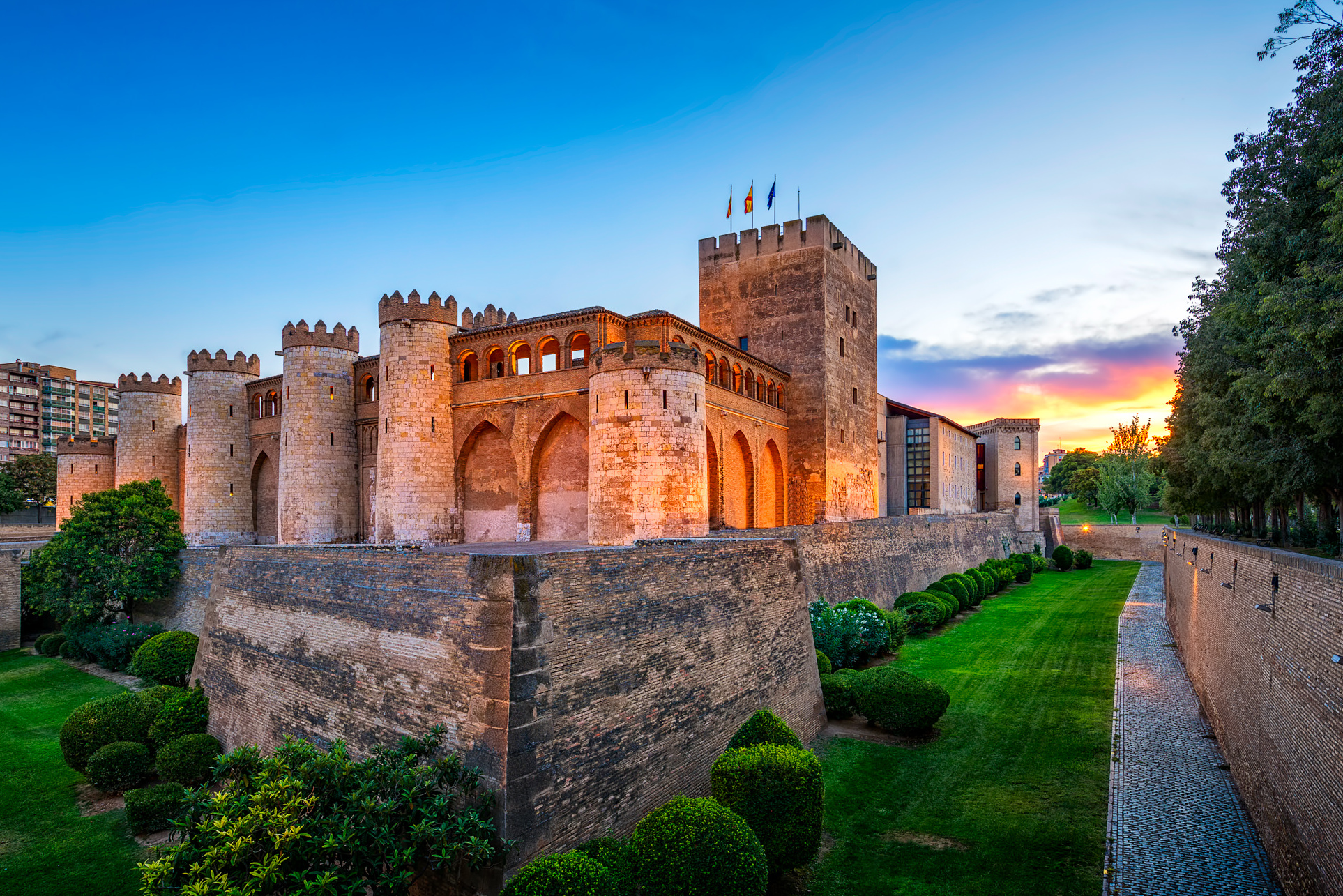

Nestled in the heart of Zaragoza, the Aljafería Palace stands as a breathtaking testament to the region's rich tapestry of history and culture. This magnificent structure, the only fortified Islamic palace from the Middle Ages still in existence, beckons visitors with its intricate architecture and fascinating narratives.
### History and Origins
The origins of the Aljafería Palace date back to the second half of the 11th century, commissioned by the Zaragoza taifa king Al-Muqtadir. It was envisioned as a summer retreat and a symbol of power, reflecting the cultural zenith of the Taifa of Zaragoza during the Islamic Golden Age. The palace witnessed a series of transformations through the centuries, reflecting the tumultuous history of the region.
In the 12th century, following the Christian conquest of Zaragoza in 1118, the palace transitioned into a royal residence for the Aragonese monarchs. Notably, it became an important site for the Spanish Inquisition in the 15th century, serving as a seat for judicial proceedings that shaped the religious landscape of the time. By the 18th century, it had been repurposed into military barracks, a role it maintained until the late 20th century. In 1985, it was designated the seat of the Cortes de Aragón, further solidifying its status as a vital political and cultural hub.
### Art and Architecture
Architecturally, the Aljafería Palace is a stunning example of Moorish design, characterized by its quadrangular plan and the harmonious blend of Islamic and Christian elements. The palace is encircled by robust walls punctuated by rounded towers, except for the Torre del Trovador (Troubadour's Tower), which boasts a rectangular layout.
Visitors are often captivated by the exquisite coffered ceilings adorned with intricate geometric patterns and the plasterwork decoration that tells stories of its glorious past. The interplay of light and shadow in the central courtyard, open to the sky, enhances the ethereal beauty of the palace, inviting contemplation and admiration. Key features like the Hall of Ambassadors showcase a wealth of decorative arts, from colorful tiles to stunning stucco that exemplify the artistic prowess of the era.
### Local Culture and Traditions
The Aljafería Palace is woven into the fabric of Zaragoza's cultural identity. Its presence is celebrated during various local festivals, particularly during the Fiestas del Pilar, a significant celebration honoring the city's patroness, the Virgin of the Pillar. During this time, the palace often serves as a backdrop for cultural events, including concerts, exhibitions, and performances that highlight the city's rich artistic traditions.
The palace also plays a pivotal role in the promotion of local customs, including the traditional jota dance, a lively folk dance that embodies the spirit and heritage of Aragon. The fusion of history and contemporary culture creates a vibrant atmosphere that engages both locals and visitors alike.
### Gastronomy
No visit to Zaragoza would be complete without indulging in its culinary delights, many of which reflect the region's historical influences. Local specialties such as ternasco de Aragón (roast lamb) and bacalao al ajoarriero (cod in garlic sauce) are must-tries. Pair these dishes with a glass of Somontano wine, renowned for its rich flavors, or sample Zaragoza's own wines from the nearby Cariñena region.
For a sweet treat, don't miss out on migas, a traditional dish often served during festivals, made from breadcrumbs, garlic, and chorizo, showcasing the rustic flavors that define Aragonese cuisine.
### Lesser-known Curiosities
While the Aljafería Palace is a well-known landmark, it harbors many lesser-known stories. One fascinating aspect is the legend surrounding the Torre del Trovador. It is said to have inspired the famous opera “Il Trovatore” by Giuseppe Verdi, which revolves around themes of love and revenge, echoing the palace's dramatic history.
Another curiosity lies in the intricate plasterwork that adorns the interior. Many visitors overlook the hidden inscriptions and symbols that reveal the rich tapestry of Islamic art and its subtle integration with Christian motifs over the centuries. These details speak to the palace's layered identity and the complex history of coexistence in Zaragoza.
### Practical Visitor Information
The best time to visit the Aljafería Palace is during the spring and fall months when the weather is pleasantly mild, ideal for exploring the grounds. The palace is open to the public, and guided tours are available to provide deeper insights into its historical significance and architectural marvels.
When visiting, take the time to explore the surrounding gardens and the Zaragoza’s historic district. Look for the original water channels that once supplied the palace, a reminder of its agricultural past. Don’t forget to bring your camera to capture the stunning interplay of light and architecture, as well as to seek out the intricate details that make this palace a true masterpiece.
In conclusion, the Aljafería Palace is not merely a monument; it is a living narrative of Zaragoza's heritage, reflecting centuries of cultural evolution. To truly appreciate its depth and beauty, consider using the Secret World app to craft a personalized itinerary for your visit to this enchanting city.