
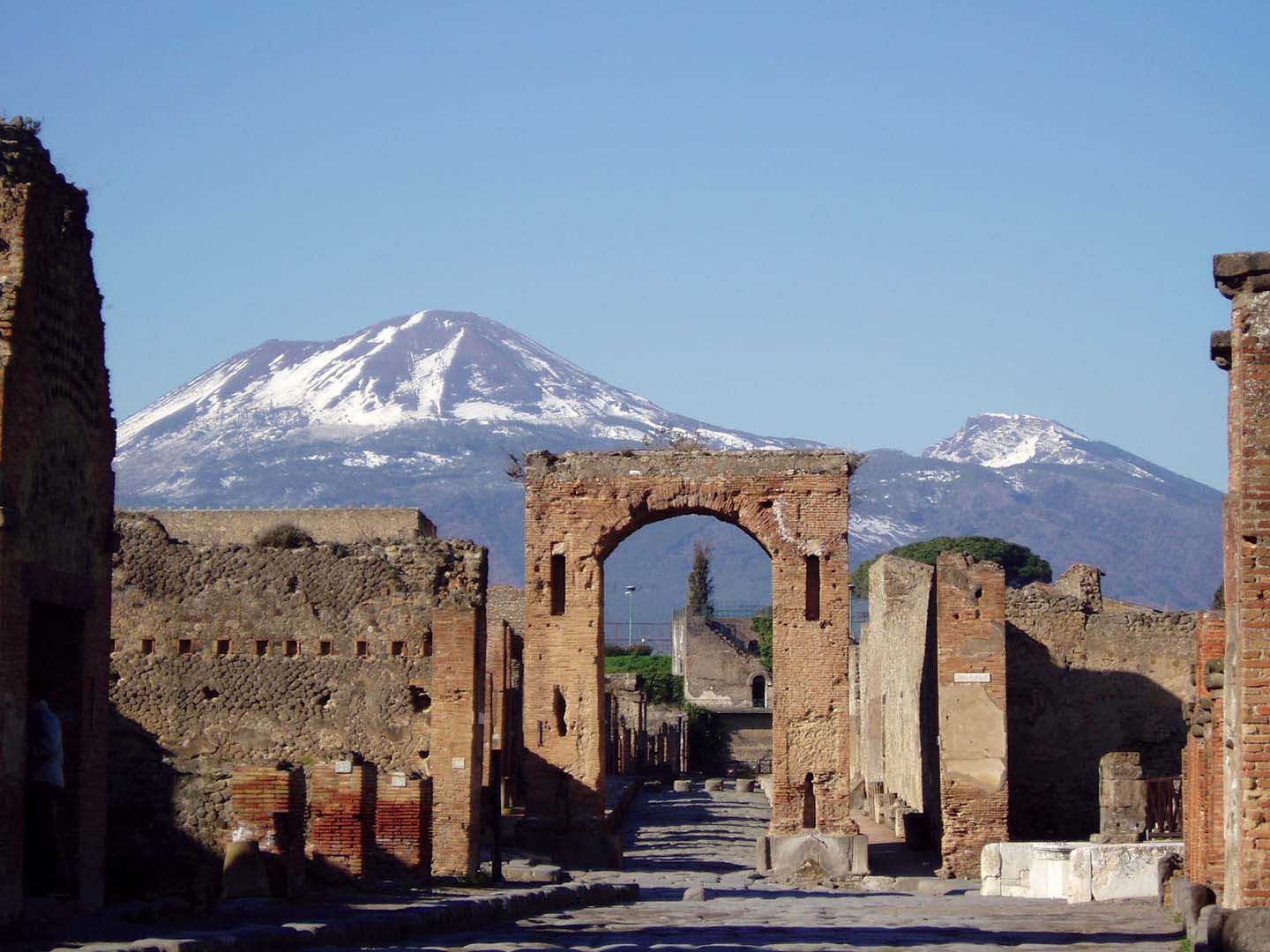

The ancient city of Pompeii is an extraordinary time capsule, frozen in the moment of its destruction by the cataclysmic eruption of Mt. Vesuvius in 79 CE. This once-thriving Roman town, located in the Campania region of Italy, offers a profound glimpse into daily life during the Roman Empire. Buried under nearly 20 feet of volcanic ash, Pompeii remained hidden for centuries until its rediscovery in the 18th century. The town’s excavation has since provided invaluable insights into Roman society, architecture, and culture, making it one of the richest archaeological sites in the world.
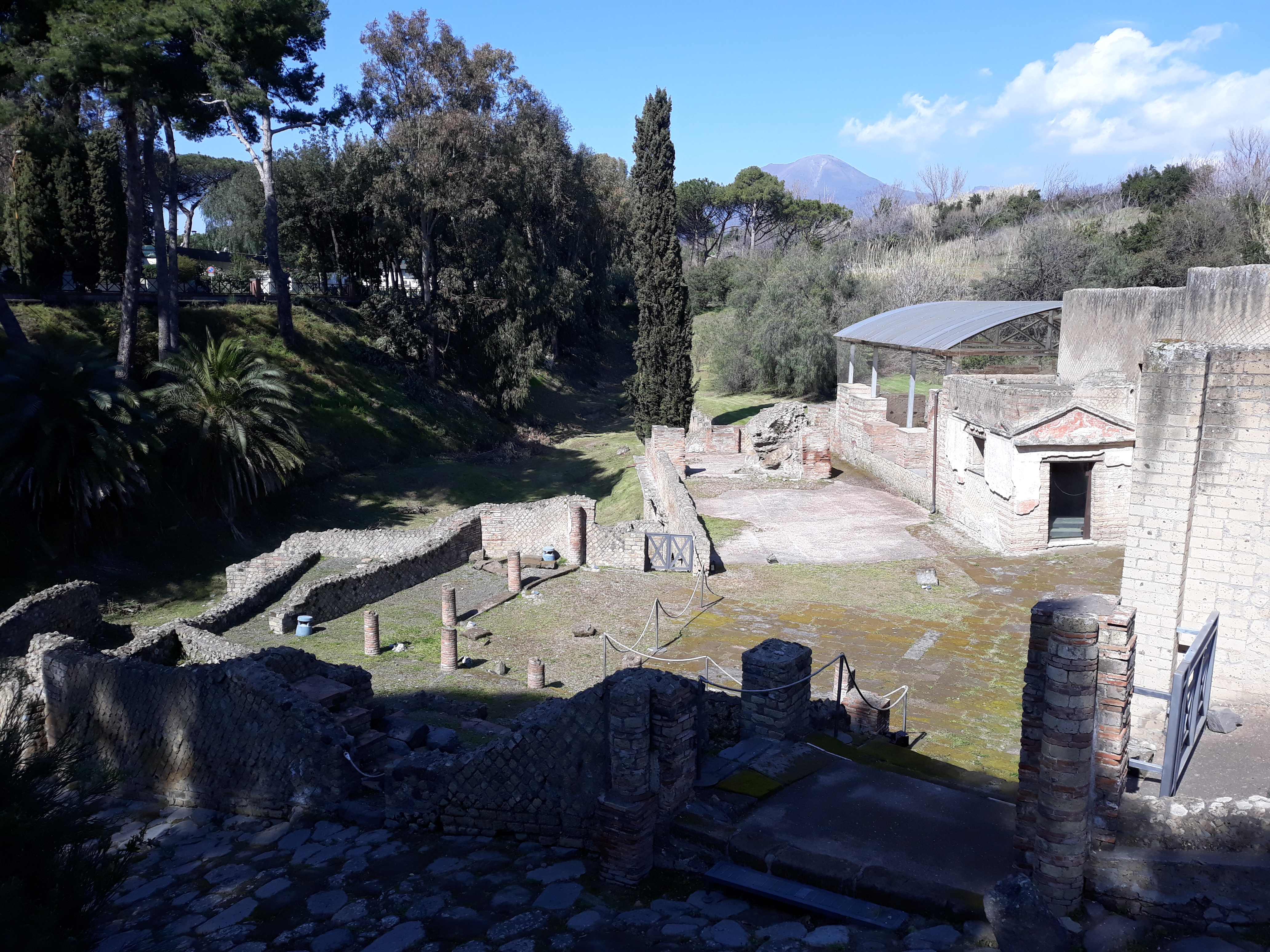
Pompeii’s origins date back to the 7th or 6th century BCE, with evidence suggesting it was founded by the Osci people. By the 4th century BCE, it came under the influence of the Greeks, and later, the Samnites. The strategic location of Pompeii, near important trade routes and the coast, allowed it to flourish. During the Roman Republic, it became a popular resort destination for the elite, leading to expansive development. Notably, it gained Roman citizenship in 80 BCE, which catalyzed its growth. However, the prosperity was abruptly halted in 79 CE, when Vesuvius unleashed a violent eruption, burying the town and its inhabitants in a thick layer of ash.
The art and architecture of Pompeii are remarkable, showcasing the grandeur of Roman design and craftsmanship. The town is characterized by its well-preserved frescoes, intricate mosaics, and stunning architectural styles, primarily influenced by Greek and Etruscan elements. The House of the Vettii, a lavish residence, is renowned for its vibrant frescoes depicting mythological scenes, while the Villa of the Mysteries features an extraordinary series of paintings that depict initiation rites into a Dionysian cult. The Forum, the bustling center of public life, is surrounded by impressive temples, including the Temple of Apollo, reflecting the importance of religion in daily life.
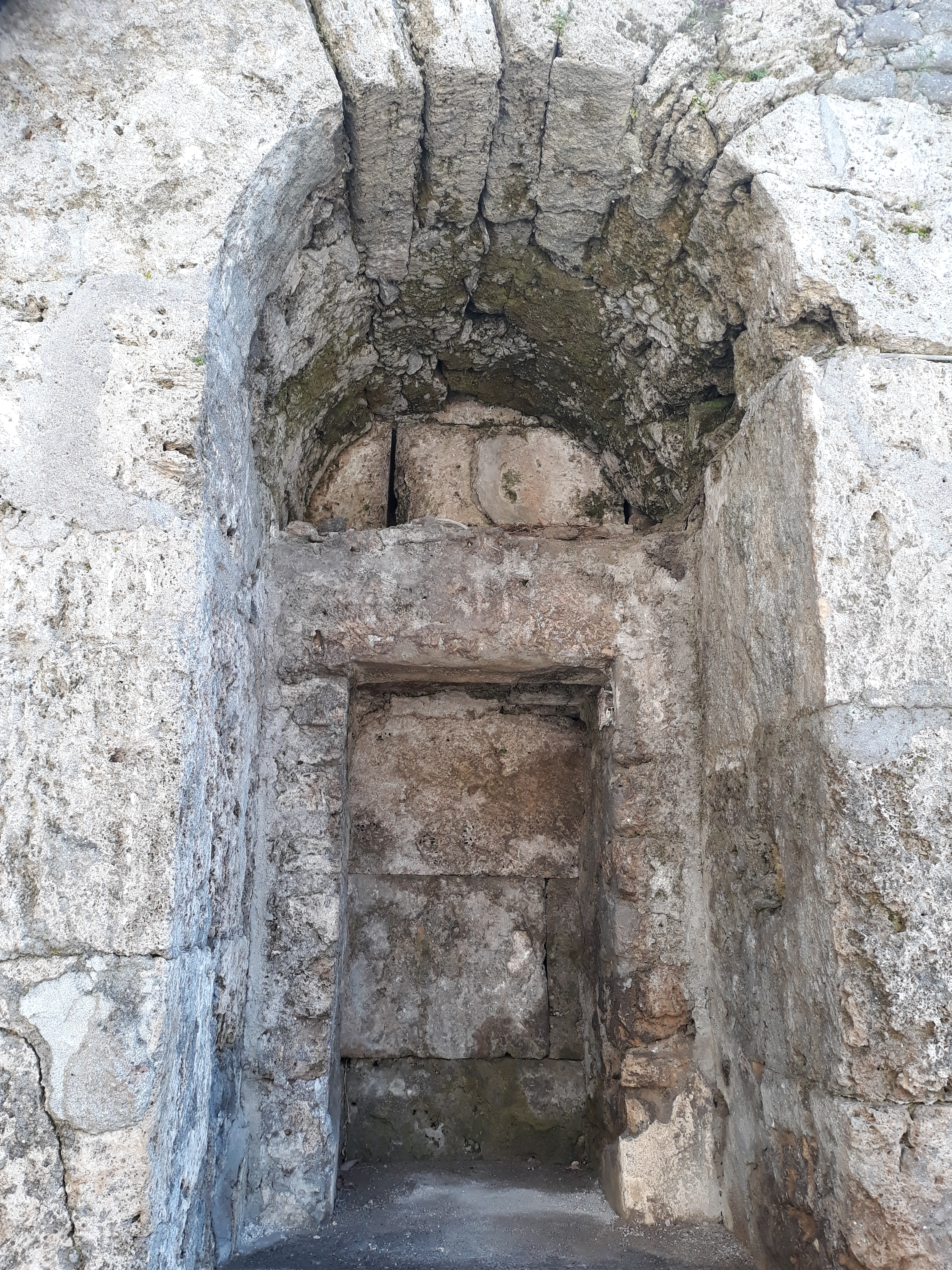
Local culture flourished in Pompeii, with customs and traditions that resonate through the ages. The people celebrated various festivals, such as the Ludi, a series of public games held in honor of the gods. These events included theatrical performances, athletic competitions, and religious ceremonies that fostered community spirit. Moreover, the presence of baths—both public and private—was a crucial aspect of social life, where citizens gathered to relax and discuss matters of the day. The remains of these baths, adorned with intricate mosaics, provide insight into the social fabric of Pompeii.
Gastronomy in Pompeii offers a tantalizing glimpse into the culinary practices of the time. Archaeological findings reveal that the ancient Romans enjoyed a diverse diet, including staples such as bread, cheese, and olives. The presence of numerous thermopolia—ancient fast-food establishments—indicates that many residents frequently dined out. Popular dishes included garum, a fermented fish sauce used to enhance flavors, and puls, a type of porridge made from grains. The discovery of food remnants, pots, and ovens further illustrates the importance of communal meals in Roman culture.
Beyond the well-trodden paths of Pompeii, several lesser-known curiosities await discovery. For instance, the Garden of the Fugitives poignantly preserves the outlines of victims who succumbed to the eruption, encapsulating their final moments. Additionally, the so-called “Vesuvius effect,” where the ash preserved not only buildings but also organic material, has led to the remarkable preservation of items like bread and fruit, offering a snapshot of daily life. Furthermore, graffiti found throughout the city reveals personal thoughts, jokes, and political commentary, providing a voice to the long-gone citizens.
For those planning a visit, the best time to explore Pompeii is during the spring and autumn months, when the weather is mild, and the crowds are thinner. Early morning visits offer a quieter experience, allowing for thoughtful exploration of the ruins. Be sure to wear comfortable shoes, as the ancient streets can be uneven, and carry water to stay hydrated. Noteworthy sites to visit include the Amphitheater, one of the oldest of its kind, and the Stabian Baths, which showcase the sophistication of Roman engineering.
As you wander through the cobblestone streets of Pompeii, surrounded by echoes of history, consider the stories and lives that once filled these spaces. The ancient city not only showcases the grandeur of Roman civilization but also serves as a poignant reminder of nature's power. For a truly personalized journey through Pompeii's wonders, consider using the Secret World app to craft your unique itinerary.


