



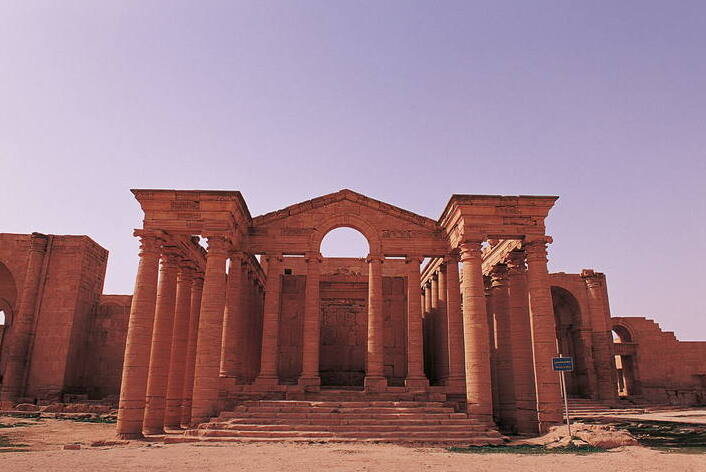
Nestled in the heart of Iraq lies the Antique City of Hatra, a marvel that tells the story of a once-great civilization. Founded in the 3rd century B.C., Hatra served as a crucial hub during the Parthian Empire and later became the capital of the first Arab Kingdom. Its strategic location, fortified by monumental walls and towers, allowed it to withstand the formidable might of the Roman Empire during invasions in A.D. 116 and 198. The remnants of Hatra reveal a fascinating tapestry of cultural influences, where Hellenistic and Roman architecture beautifully intertwine with distinct Eastern decorative elements. This blend is vividly showcased in its temples, where intricate carvings and grand columns stand as a testament to the artistic prowess of its builders.
As you explore Hatra, you encounter not just ruins but echoes of a rich history. The city was established as a commercial center, attracting merchants from far and wide. It became a melting pot where Eastern and Western cultures converged, fostering a unique artistic tradition. The most notable structure, the Temple of the Sun, exemplifies this fusion, boasting a circular layout reminiscent of Roman temples while adorned with local motifs.
Hatra's local culture still resonates within the surrounding communities. Though the city itself has faced challenges, nearby villages celebrate their heritage through traditional customs and festivals that recall the grandeur of Hatra's past. One such festival, held annually, honors the ancient gods once worshipped in Hatra’s temples, drawing visitors keen to experience local music, dance, and culinary delights.
When it comes to gastronomy, the flavors of Hatra are representative of the broader Iraqi culinary landscape. Traditional dishes such as kebabs, tabbouleh, and dolma reflect a rich tapestry of flavors cultivated over centuries. Visitors should not miss out on sampling qamar al-din, a delightful apricot juice, or salep, a warm beverage made from orchid tubers, both deeply rooted in local traditions.
Beyond the well-trodden paths, Hatra brims with lesser-known curiosities. For instance, many tourists might overlook the ancient water systems that once supplied the city, showcasing the ingenuity of its inhabitants. Additionally, Hatra is often associated with Nabataean influences, as it shares similarities with Petra, allowing for intriguing comparisons and deeper understanding of the region's historical interconnections.
For those planning to visit, the best time to explore Hatra is during the cooler months, from November to March, when temperatures are more conducive to outdoor exploration. It is important to check the current travel guidelines and local regulations, as the area continues to recover and be restored following years of conflict. When visiting, take your time to wander through the ruins and imagine the bustling life that once thrived here. Look for the inscriptions on the temple walls, which offer insights into the languages and cultures that influenced the city.
Hatra, with its monumental ruins and rich history, stands not only as a reminder of a glorious past but also as a symbol of resilience. Each stone tells a story, and each temple whispers the echoes of a civilization that once was. For a memorable journey that uncovers the hidden gems of this ancient city, consider personalizing your itinerary with the Secret World app to explore Hatra's wonders fully.
