



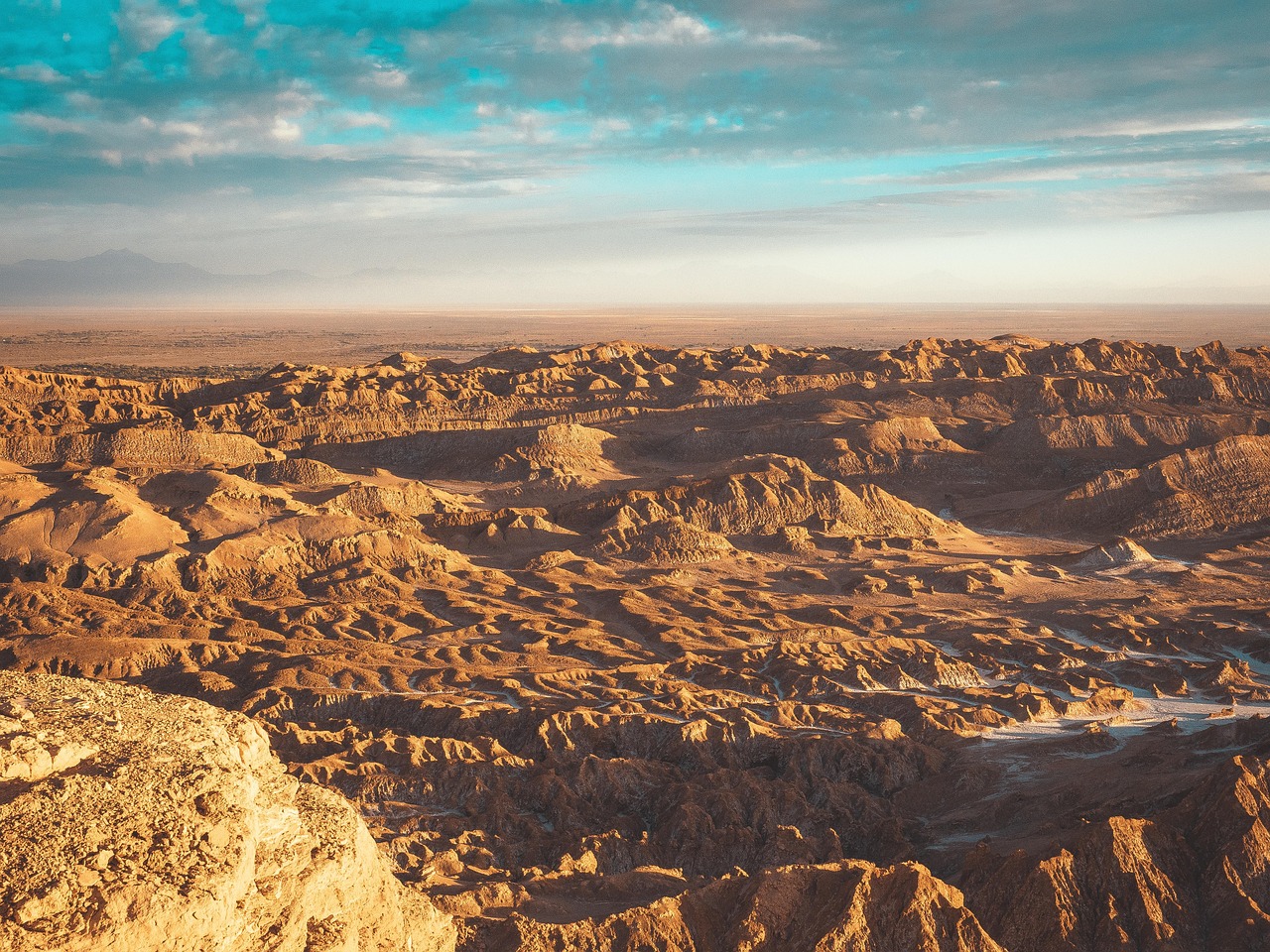
In the heart of northern Chile, the Atacama Desert unfolds like a canvas of extremes, stretching over 1,000 kilometers from the Pacific coastline to the rugged Andean foothills. Known as the driest non-polar desert in the world, its arid landscape is punctuated by vast salt flats, towering volcanoes, and surreal geological formations. This otherworldly terrain has been shaped not just by natural forces, but by thousands of years of human history, creating a place where the past and present coexist in a stunning display of resilience and beauty.

The history of the Atacama is as rich as its landscapes. Long before the Spanish conquest in the 16th century, the region was home to the Atacameño people, also known as the Likan Antai. This indigenous group thrived in the harsh desert environment, creating complex societies centered around oasis agriculture and trade routes that connected the coast with the high Andes. Evidence of their presence remains in the form of archaeological sites, ancient petroglyphs, and the ruins of settlements like Tulor, which date back over 2,000 years. The desert later witnessed the tumultuous era of the Spanish colonization, and in the late 19th century, it became a significant site during the War of the Pacific, which saw Chile, Bolivia, and Peru vying for control over the region's rich nitrate deposits.
The architectural landscape of the Atacama reflects a blend of indigenous heritage and colonial influence. In San Pedro de Atacama, the desert's cultural hub, the San Pedro Church stands as a testament to this fusion. Built in the 17th century, its adobe walls and wooden roof, crafted from local algarrobo wood, exemplify colonial architecture adapted to desert conditions. Meanwhile, the Pukará de Quitor, a pre-Columbian fortress, offers insights into the defensive strategies of early inhabitants against invading forces.
Cultural traditions in the Atacama are deeply rooted in indigenous customs and Catholic influences. The Fiesta de San Pedro y San Pablo, celebrated annually in late June, is a vibrant display of the region's cultural tapestry. This festival honors the town's patron saints with processions, music, and traditional dances like the diablada, which symbolizes the triumph of good over evil. Such celebrations are a testament to the enduring spirit of the local communities, who maintain a strong connection to their ancestral lands.
Gastronomy in the Atacama Desert is a reflection of its arid environment and cultural history. Local dishes often feature quinoa, a staple grain cultivated by the Atacameños for centuries. Chañar, a sweet syrup made from the fruit of the chañar tree, is a local delicacy, often used to sweeten desserts or enjoyed on its own. The desert's proximity to the Pacific Ocean also means that fresh seafood, such as ceviche, is a common offering, showcasing the region's diverse culinary influences.
Beyond its famed landscapes and cultural sites, the Atacama harbors lesser-known curiosities that intrigue the intrepid traveler. One such wonder is the Hand of the Desert, a massive sculpture by Chilean artist Mario Irarrázabal, which rises eerily from the sand as a symbol of human vulnerability and resilience. Another secret of the desert is its extraordinary night sky, renowned among astronomers for being one of the clearest on Earth. The ALMA Observatory, the largest radio telescope in the world, takes advantage of these pristine conditions to explore the depths of the universe.
For visitors, the Atacama Desert offers a wealth of experiences, each as unique as the landscape itself. The best time to visit is during the austral spring and autumn (September to November and March to May), when temperatures are more moderate. Travelers should prepare for the high altitude, which can exceed 2,400 meters above sea level, bringing necessary precautions to prevent altitude sickness. Exploring the desert's vastness requires a spirit of adventure, with highlights including the otherworldly Valle de la Luna, the ethereal Tatio Geysers, and the vast expanse of the Salar de Atacama.
In the Atacama Desert, the interplay of history, culture, and nature creates a narrative as compelling as it is beautiful. Whether wandering through ancient ruins, marveling at celestial wonders, or simply soaking in the stark beauty of the landscape, visitors will find themselves captivated by the stories that this remarkable desert has to tell.
