
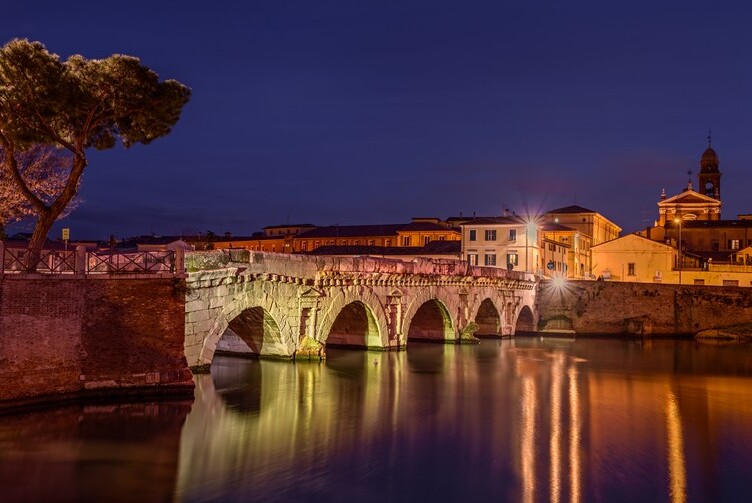

Nestled in the charming Italian city of Rimini, the Bridge of Augustus and Tiberius stands as a testament to the enduring legacy of Roman engineering and architectural prowess. Spanning the tranquil waters of the Marecchia River, this ancient bridge is more than just a crossing point; it is a tangible link to the past, offering a glimpse into the lives of those who trod its stones nearly two millennia ago.
Completed during a pivotal period in Roman history, the bridge was constructed between 14 and 21 AD, under the auspices of the emperors Augustus and Tiberius. The Latin inscription that proudly adorns the bridge commemorates its imperial patrons. This bridge was not merely a utilitarian structure but a symbol of Rome's strength and stability during a time of expanding empire. Over the centuries, it has withstood the ravages of war, including significant bombardment during World War II, yet remains remarkably intact, a testament to the durability of Roman craftsmanship.
The architectural elegance of the Bridge of Augustus and Tiberius is undeniably captivating. Its five sweeping arches elegantly span the width of the river, crafted from Istrian stone, known for its resilience and beauty. The bridge reflects the classical Roman style, characterized by symmetry and proportion. Its robust construction and integration with the natural landscape underscore the ingenuity of Roman engineers who understood the importance of both form and function. The design of the bridge, with its gentle curve and perfectly aligned arches, creates a harmonious rhythm that continues to inspire architects and historians alike.
Beyond its architectural significance, the bridge serves as a cultural beacon for the people of Rimini. The locals, ever proud of their Roman heritage, often gather here during festivals such as La Notte Rosa – the Pink Night – an annual summer event where the city lights up in hues of pink, celebrating life and culture with concerts, performances, and fireworks. The bridge becomes a focal point, draped in lights, reflecting the vibrant colors on the river below, embodying the festive spirit that defines Rimini.
No visit to Rimini would be complete without indulging in its rich gastronomy. The region is famed for its delicious cuisine, deeply rooted in tradition. Visitors can savor dishes like piadina, a thin Italian flatbread, often served with an array of cheeses and cured meats. Another local specialty is passatelli, a pasta made from breadcrumbs, Parmesan cheese, and eggs, served in a rich broth. To complement the meal, a glass of Sangiovese di Romagna, a locally produced wine, perfectly captures the essence of the region’s culinary heritage.
For those seeking lesser-known curiosities, the bridge offers its own mysteries. Few tourists are aware that the bridge’s fifth arch is slightly narrower than the others, a subtle detail that hints at challenges faced during its construction. Moreover, according to local folklore, the bridge was once believed to be protected by San Giuliano, the patron saint of Rimini, who ensured its survival through natural and man-made disasters.
Practical tips for visiting the Bridge of Augustus and Tiberius include timing your visit for the late afternoon, when the setting sun casts a golden glow over the stone, creating a perfect opportunity for photography. While the bridge is accessible year-round, visiting during the spring or early autumn ensures pleasant weather for exploring the surrounding area. Pay attention to the intricate details of the stonework, which bear centuries-old carvings and marks, each telling a story of its own.
In essence, the Bridge of Augustus and Tiberius is not just an architectural wonder; it is a living chapter of history, blending ancient Roman heritage with the vibrant culture of modern Rimini. Whether you are a history enthusiast, an architecture aficionado, or simply a curious traveler, a visit to this iconic bridge promises an enriching experience, one that connects the present with the past in the most tangible of ways.


