
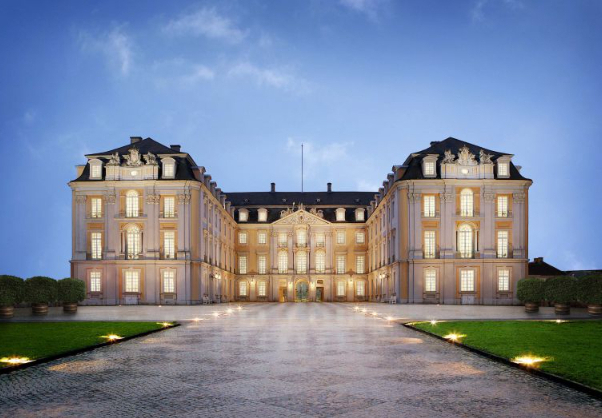

Standing amidst the grandeur of the Brühl Palaces, one might feel as if they have been transported back to the 18th century, a time of opulence and artistic extravagance. Located in Brühl, Germany, these palaces are more than just architectural marvels; they are portals into the past, infused with the spirit of Baroque and Rococo splendor.
The story of the Brühl Palaces begins in the early 18th century with the construction of Augustusburg Palace, commissioned by Clemens August of Bavaria, the prince-elector and archbishop of Cologne. Built on the foundations of a medieval moated castle, the palace served as a symbol of the prince's power and taste. Construction began in 1725, led by architect Johann Conrad Schlaun, and was later taken over by François de Cuvilliés, who infused it with the opulence typical of the era. By 1768, the magnificent Falkenlust Hunting Lodge was added to this ensemble, designed as a retreat for the prince’s falconry pursuits, a popular pastime among the nobility.
The architectural style of the Brühl Palaces is a harmonious blend of Baroque and Rococo, characterized by its elaborate ornamentation and symmetrical designs. Augustusburg Palace's grand staircase, designed by Balthasar Neumann, is a masterpiece of theatrical Baroque art, where visitors can marvel at the sweeping curves and lavish stucco work. The interiors are adorned with frescoes and tapestries, showcasing the artistic talent of the period. The intimate elegance of the Falkenlust Hunting Lodge contrasts yet complements Augustusburg’s grandeur, reflecting a more personal side of aristocratic life.
Culturally, Brühl and its palaces are deeply embedded in the local traditions and history. The annual Brühler Schlosskonzerte (Brühl Palace Concerts) are a testament to the town's enduring love for classical music, attracting artists and audiences from around the world. During the Advent season, the palaces are beautifully illuminated, and local Christmas markets offer a festive atmosphere filled with traditional goods and culinary delights.
No visit to Brühl would be complete without indulging in the local gastronomy. The region's culinary offerings are a blend of hearty German fare with a Rhineland twist. Traditional dishes such as Rheinischer Sauerbraten (a marinated roast) and Reibekuchen (potato pancakes) are must-tries. Pair these with a glass of locally brewed beer or a fine Riesling wine from the nearby vineyards to complete your culinary journey.
Among the lesser-known curiosities of the Brühl Palaces is the intricate network of secret passageways that once allowed discreet movement between rooms, a feature favored by Clemens August for maintaining privacy. Another intriguing detail is the palace's connection to the Prussian King Frederick the Great, who visited Brühl and reportedly admired the architecture so much that it influenced the design of his own Sanssouci Palace in Potsdam.
For those planning a trip, the best time to visit the Brühl Palaces is during the spring or early autumn, when the gardens are in full bloom and the weather is mild. Visitors should allocate ample time to explore both Augustusburg and Falkenlust, as well as the extensive gardens designed by Dominique Girard, a pupil of the famed André Le Nôtre. Guided tours are recommended, as they offer insights into the historical and architectural significance of the site.
When exploring the palaces, keen-eyed visitors should look for the mythological and allegorical themes depicted in the artwork, which reflect the power and intellect of the ruling elite. The delicate stucco work and frescoes are rich with stories waiting to be uncovered by those who take the time to appreciate their intricate details.
In conclusion, the Brühl Palaces are not just a testament to the architectural and cultural zenith of the Baroque period but also a living tapestry of history, art, and tradition. Whether you are a lover of history, an art enthusiast, or a curious traveler, a visit to this UNESCO World Heritage Site is sure to leave an indelible impression on your soul.


