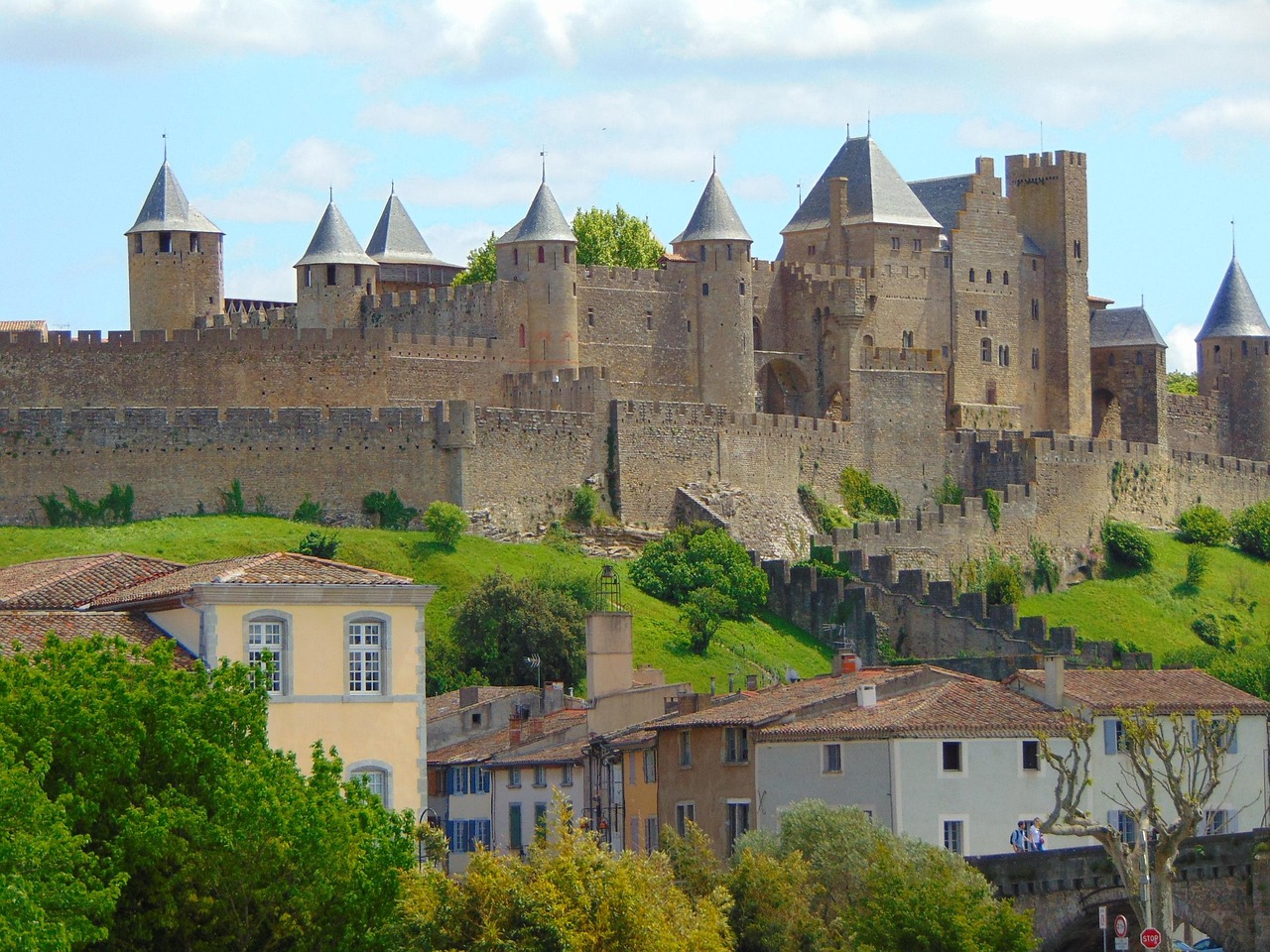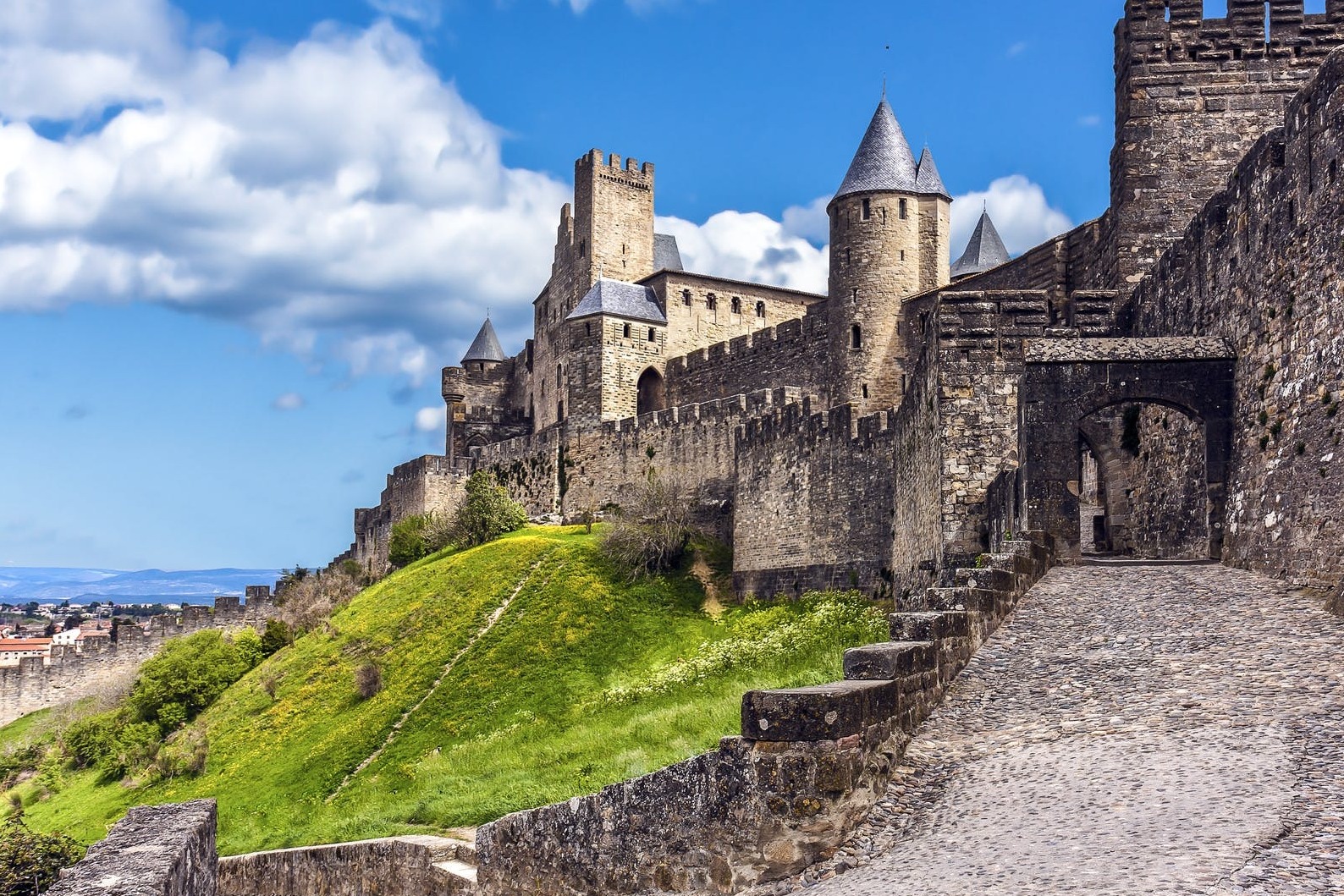

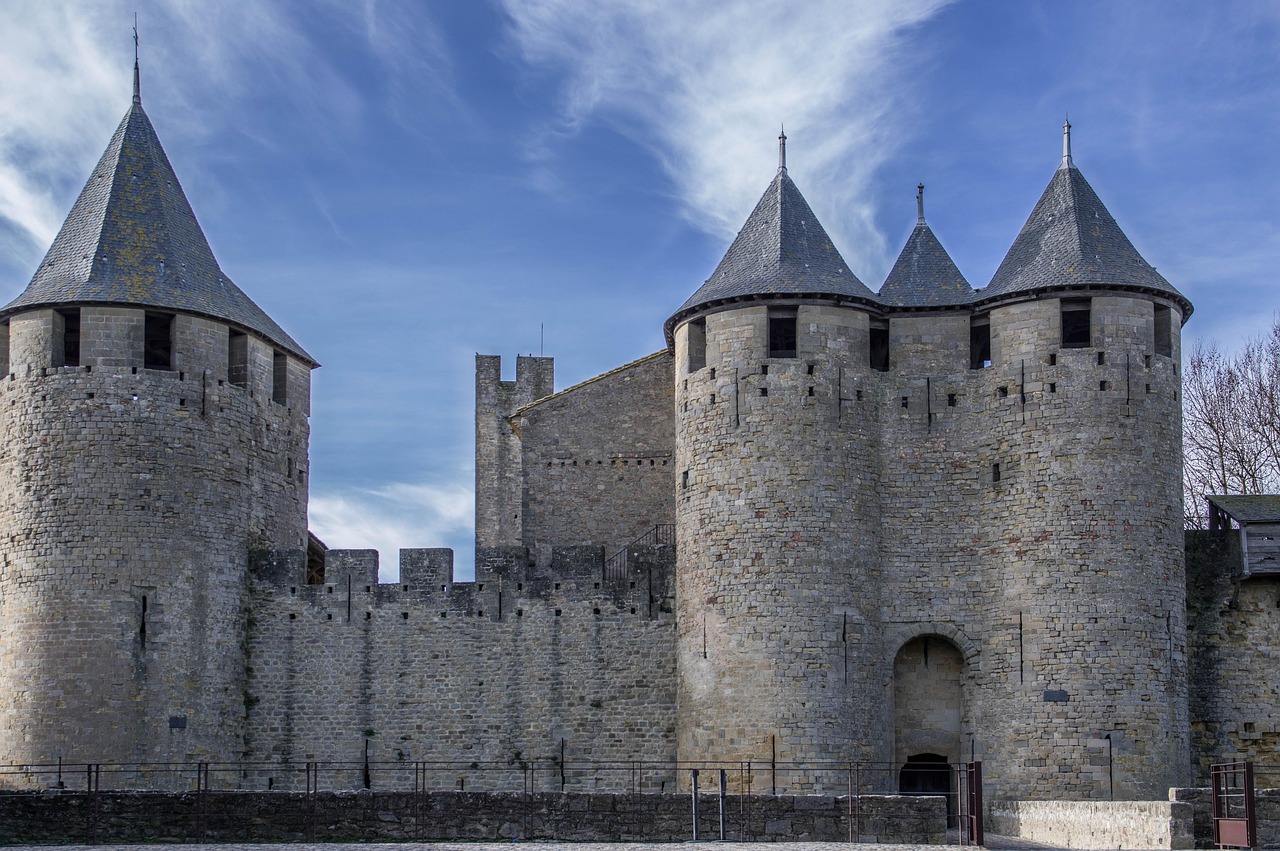
In the heart of Carcassonne, the Château Comtal rises majestically, a testament to the region's rich history and architectural brilliance. This medieval fortress, nestled within the ramparts of the Cité de Carcassonne, is not just an impressive structure; it embodies centuries of conflict, culture, and resilience.
### History and Origins
The origins of the Château Comtal date back to the Gallo-Roman period, around the 1st century AD, when the site was fortified to protect the strategic crossing of the Aude River. However, it gained prominence as a stronghold during the 12th century, under the rule of Raymond-Roger Trencavel, a viscount of Carcassonne. The castle's pivotal moment came in 1209, when it became the focal point of the Albigensian Crusade. The Catholic Crusader army, intent on eradicating the Cathar heresy, first attacked the nearby castrum of Béziers before laying siege to Carcassonne itself.
The castle endured significant transformations over the centuries. After being recaptured by French forces, it fell into disrepair until the mid-19th century when the renowned architect Eugène Viollet-le-Duc undertook an ambitious restoration project. His vision not only preserved the castle but also revitalized its historical significance, leading to its designation as a UNESCO World Heritage Site in 1997.
### Art and Architecture
The Château Comtal is a striking example of medieval military architecture, characterized by its imposing rectangular shape and robust fortifications. The castle is encircled by a deep ditch, creating a formidable barrier, while its two barbicans serve as additional layers of defense. Visitors are greeted by six towering curtain walls adorned with crenellations, which provide stunning views of the surrounding landscape.
Inside, the castle boasts a collection of historical artifacts, including remnants of Romanesque and Gothic architecture. The Great Hall, with its grand vaulted ceilings, is an architectural highlight. The intricate stone carvings and the impressive chapel within showcase the artistic craftsmanship of the period, making the castle not just a military stronghold but also a site of artistic significance.
### Local Culture and Traditions
The region surrounding Carcassonne is steeped in rich traditions, many of which have been shaped by the castle's storied past. The annual Medieval Festival, held each August, attracts thousands of visitors eager to witness reenactments, craft demonstrations, and vibrant parades that echo the town's medieval heritage. Locals don period costumes, transporting onlookers to a time when knights roamed the battlements.
Another cultural highlight is the Fête de la Cité, celebrated in July, which features concerts, theatrical performances, and fireworks, culminating in a spectacular display above the castle. The preservation of these traditions underscores the community’s dedication to honoring their history, making it an integral part of the visitor experience.
### Gastronomy
No visit to Carcassonne is complete without indulging in its culinary delights. The region is known for its rich Languedoc cuisine, characterized by hearty, rustic dishes. One must-try is cassoulet, a slow-cooked casserole made with white beans, duck, sausage, and sometimes lamb. This dish embodies the spirit of the region, reflecting its agricultural bounty.
Accompany your meal with a glass of Côtes du Roussillon wine, a local specialty that perfectly complements the robust flavors of the cuisine. For dessert, savor a slice of fougasse, a sweet bread often flavored with orange blossom or almond, showcasing the region's penchant for delightful flavors.
### Lesser-Known Curiosities
While many tourists flock to the Château Comtal for its grand architecture and history, fewer know about the hidden well within its walls. This well, believed to have supplied water during sieges, is a fascinating glimpse into the castle's strategic importance.
Additionally, the castle's towers are not just defensive structures; they are home to various species of flora and fauna, making them a unique micro-ecosystem. Birdwatchers and nature enthusiasts will find joy in observing the diverse wildlife that inhabits these ancient fortifications.
### Practical Visitor Information
The best time to visit the Château Comtal is during the spring and fall months (April to June and September to October). The weather is mild, and the crowds are smaller compared to the peak summer months.
When planning your visit, consider arriving early in the day to explore the castle before it becomes busy. Don’t miss the opportunity to walk along the ramparts for panoramic views of the surrounding countryside and the city below.
For a more immersive experience, join a guided tour that delves deeper into the castle’s history and architecture. Look out for the informative displays that share stories of the castle's past and its role in the Cathar history.
As you explore the enchanting streets of Carcassonne and the formidable Château Comtal, consider using the Secret World app to craft your personalized itinerary for an unforgettable adventure in this medieval gem.