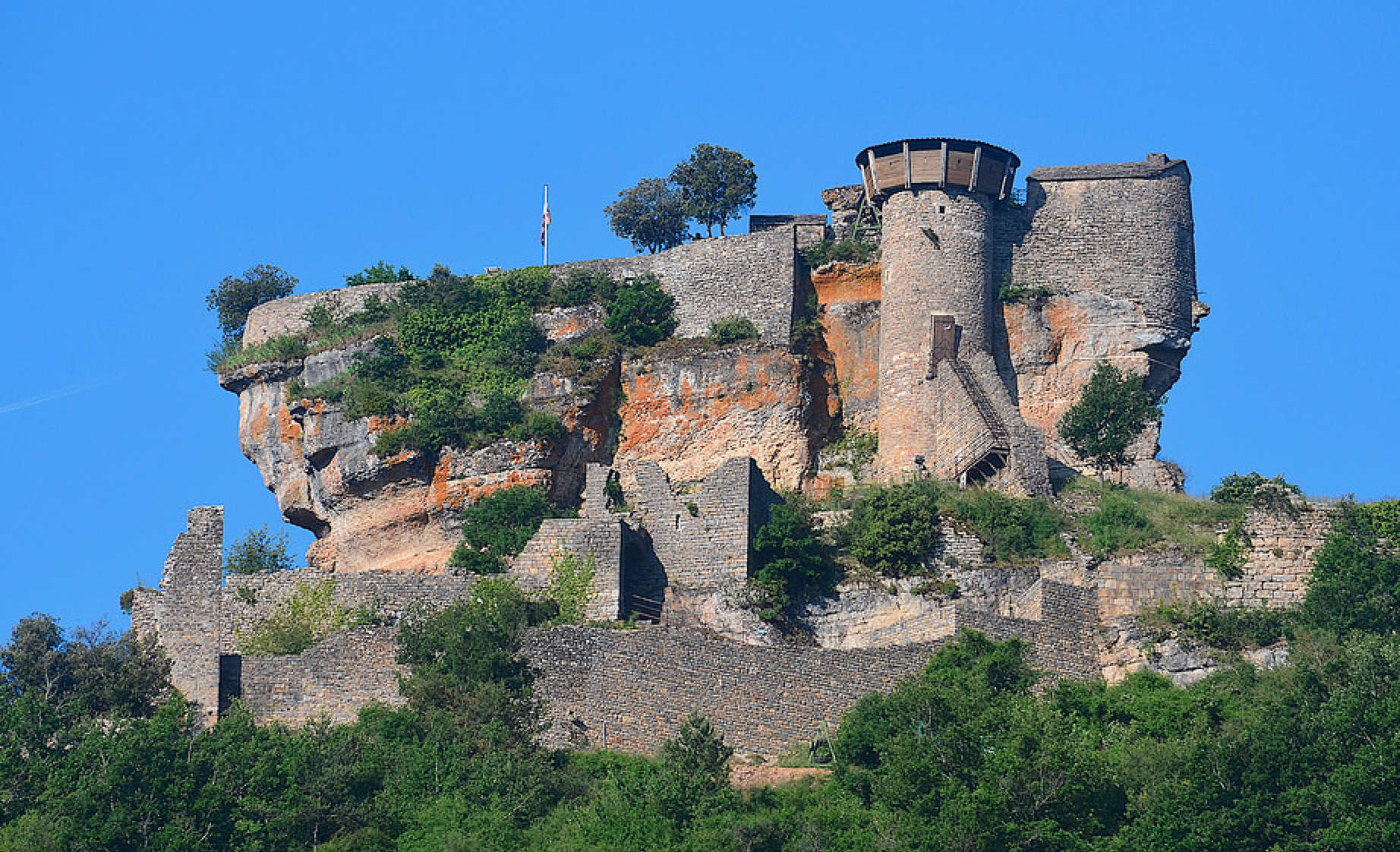

Perched majestically above the Gorges du Tarn, the Château de Peyrelade is a testament to the turbulent history of the region and an emblem of medieval architecture. Its name, derived from the Occitan phrase 'Pèira Lada', translates to "wide rock," perfectly embodying its dramatic setting on a massive limestone bluff. This castle is more than a mere ruin; it is a captivating journey through time, offering insights into ancient habitation and the feudal struggles that shaped the Rouergue province.
### History and Origins
The roots of Château de Peyrelade stretch back to prehistoric times, as evidenced by artifacts unearthed at the site. It is believed that the location served as a strategic vantage point long before the castle was constructed. The first significant mention of the castle dates back to the 12th century, when it emerged as a vital stronghold controlling access to the Gorges du Tarn, a crucial passage for trade and military movements.
Throughout the centuries, the castle became embroiled in relentless skirmishes and sieges, particularly during the Albigensian Crusade in the early 13th century, which sought to eradicate Catharism from the region. The castle changed hands multiple times, reflecting the shifting allegiances and power struggles of the era. It remained an important military and administrative center until 1633, when Cardinal Richelieu, seeking to consolidate royal power, ordered its dismantling. Despite the destruction, the remnants of the castle reveal much about its formidable past and strategic significance.
### Art and Architecture
The architectural style of Château de Peyrelade is a fascinating blend of medieval military design and natural rock formation. The outer wall, measuring over 250 meters in length and standing 10 meters high, exhibits the robust engineering of the time. Its thickness of 2.1 meters is a testament to the defensive needs of the castle in an era when warfare was a constant threat.
At the heart of the castle lies the natural rock keep, soaring more than 50 meters into the sky. This daunting structure was accessible only via a round tower, which adds an element of intrigue to the castle's defenses. Visitors can still trace the layout of the site, offering a glimpse into the daily life of its former inhabitants and the strategic military operations that took place within its walls.
### Local Culture and Traditions
The area surrounding Rivière-sur-Tarn is rich in cultural traditions that echo the history of the Aveyron region. Local customs celebrate the region's heritage, including the annual Fête de la Châtaigne (Chestnut Festival), which showcases the importance of chestnuts in local cuisine. This festival, held in the autumn, features music, dance, and a variety of traditional dishes.
Additionally, the Route des Seigneurs du Rouergue invites visitors to explore the other 22 castles in the area, each telling its own story of nobility, conflict, and culture. This collective heritage underscores the significance of the châteaux in shaping the region's identity and preserving its history.
### Gastronomy
A visit to Rivière-sur-Tarn would be incomplete without indulging in the local gastronomy. The region is known for its hearty dishes that reflect the rugged landscape and agricultural traditions. Aligot, a creamy blend of mashed potatoes and melted cheese, is a must-try, often accompanied by succulent sausages or roasted meats.
Local wines, particularly those from the Marcillac appellation, pair beautifully with the regional fare. The Fermes de la Vallée also offers artisanal products, including cured meats and cheeses that celebrate the flavors of the Aveyron countryside. Don't miss the opportunity to sample Roquefort, the famous blue cheese made in nearby caves, which adds a unique taste of local terroir to any meal.
### Lesser-Known Curiosities
Beyond its imposing ruins, Château de Peyrelade holds several lesser-known curiosities that intrigue visitors. One such detail is the legend of the castle’s ghost, a spectral figure said to wander the grounds, believed to be the spirit of a former lord who met a tragic end. Additionally, the castle's unique location has made it a popular spot for rock climbers, drawn by the stunning cliffs that offer breathtaking views of the gorge below.
The castle also provides excellent opportunities for birdwatching, particularly for spotting golden eagles that soar above the cliffs. This blend of history and natural beauty makes the site a multifaceted destination for those willing to explore beyond the typical tourist experience.
### Practical Visitor Information
The best time to visit Château de Peyrelade is between mid-June and mid-September when the site is open to the public. Guided tours provide deeper insights into the castle's history and architecture, and the picturesque trails around the site are perfect for hiking enthusiasts.
When planning your visit, consider exploring the surrounding area, including the stunning Gorges du Tarn, where outdoor activities such as kayaking and rock climbing abound. Bring sturdy shoes, a camera to capture the breathtaking views, and perhaps a picnic to enjoy in the shadow of the castle's majestic ruins.
In conclusion, the Château de Peyrelade is not merely a relic of the past; it is a vibrant piece of the cultural tapestry of Rivière-sur-Tarn. To fully appreciate this remarkable destination and plan your personalized adventure, consider using the Secret World app for tailored itinerary suggestions.
