



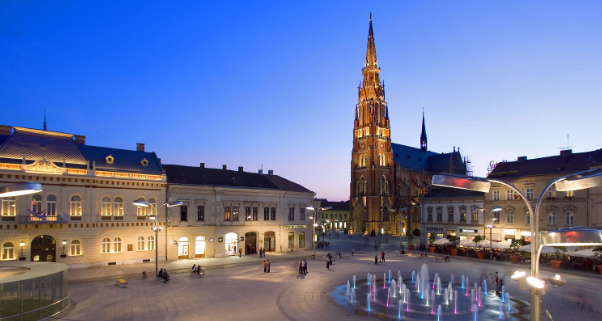
Standing as a sentinel of spiritual and architectural splendor, The Church of St Peter and St Paul in Osijek, Croatia, is more than a place of worship—it is a testament to the city's vibrant history and cultural richness. Nestled in the heart of Slavonia, this neo-Gothic masterpiece commands attention with its towering 90-metre spire, a beacon that has guided both the faithful and curious travelers for over a century.
The origins of the church are deeply interwoven with the narrative of Osijek itself. Construction began in 1894, during a period marked by a surge of architectural ambition in the Austro-Hungarian Empire. Designed by architect Franz Langenberg, the church was completed in 1898, just in time to usher in the 20th century. It was built to replace a smaller church that could no longer accommodate the burgeoning population of Osijek. The opening was a grand affair, attended by dignitaries and local citizens alike, symbolizing Osijek's emergence as a significant urban center in Croatia.
Architecturally, the Church of St Peter and St Paul is a stunning example of neo-Gothic design. Its intricate facade, characterized by pointed arches, ribbed vaults, and flying buttresses, draws inspiration from the great cathedrals of Europe. The interior is equally impressive, with high vaulted ceilings and richly decorated altars that create an atmosphere of reverence and awe. Notable artworks include beautiful stained glass windows, which depict biblical scenes in vibrant hues, casting a kaleidoscope of colors across the pews during the afternoon sun. The church also houses an impressive organ, which, with its melodious tones, enhances the spiritual experience of those attending services.
Osijek’s local culture is deeply tied to the rhythms of this church. The Feast of Saints Peter and Paul, celebrated every June 29th, is a highlight of the local calendar. On this day, the church becomes a focal point for festivities, marked by processions, special masses, and community gatherings. The event is a blend of religious devotion and cultural celebration, reflecting the city's diverse heritage.
While exploring the local culture, one cannot ignore the gastronomic delights of Osijek. The region's cuisine is a delightful mosaic of flavors, with influences from Hungarian, Austrian, and Balkan traditions. Visitors are encouraged to try čobanac, a hearty meat stew that perfectly encapsulates the wholesome richness of Slavonian cooking. Pair it with a glass of locally produced Graševina wine, and you have a meal that is as satisfying as it is memorable.
Among the lesser-known curiosities of the Church of St Peter and St Paul is its crypt, a hidden gem that many visitors overlook. The crypt contains the remains of notable local figures and offers a fascinating glimpse into the history of Osijek’s ecclesiastical community. Another intriguing detail is the church's clock mechanism, which has been meticulously maintained since its installation over a century ago, a testament to the craftsmanship of the era.
For those planning a visit, the best time is during the warmer months, from late spring to early autumn, when the city is alive with festivals and the weather is inviting. Early morning visits offer a serene experience, allowing one to appreciate the church's architectural details in the soft morning light. Be sure to take a moment to sit in the church’s peaceful courtyard, a perfect spot for quiet reflection or simply to soak in the beauty of this historic site.
In summary, the Church of St Peter and St Paul is not merely a landmark of Osijek but a living symbol of the city's enduring spirit and cultural heritage. Its rich history, architectural grandeur, and deep-rooted traditions offer visitors a profound connection to the past, while its vibrant community life ensures that it remains a vital part of Osijek's present and future. Whether you are there to marvel at its architecture, participate in a local festival, or simply enjoy the tranquility of its surroundings, the church is a must-see destination that promises to leave a lasting impression.
