
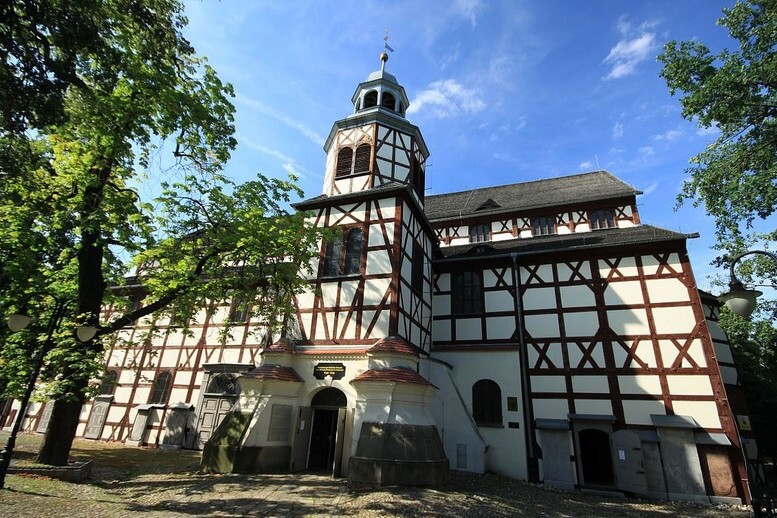

Nestled in the heart of Jawor, Poland, the Churches of Peace stand as monumental testaments to a tumultuous era in European history. Built during the mid-17th century, these remarkable structures are not only architectural marvels but also symbols of the quest for religious freedom amidst the backdrop of the Thirty Years' War and the subsequent Peace of Westphalia in 1648. The churches in Jawor and Świdnica represent the largest timber-framed religious buildings in Europe, embodying a unique Lutheran ideology in regions traditionally dominated by Catholicism.
The Church of the Holy Trinity in Świdnica, constructed between 1656 and 1657, is a prime example of this architectural style. Designed as a three-aisled basilica with a Greek cross ground plan, it can accommodate an astonishing 7,500 worshippers. The church’s interior is a feast for the senses, dominated by an exquisite 18th-century wooden altar that showcases the Baroque style. Above the altar, the relief of the Last Supper captures the moment of Christ's final meal, surrounded by intricately carved figures of key biblical characters, including Moses, Aaron, John the Baptist, and the apostles Peter and Paul. The center scene depicts the baptism of Christ in the Jordan River, symbolizing the core of Christian faith.
The architectural significance of these churches extends beyond their sheer size. Constructed primarily from timber, they reflect the craftsmanship and ingenuity of the era, utilizing local materials and methods that resonate with the Silesian landscape. The churches were built quickly due to the constraints imposed by the Peace of Westphalia, which allowed Protestants only a limited time to erect such structures. This urgency led to innovative building techniques, resulting in a harmonious blend of form and function that continues to captivate visitors today.
Local culture in Jawor is deeply intertwined with the legacy of the Churches of Peace. The region celebrates its Protestant heritage through various traditions and festivals. One notable event is the annual Day of the Reformation, observed on October 31st, which draws both locals and tourists to the churches for special services and community gatherings. This celebration not only honors the Protestant Reformation but also fosters a sense of unity among residents, highlighting their shared history and cultural identity.
Gastronomy in Jawor offers a delightful journey into the region’s culinary heritage. Traditional Silesian dishes are a must-try for any visitor. Pierogi, the beloved Polish dumplings, are filled with various ingredients, from potatoes and cheese to seasonal fruits. Another local favorite is kopytka, a type of potato dumpling often served with a savory sauce. To wash it down, locals enjoy Żywiec, a popular Polish beer, or kompot, a sweet fruit drink made from stewed fruits, often served at family gatherings and celebrations.
Beyond its churches, Jawor holds lesser-known curiosities that pique the interest of the curious traveler. One surprising fact is that the churches were constructed under the watchful eye of local nobility who, despite their own Catholic faith, supported the Protestant community’s right to worship freely. Additionally, the Church of Peace in Jawor houses a unique collection of 17th-century organ pipes, which are still played during services, connecting the past with the present through music.
For those looking to visit, the best time to explore Jawor is during the spring and early autumn months when the weather is mild, and the countryside is lush. Plan your visit around local festivals to experience the vibrant culture firsthand. The churches themselves are open to the public and often host guided tours, allowing visitors to delve deeper into their rich history and architectural details. Don’t forget to look for the hidden corners within these sacred spaces, where intricate carvings and historical artifacts tell stories of faith and perseverance.
In conclusion, Jawor and its Churches of Peace are a treasure trove of history, culture, and artistry waiting to be discovered. Whether you're drawn by the architectural grandeur, the rich local traditions, or the delectable cuisine, this charming town offers a unique glimpse into a pivotal chapter of European history. For a personalized experience, consider using the Secret World app to craft an itinerary that uncovers the hidden gems of this enchanting destination.


