
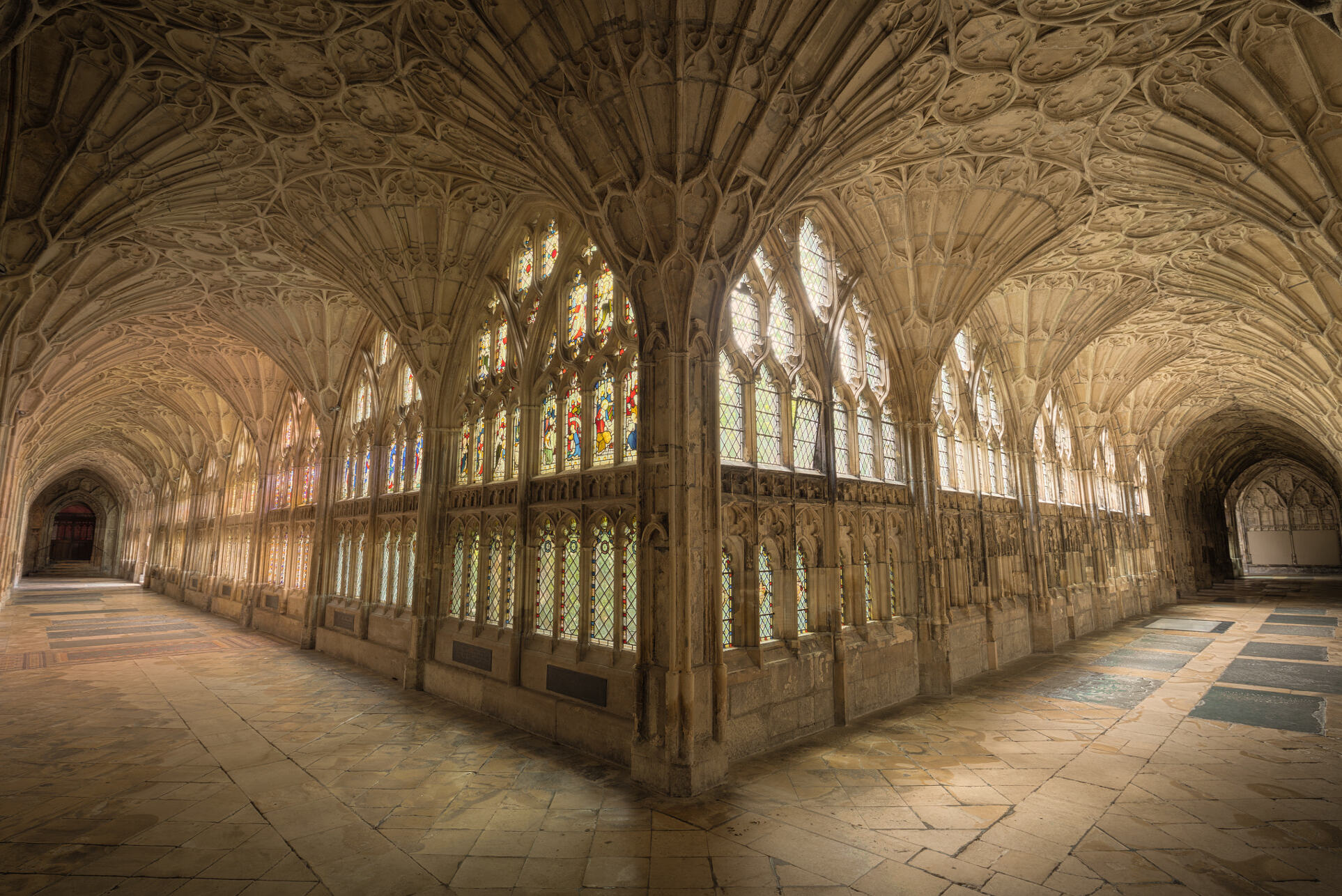

There are few places that you visit that completely exceed your expectations, places that you find so astonishing that you think of them long after you have departed. For me, Gloucester Cathedral, especially its cloisters, is one of these remarkable locations.
From the first time I saw them, I knew that their fame was more than justified. The ceilings are draped with the most beautiful fan vaulting, a hallmark of Gothic architecture that creates an ethereal atmosphere. The way light dances through the stained glass windows, illuminating centuries of artistry, gives visitors a chance to walk in peace and quiet, making it feel as though you have stumbled back in time.
History and Origins The history of Gloucester Cathedral dates back to 678 AD when it was originally founded as a Benedictine monastery. The present structure, however, began to take shape in 1089 under the guidance of King William II, who commissioned the building in the Norman style. Over the centuries, the cathedral has witnessed significant historical events, including the coronation of King Edward II in 1308 and the burial of notable figures such as Robert of Gloucester, a chronicler of the 12th century. The cloisters, completed in the 14th century, are particularly fascinating because they are located on the north side of the church, a rarity since most cloisters are traditionally found on the south side due to sunlight considerations.
Art and Architecture The architectural style of the cloisters is a breathtaking illustration of the Perpendicular Gothic style, characterized by its towering vaulted ceilings and intricate stone carvings. The fan vaulting in the cloisters is especially stunning, with delicate ribs extending outward like a spider's web, creating an illusion of infinite space. Visitors can also admire the numerous stained glass windows, each telling a story of its own, from biblical tales to local legends. The chapter house, adjacent to the cloisters, features exquisite carvings and a unique octagonal shape, inviting visitors to ponder the artistry of the medieval craftsmen.
Local Culture and Traditions The culture surrounding Gloucester Cathedral is deeply rooted in both religious and local traditions. Each year, the cathedral hosts various festivals and events that celebrate not only its religious significance but also the vibrant community it serves. The Gloucester History Festival, held in September, invites locals and visitors alike to explore the city’s rich heritage, with the cathedral often serving as a focal point for activities and performances. Additionally, the annual carol services during the Christmas season draw large crowds, filling the air with music and festivity.
Gastronomy No visit to Gloucester would be complete without indulging in local culinary delights. The region is known for its Gloucestershire cheese, particularly the double Gloucester, which boasts a rich, creamy flavor and is often paired with local cider. For those with a sweet tooth, Gloucester’s famous cider cakes—rich with local apples and spices—are a must-try. The nearby Gloucester Docks area also offers a plethora of eateries where visitors can sample traditional English fare, from hearty pies to freshly caught fish and chips.
Lesser-known Curiosities Despite its popularity, there are many hidden details that most tourists miss. For instance, if you look closely at the stonework in the cloisters, you’ll find intricate carvings of animals and mythical creatures, each with their own stories. The cathedral’s library, one of the oldest in England, houses over 300,000 books, some dating back to the 12th century. Additionally, the cathedral’s famous filming locations, including scenes from the Harry Potter films, allow fans to walk in the footsteps of wizards and witches.
Practical Visitor Information The best time to visit Gloucester Cathedral is during the spring and autumn months, when the weather is mild and the gardens surrounding the cathedral are in full bloom. Be sure to take a guided tour to fully appreciate the history and artistry of the cloisters. Don’t miss the opportunity to explore the gift shop, where you can find unique local crafts and souvenirs to remember your visit. Also, be sure to seek out the refectory café for a delightful cup of tea and a slice of cake while soaking in the cathedral's atmosphere.
In conclusion, the cloisters of Gloucester Cathedral are not just a visual feast; they are a portal to the past, offering insights into the architectural genius and cultural richness of the region. Whether you are an architecture enthusiast, a history buff, or simply seeking a moment of tranquility, the cloisters will leave an indelible mark on your heart.
To truly enhance your visit, consider using the Secret World app to create a personalized itinerary that showcases the hidden gems of Gloucester.


