



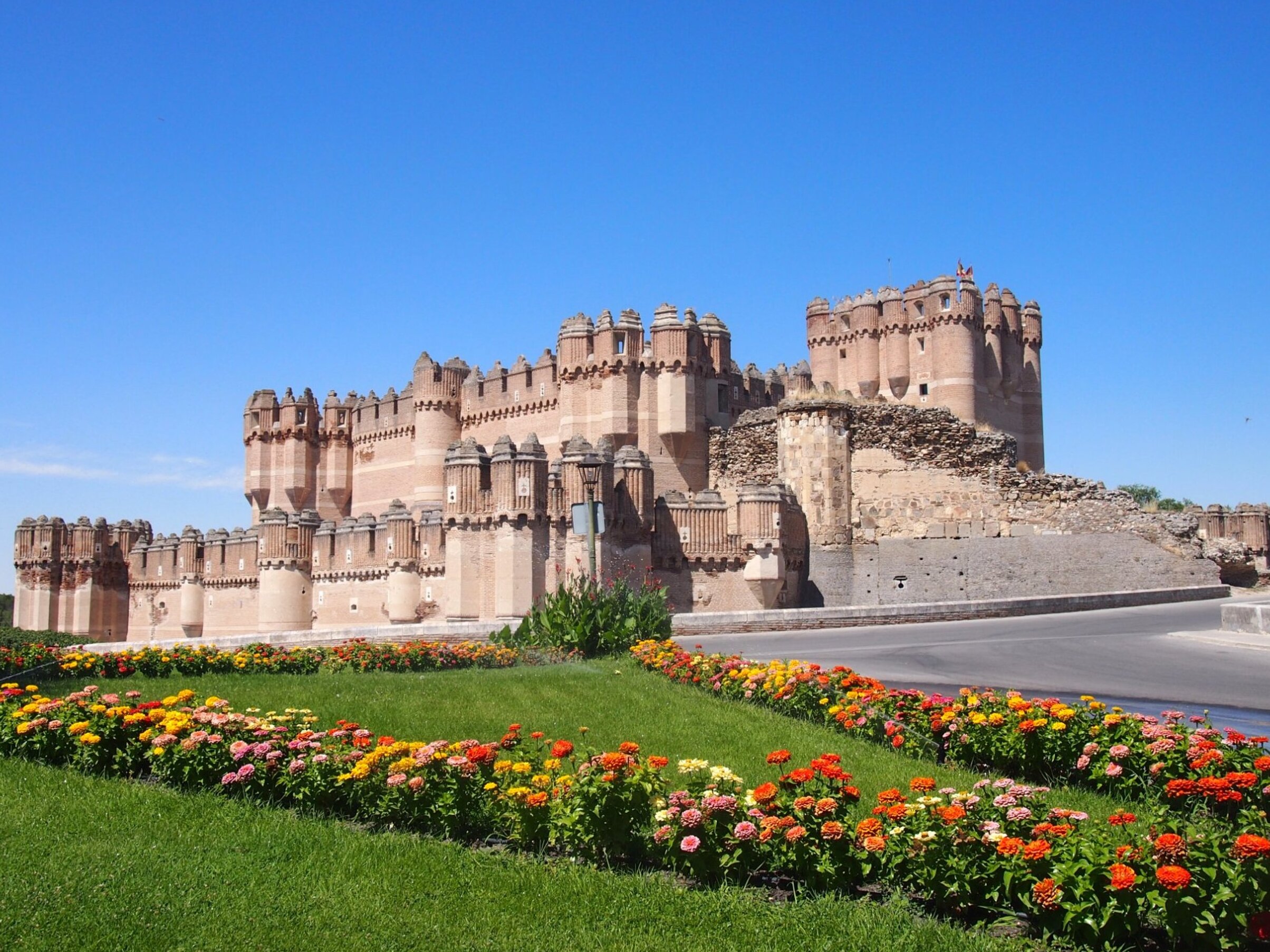
Nestled in the picturesque town of Coca, Segovia, the Coca Castle (Castillo de Coca) stands as a testament to the region’s rich history and architectural brilliance. This 15th-century fortress, constructed in 1453 under the orders of Alfonso de Fonseca, is a striking example of Mudejar architecture, characterized by its unique use of brick and polygonal towers adorned with crenellated ramparts. The castle’s construction marked a pivotal moment in the history of Castilla y León, a region known for its fortified buildings and medieval heritage.
The castle’s most renowned feature is its circular room located within the tower of Pedro Mata. This room is celebrated for its remarkable acoustics; whispers spoken against one wall can be clearly heard on the opposite side, an enchanting phenomenon that continues to intrigue visitors.
Coca Castle was not only a strategic military stronghold but also a residence that showcased the wealth and influence of its owners. After its construction, the castle was acquired by the Duke of Alba, a title that still resides within the family today, linking the castle to one of Spain’s most noble lineages.
In terms of art and architecture, the Coca Castle exemplifies the Mudejar style, which blends Islamic and Christian design elements. The intricate brickwork, detailed ornamentation, and elegant arches are indicative of this unique architectural fusion. Inside the castle, visitors can find beautifully preserved rooms that reflect the lifestyle of the nobility during the Renaissance period. The great hall and chapel are adorned with original wooden ceilings and plasterwork, showcasing the craftsmanship of the era.
Coca's local culture is vibrant and steeped in tradition, with customs that echo the town's historical significance. One of the most notable events is the Fiesta de la Virgen de la Asunción, celebrated every August. This festival features colorful parades, traditional music, and a variety of local dishes, drawing visitors from near and far. Other cultural highlights include the Semana Santa (Holy Week) processions, which reflect the deep-rooted religious traditions of the region.
When it comes to gastronomy, Coca offers a delightful array of local flavors. The town is known for its roasted lamb, prepared in traditional wood-fired ovens, which locals say is best enjoyed with a glass of Ribera del Duero wine. Another local delicacy is cochinillo, or suckling pig, renowned throughout Castilla y León. Don't miss the chance to sample pan de Coca, a local bread that is a staple in the area, often served with regional cheeses and cured meats like jamón ibérico.
For those looking to explore lesser-known curiosities, Coca Castle has its share of surprising stories. It is said that the castle was a favorite hideout for bandits during the Middle Ages, taking advantage of its strategic location and complex layout to evade capture. Some visitors report sightings of ghostly figures, adding an air of mystery to the castle’s already enchanting atmosphere.
The best time to visit Coca Castle is during the spring and early autumn months when the weather is mild, and the surrounding landscapes are adorned with blooming flowers and vibrant foliage. It’s advisable to check the castle’s opening hours and any scheduled tours, especially if you wish to experience the acoustics of the circular room, which are sometimes highlighted during guided visits.
As you explore the castle’s grounds, be sure to take a moment to absorb the stunning views of the surrounding countryside and the charming town of Coca. The blend of history, architecture, and local culture makes this destination a hidden gem in Segovia.
For a unique experience in planning your visit, consider using the Secret World app to craft a personalized itinerary that captures all the essence of Coca.
