
← Back

The Durazzo Bombrini Palace

Via Lodovico Antonio Muratori, 5, 16152 Genova GE, Italia ★★★★☆ 267 views
Simona Illy
Genova
🏆 AI Trip Planner 2026

Get the free app

Discover the best of Genova with Secret World — the AI trip planner with 1M+ destinations. Get personalized itineraries, hidden gems and local tips. Free on iOS & Android.

🧠 AI Itineraries 🎒 Trip Toolkit 🎮 KnowWhere Game 🎧 Audio Guides 📹 Videos
Download on the App Store Get it on Google Play
Scan to download Scan to download

Palaces, Villas and Castles · Genova

The Durazzo Bombrini Palace - Genova | Secret World Trip Planner

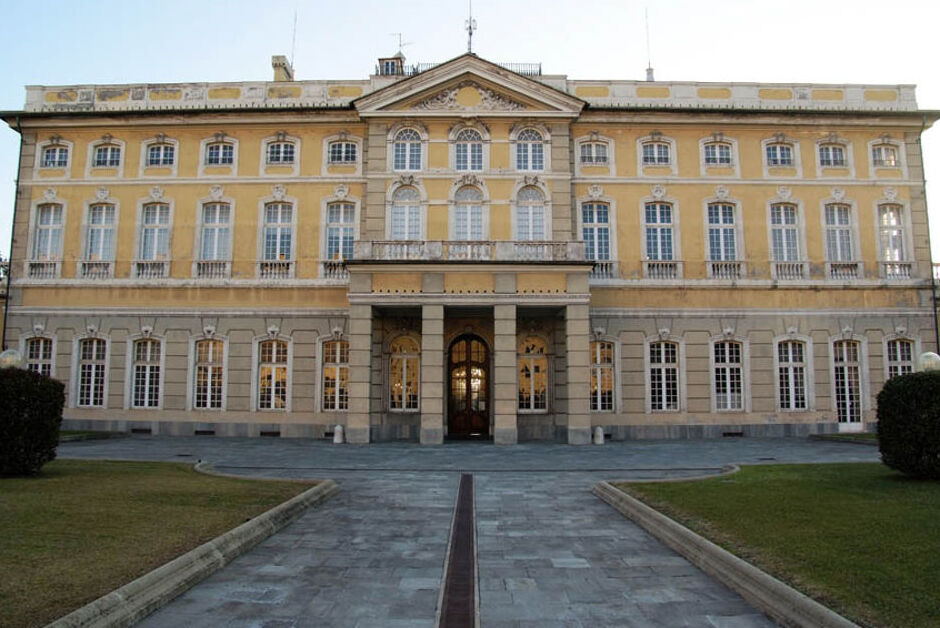
Palazzo Durazzo Bombrini in Genoa Cornigliano is certainly the most valuable and innovative example of 18th century residential architecture in the area. It was built starting in 1752, based on a project by Pierre Paul De Cotte for the Marquis of Gabiano, Giacomo Filippo II Durazzo. Pierre Paul De Cotte, a French officer, arrived in Genoa in 1747 on a vessel allied to the Republic and settled there for some time; a military engineer, he contributed to the design and early stages of the construction of the Genoese system of fortifications, in particular between 1756 and 1758 he designed and supervised the construction of Forte Diamante, financed by Giacomo Filippo II Durazzo. The professional relationship established between the Marquis Durazzo and De Cotte included the design and construction of the Cornigliano holiday residence. This building, built almost entirely from scratch, was conceived by its designer with the typical layout of French hotels (aristocratic residences): a central building and 2 side wings around a vast cour d'honneur, a type of construction which, in a completely innovative way, managed to reconcile the needs of representation and grandeur with a modern need for hospitality and intimacy. This approach, which was by now customary among the French aristocracy, was certainly revolutionary for the Genoese context (still tied to 16th-century buildings) and was an avant-garde choice that went beyond local references while managing to reaffirm the image of supremacy and power sought by the client. Consistent with the strong Frenchness that characterizes it, the palace houses the first magnificent example of a completely cantilevered staircase built in Genoa: made of Carrara marble, the structure is airy and elegant, with attention to detail and framed by the lightness of the embroidery of the painted iron railing. Around 1778, the Genoese Andrea Tagliafichi added the portico to the residence and renovated many of the rooms. Noteworthy are still the decorations of the reception halls, the wrought iron works, both fixed and movable, the original structure of the roof and the covering. Finally, the large reception hall on the ground floor, the Sala al Mare, houses two important canvases (both measuring about 3.15 x 4.35 m) depicting the biblical episodes of Deborah and Baraci and Judith showing the head of Holofernes, by the Neapolitan painter Francesco Solimena, painted around 1717.

The Durazzo Bombrini Palace - Genova | Secret World Trip Planner
🗺 AI Trip Planner

Plan your visit to Genova

Suggested itinerary near The Durazzo Bombrini Palace

MAJ+
500.000+ travelers worldwide
  1. 🌅
    Morning
    The Durazzo Bombrini Palace
    📍 Genova
  2. ☀️
    Afternoon
    The Lighthouse of Genoa, simply called Lanterna
    📍 2.6 km · Genova
  3. 🌆
    Evening
    Villa del Principe
    📍 3.3 km · Genova

Buy Unique Travel Experiences

Powered by Viator

See more on Viator.com

Explore nearby · Genova

Frequently Asked Questions

The palace was designed by Pierre Paul De Cotte, a French military engineer who arrived in Genoa in 1747, and construction began in 1752 for the Marquis of Gabiano, Giacomo Filippo II Durazzo. De Cotte's design was based on the typical French aristocratic residence layout, making it a groundbreaking example of 18th-century architecture in the region.
The palace features a revolutionary French-style layout with a central building and two side wings surrounding a vast cour d'honneur (courtyard of honor), which was completely innovative for Genoa at the time. It successfully balanced the needs for grand representation with modern comfort and intimacy, and it houses Genoa's first magnificent completely cantilevered staircase made of Carrara marble.
The palace's most striking interior feature is its cantilevered Carrara marble staircase, the first of its kind built in Genoa, which is characterized by its airy and elegant design complemented by a delicate painted iron railing. This architectural element exemplifies the refined craftsmanship and French influence that defines the entire residence.
Around 1778, Genoese architect Andrea Tagliafichi added a portico to the residence and undertook significant renovations of many rooms within the palace. These additions further enhanced the building's aesthetic appeal and functionality while maintaining its original French architectural character.
The palace is located in Genoa Cornigliano and was designed as a holiday residence for the wealthy Marquis Durazzo, reflecting his status and power through its innovative architecture. The Cornigliano area provided an ideal location for this grand estate, which stands as the most valuable and innovative example of 18th-century residential architecture in the region.
