
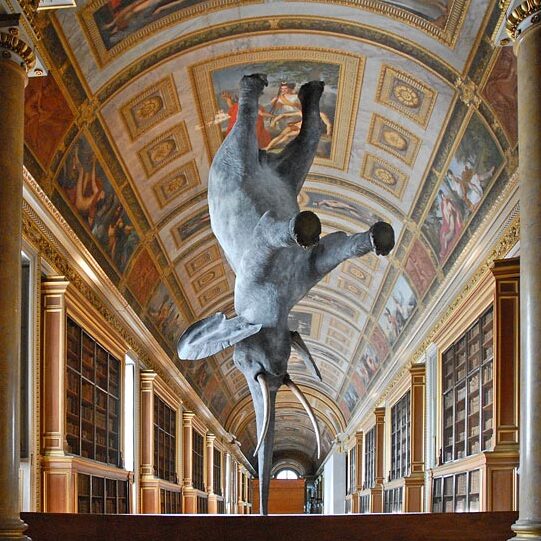

Nestled in the mesmerizing Fontainebleau Forest, the enchanting Elephant Wursa is not merely a sculpture; it is a thought-provoking fusion of art and science. Crafted by French artist Daniel Firman, this life-sized elephant appears to be precariously balanced on its trunk, a playful defiance of gravity that invites viewers into a dialogue about balance—both literal and metaphorical. Since its exhibition at the Château de Fontainebleau in 2008, Wursa has captivated the imaginations of locals and visitors alike, challenging our understanding of physical laws.
The Château de Fontainebleau, a UNESCO World Heritage site, boasts a rich history dating back to the 12th century. Originally a royal hunting lodge, it was transformed into a magnificent palace by King Francis I in the 16th century. Over the centuries, rulers such as Louis XIV and Napoleon Bonaparte made their mark on the estate, adding opulent gardens and lavish interiors. The blend of architectural styles—from Renaissance to Classical—creates a unique aesthetic that mirrors the evolution of French history itself.
Strolling through the palace's grand halls, visitors are treated to an array of notable artworks, including Francois Clouet's portraits and the intricate ceiling frescoes by Giorgio Vasari. The Gallery of Francis I stands out, adorned with stunning woodwork, marble sculptures, and elaborate tapestries that tell tales of royal grandeur. The artistic significance of Fontainebleau lies not only in its physical beauty but also in its role as a cultural hub where the arts flourished under royal patronage.
Fontainebleau is steeped in local culture and traditions that celebrate its rich heritage. The annual Festival des Jardins, held in the spring, transforms the palace gardens into an artistic canvas showcasing innovative landscaping designs. Visitors can wander through a myriad of thematic gardens, each one telling a distinct story through flora and design. Additionally, the Fête de la Musique in June brings the streets alive with music, where local and international artists perform, creating a vibrant atmosphere that reflects the town's artistic spirit.
Culinary delights in Fontainebleau reflect the region's agricultural bounty and culinary traditions. One must try the Flognarde, a delicious dessert made with seasonal fruits and a custard-like batter, reminiscent of a clafoutis. Pair it with a glass of local Cider de Fontainebleau, a crisp and refreshing drink that embodies the essence of the region. For a savory experience, indulge in a Boeuf à la mode, a traditional French pot roast that showcases the robust flavors of local produce and meats.
While many visitors flock to the grand Château de Fontainebleau, hidden gems abound in this charming locale. For instance, the Barbizon School of painters, which emerged in the mid-19th century, is often overlooked. Artists like Jean-François Millet and Theodor Rousseau found inspiration in the forest's natural beauty, revolutionizing landscape painting. The quaint village of Barbizon itself is a treasure trove of art galleries and rustic charm, inviting exploration away from the bustling tourist pathways.
For those planning to visit, the best time to explore Fontainebleau is in the spring or early autumn when the weather is mild, and the gardens are in full bloom. To truly appreciate the Elephant Wursa and the surrounding beauty, consider taking a leisurely walk through the forest trails that crisscross the area, revealing hidden views of the château. Don't forget to check the local calendar for events and festivals that enhance the cultural experience.
As you wander through the enchanting landscapes and historical corridors of Fontainebleau, you'll find that every corner holds a story waiting to be discovered. The Elephant Wursa is just one of many intriguing facets of this remarkable destination, where art, history, and nature converge in a spectacular setting.
For a personalized experience that uncovers the hidden treasures of Fontainebleau, consider using the Secret World app to plan your itinerary.


