



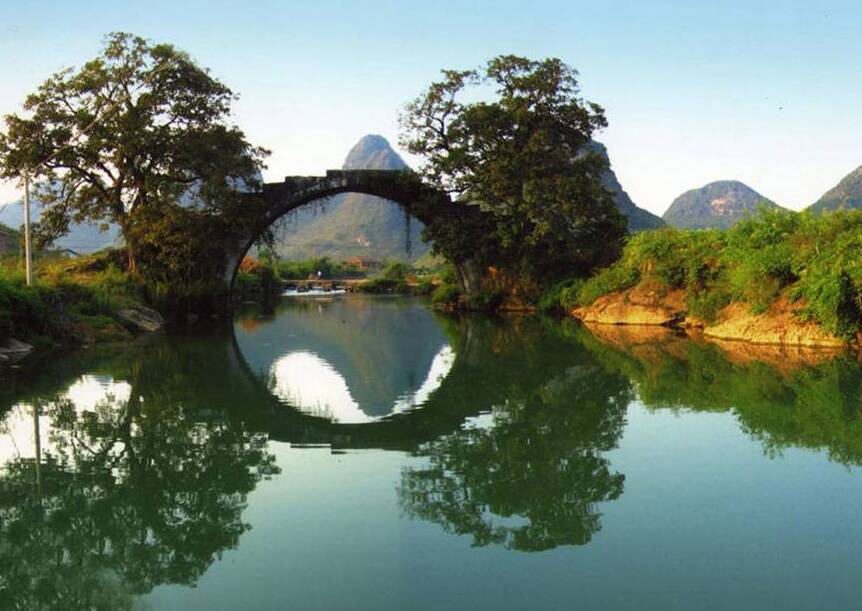
Nestled amidst the breathtaking karst mountains of Guilin, the Fuli Bridge stands as a remarkable testament to ancient engineering and cultural heritage. At over 500 years old, this exquisite stone bridge not only serves as a functional crossing but also embodies the rich tapestry of history and artistry that flourishes in this enchanting region.
### History and Origins
The Fuli Bridge, known locally as Fuli Qiao, dates back to the Ming Dynasty (1368-1644), a period marked by significant advancements in architecture and infrastructure in China. Built in 1573 during the reign of Emperor Zhengde, the bridge facilitated trade and communication between the villages of Fuli and surrounding areas. Its strategic location along the riverbanks was pivotal for local commerce, particularly in the transport of goods such as rice and tea.
Over the centuries, the Fuli Bridge has withstood the test of time, surviving floods and wars that have ravaged other structures. The bridge’s endurance is a reflection of the skilled craftsmanship of its builders, who expertly utilized locally sourced materials to create a structure that harmonizes with its natural surroundings. It is said that the bridge was constructed using a unique mortar made from sticky rice, giving it both durability and flexibility against the elements.
### Art and Architecture
The architectural style of the Fuli Bridge is a striking example of traditional Chinese stone bridge design, characterized by its high arch and intricate stone carvings. The bridge spans 33 meters (approximately 108 feet) and rises to a height of 14 meters (about 46 feet), making it the tallest bridge in Guangxi Province. Its graceful curve allows for the enchanting reflection in the waters below, creating a visual spectacle often likened to a full moon—hence the local name for the phenomenon.
Adorning the bridge are exquisite carvings depicting mythical creatures, floral motifs, and scenes from local folklore, showcasing the artistic significance of the structure. These intricate designs not only enhance the aesthetic appeal of the bridge but also tell stories of the region’s cultural heritage, making it an important subject of study for art historians and enthusiasts alike.
### Local Culture and Traditions
The Fuli Bridge is more than just a crossing; it is a vibrant hub of local culture and traditions. The nearby village of Fuli is renowned for its hand-painted batiks and traditional crafts, which are often showcased in local markets. Visitors can engage with artisans, learning the intricate techniques that have been passed down through generations.
Festivals in the region, such as the Dragon Boat Festival and Mid-Autumn Festival, often see the bridge decorated with colorful lanterns and flowers. During these times, locals gather to celebrate with traditional music, dance, and food, creating a lively atmosphere that attracts both locals and tourists. The bridge serves as a backdrop for these festivities, symbolizing unity and the continuation of cultural practices.
### Gastronomy
A visit to the Fuli Bridge would be incomplete without indulging in the rich flavors of local cuisine. Guangxi is famous for its unique dishes, heavily influenced by its ethnic diversity. One must-try specialty is Liangpi, a cold noodle dish made from rice flour, often served with a variety of toppings such as peanuts, shredded vegetables, and a spicy sauce.
Another local delight is Fuli Rice Noodles, known for their chewy texture and served in a savory broth with various meats and greens. Pair these dishes with a refreshing cup of local tea, such as Guilin Rice Wine, which complements the meal and provides insight into the region's agricultural practices.
### Lesser-known Curiosities
While the Fuli Bridge might be well-known for its beauty, there are intriguing stories that many visitors overlook. Legend has it that the bridge is haunted by the spirits of those who perished in the river, and locals often recount tales of mysterious happenings at night. Additionally, the bridge has been featured in various films and television shows, making it a favorite among photographers and filmmakers looking to capture its ethereal charm.
Another fascinating detail is the bridge's role in the local ecosystem. It acts as a crossing point not only for people but also for wildlife, including numerous bird species that frequent the riverbanks. This dual purpose highlights the bridge's importance in supporting both human activities and natural habitats.
### Practical Visitor Information
The best time to visit the Fuli Bridge is during the spring and autumn months, when the weather is mild and the surrounding landscapes are at their most vibrant. Early morning or late afternoon visits offer the best lighting for photography, as the sun casts a golden hue over the bridge and its reflections in the water.
For those planning to visit, it is advisable to wear comfortable shoes, as exploring the area involves a bit of walking. Be sure to bring a camera to capture the stunning views and intricate details of the bridge. Local guides can provide valuable insights into the history and significance of the structure, enhancing your experience.
In conclusion, the Fuli Bridge is not only a marvel of ancient engineering but also a vibrant symbol of Guilin's rich cultural heritage. Exploring its history, artistry, and the local traditions surrounding it offers a unique glimpse into the heart of this stunning region. Consider using the Secret World app to craft a personalized itinerary for your journey to Guilin.
