
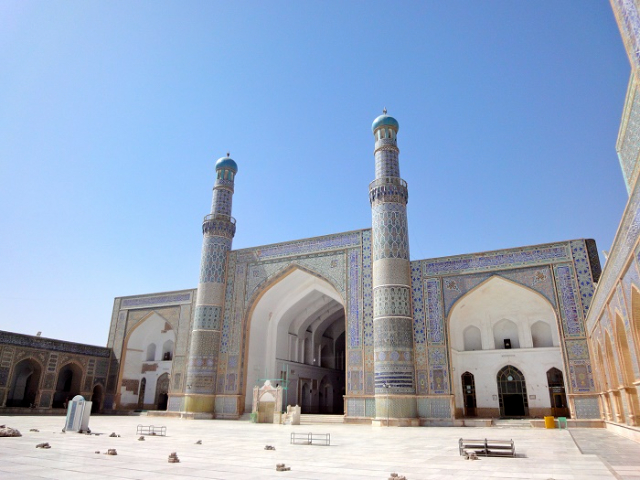

The Great Mosque of Herat, also known as the Jama Masjid of Herat, is one of Afghanistan's most illustrious historical and architectural landmarks. Situated in Herat, a city with a rich tapestry of history in the northwestern part of the country, this mosque serves as a spectacular example of Islamic architectural and artistic tradition.
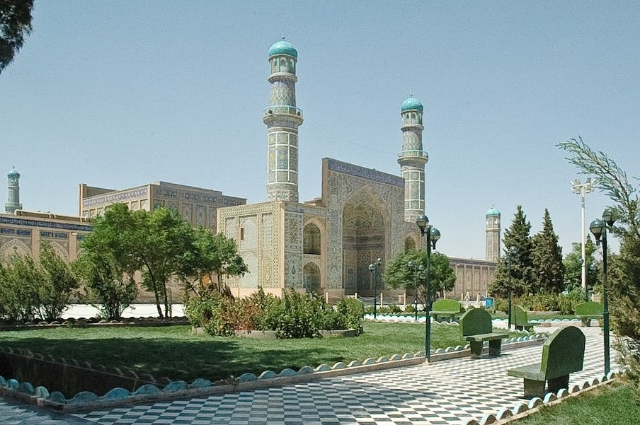
The mosque's foundation dates back to 1200, during the Ghurid dynasty, but it was substantially reconstructed and expanded under the Timurid dynasty, reaching its completion in 1446. The mosque's design and decoration exemplify the apex of Timurid architecture, renowned for its intricate tile work and grand scale.
The Great Mosque of Herat is especially famous for its stunning tile mosaic work. These mosaics, many of which are based on Timurid designs, cover large parts of the mosque’s vast exterior and interior. The color palette predominantly features vibrant blues and turquoises, creating a visually captivating experience. This tile work not only highlights the artistic craftsmanship of the period but also serves as an educational canvas that offers insights into the artistic heritage of the Timurid era.
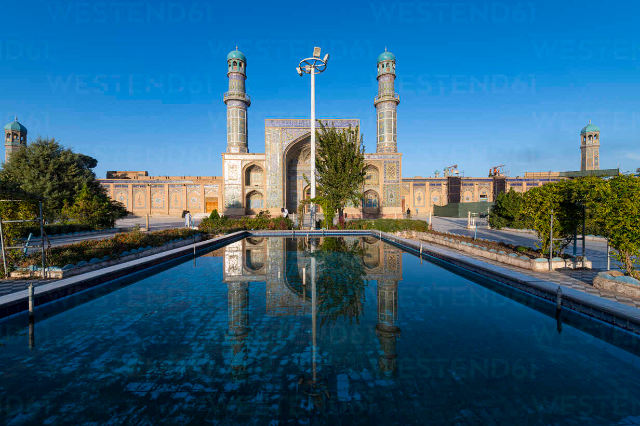
The mosque has undergone numerous restorations over the centuries to preserve its intricate artwork and structural integrity, reflecting the community's ongoing commitment to maintaining this iconic site. For visitors and scholars alike, the Great Mosque of Herat provides a masterclass in the art of tile mosaic and serves as a profound emblem of Afghanistan's rich cultural and historical heritage.


