


The Kantanagar Temple, near Dinajpur town in Bangladesh, stands as a resplendent example of late medieval temple architecture. Built in 1752 by Maharaja Pran Nath of Dinajpur, this temple is renowned for its intricate ornamentation and exquisite craftsmanship, marking it as the most ornate among the temples from that period in Bangladesh.

Architectural Design The temple is a 50-foot square, three-storied structure, elegantly resting on a slightly curved raised plinth made of sandstone blocks. These blocks are believed to have been quarried from the ruins of the ancient city of Bangarh near Gangharampur in West Bengal, adding a layer of historical significance to its construction.
Original Structure Originally designed as a navaratna (nine-gemmed) temple, it was adorned with four richly decorative corner towers on two stories and a central tower over the third story. This design imbued the temple with a majestic and harmonious symmetry that was characteristic of navaratna architecture.
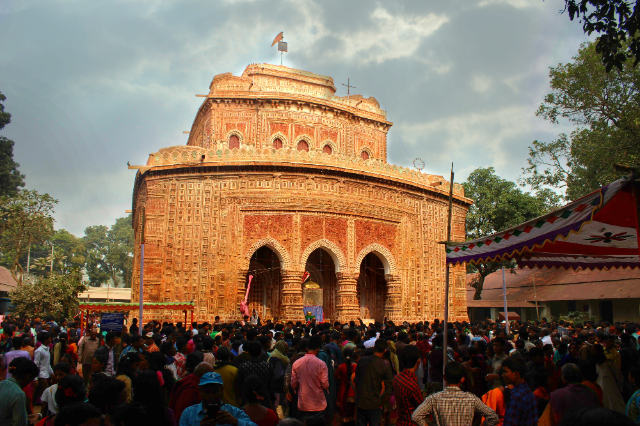
Effects of Earthquake Tragically, the ornate towers of the Kantanagar Temple collapsed during an earthquake at the end of the 19th century. Despite this loss, the temple remains a prime example of brick and terracotta workmanship, skillfully executed by Bengali artisans. The craftsmanship's resilience and the structure's enduring beauty despite the earthquake underscore the temple's architectural significance.
Interior and Decorative Elements The central cell of the temple is encircled by a covered verandah, with each side pierced by three entrances. These entrances are separated by ornate dwarf brick pillars, mirroring the delicately cusped entrances of the balcony. Furthermore, the sanctum features three richly decorated arched openings on each face, adding to the temple's aesthetic appeal.

Terracotta Artwork Perhaps the most striking feature of the Kantanagar Temple is its comprehensive embellishment with terracotta plaques. Every inch of the temple's surface is adorned with these plaques, depicting a wide range of motifs and scenes. These include flora and fauna, geometric patterns, mythological narratives, and an impressive array of contemporary social scenes and popular pastimes of the era. The terracotta work not only exemplifies the artistic skills of the period but also provides valuable insights into the social and cultural fabric of the time.
Cultural Significance Today, the Kantanagar Temple is not just a place of worship but a cultural landmark that attracts historians, art enthusiasts, and tourists from around the world. Its rich history, coupled with the stunning display of terracotta art, makes it a significant testament to the artistic and cultural heritage of Bangladesh.
In conclusion, the Kantanagar Temple stands as a majestic emblem of historical and architectural grandeur, preserving the legacy of its era through its exquisite artistry and enduring structure.


