
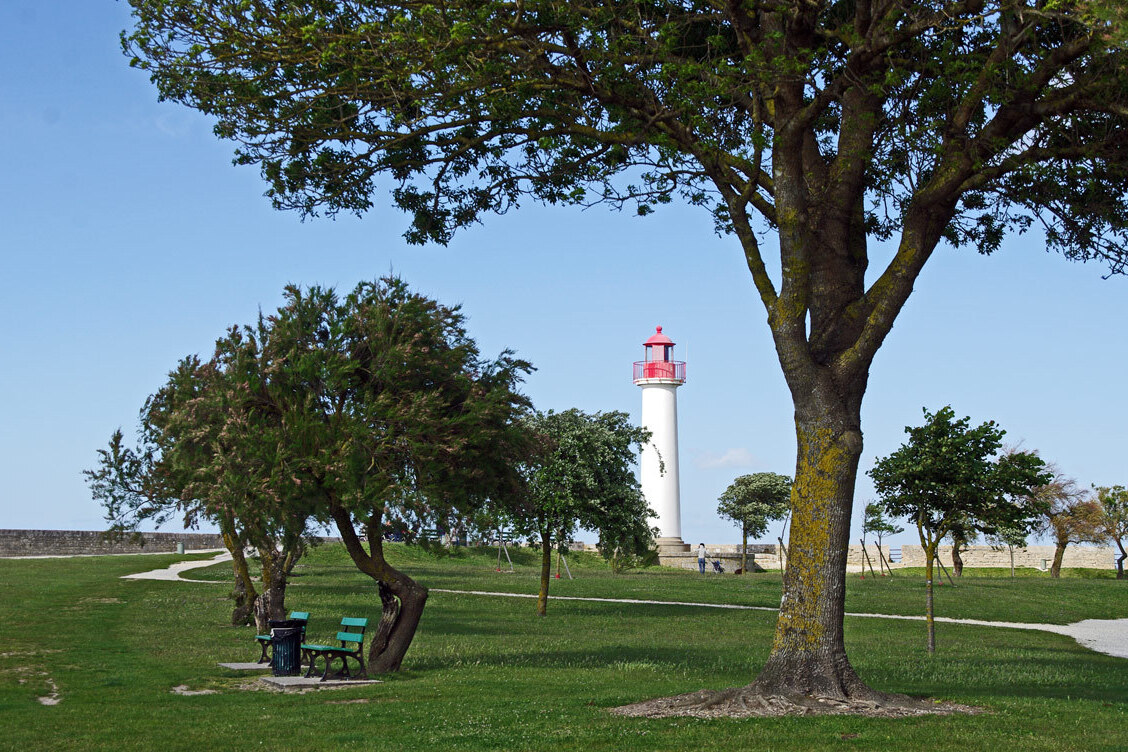

Perched gracefully on the edge of the charming Île de Ré, the Lighthouse at Saint Martin de Ré stands as a sentinel of history and beauty. This striking red and white tower, built in 1867, serves not only as a beacon for sailors but also as a gateway into the rich tapestry of the island's past. The lighthouse, while not as ancient as some of the island's other structures, is a vital part of the historical narrative of Saint-Martin-de-Ré, a town deeply rooted in its maritime heritage.
Saint-Martin-de-Ré itself was fortified in the 17th century by the famed military engineer Vauban, under the reign of King Louis XIV. The town's citadel, with its star-shaped fortifications, forms a harmonious backdrop to the lighthouse, illustrating a period when the island was a strategic military outpost. The lighthouse, although constructed later, complements these historical defenses, signaling the continued importance of maritime navigation in the region.
Architecturally, the lighthouse is a testament to the utilitarian design of the 19th century, yet it possesses a certain elegance. Its bold red and white bands not only ensure visibility against the azure skies and the shimmering Atlantic but also create a photogenic contrast that appeals to artists and photographers. While the lighthouse itself may not house notable artworks, the entire setting is a canvas that has inspired numerous paintings and photographs, capturing the essence of Île de Ré's serene and timeless landscape.
Beyond its architectural charm, Saint-Martin-de-Ré is steeped in local culture and traditions. The island is well-known for its vibrant festivals, including the Fête de la Mer (Festival of the Sea), which celebrates the town’s maritime heritage with boat parades, music, and seafood tastings. Another local tradition is the Fête de la Saint-Martin, a celebration in honor of the town's patron saint, featuring processions and traditional music that echo through the cobblestone streets.
Gastronomy on the island is a feast for the senses, deeply influenced by the bounty of the sea. Visitors should not miss sampling the local oysters, harvested from the surrounding waters and renowned for their briny freshness. The island's salt is another culinary treasure, harvested from the picturesque salt marshes that dot the landscape. Pair these with a glass of local Pineau des Charentes, a sweet aperitif wine, for a true taste of the region’s culinary offerings.
For those seeking lesser-known curiosities, the island holds a few secrets. A short walk from the lighthouse leads to the Abbaye des Châteliers, the ruins of a 12th-century Cistercian abbey, offering a hauntingly beautiful glimpse into the island's medieval past. Another hidden gem is the Ecomuseum of Salt Marshes in Loix, where visitors can learn about the traditional salt-harvesting techniques that have been passed down through generations.
When planning a visit to the lighthouse and Saint-Martin-de-Ré, timing is key. The summer months are the most popular, with warm weather making it ideal for exploring on foot or by bicycle, the preferred mode of transport on the island. However, those seeking a quieter experience might consider visiting in the spring or early autumn, when the crowds have thinned, and the island's natural beauty can be enjoyed in more solitude.
Visitors should take the time to wander through the town’s narrow streets, lined with whitewashed houses and colorful shutters, and explore the bustling markets where local produce and crafts are sold. Keep an eye out for the intricate ironwork and mosaic details on the older buildings, subtle testaments to the island's artistic heritage.
In summary, the Lighthouse at Saint Martin de Ré is much more than a navigational aid. It is a symbol of the island’s enduring relationship with the sea and a gateway to exploring the rich history, vibrant culture, and culinary delights of Île de Ré. Whether you're drawn by the allure of its past, the charm of its present, or the promise of its future, this lighthouse is a beacon for all who seek the serene beauty of this unique French island.


