



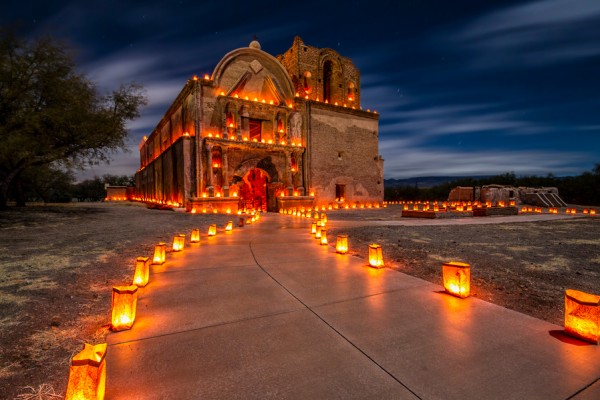
As the sun dips below the horizon on Christmas Eve, a magical transformation unfolds at Tumacacori Mission in Tubac, Arizona. The flickering glow of approximately 2,500 luminarias, each crafted from brown paper bags and filled with sand to hold a lit candle, illuminates the path leading to this historic site. This annual tradition draws visitors from near and far, creating a mesmerizing spectacle that intertwines history, culture, and community spirit.
The origins of Tumacacori Mission stretch back to 1691, when the first Spanish Colonial Jesuit missions were established in the region. Mission San Cayetano de Tumacácori was among the earliest, serving as a spiritual hub for local Indigenous communities and Spanish settlers. Over the years, the mission became a focal point for cultural exchange, where indigenous traditions mingled with Spanish customs. The Franciscan church, built in the 1750s, replaced the original Jesuit structure and stands as a testament to the resilience of the community through various historical upheavals, including the expulsion of Jesuits from New Spain in 1767.
Architecturally, Tumacacori Mission is a stunning example of Spanish Colonial design, characterized by its adobe construction and ornate detailing. The main church, with its graceful arches and intricate altar, reflects the artistic influences of both Spanish and Indigenous cultures. Notable artworks within the mission include the vibrant murals that adorn the interior, depicting scenes from the life of Christ and the Virgin Mary, which serve as a captivating reminder of the mission’s religious significance. The Tumacácori Museum, housed in a historic Mission Revival-style building, further showcases the artistic legacy of the region, featuring artifacts that tell the story of both the mission and the surrounding communities.
The cultural fabric of the area is rich with traditions that stem from its diverse heritage. The luminaria event itself is a cherished local custom, with families gathering to prepare for the festivities by lighting candles and sharing stories of the mission's past. The Christmas Eve luminarias symbolize hope and community, drawing attendees into a reflective experience that honors the mission's history. In addition to this event, the Feast of San José, celebrated in March, showcases local customs with processions, traditional music, and food that echo the region’s Spanish roots.
Speaking of food, the culinary landscape around Tumacacori is a delightful blend of flavors influenced by both Indigenous and Spanish cuisines. Visitors can savor traditional dishes such as tamales, filled with meats or cheeses and wrapped in corn husks, and posole, a hearty soup made from hominy, pork, and spices. Local eateries often feature Sonoran hot dogs, a popular street food, wrapped in bacon and topped with an array of fresh ingredients. To wash it all down, try a refreshing glass of horchata, a sweet rice drink flavored with cinnamon.
Among the many stories that echo through the walls of Tumacacori Mission, one lesser-known fact is the role the site played in the Spanish-Mexican War. The mission served as a refuge for those fleeing conflict, and its ruins tell tales of resilience and survival. Additionally, the mission's isolated location provided a unique vantage point for observing the changing dynamics between settlers and Indigenous peoples, weaving a complex narrative of coexistence and conflict.
For those planning to visit, the best time to experience the luminarias is undoubtedly on Christmas Eve. However, the park is open year-round, offering a serene setting for exploration. The cooler months of November through March are ideal for hiking and photography, as the surrounding landscapes come alive with vibrant colors and clear skies. Be sure to stop by the Visitor Center to learn more about the park’s history and pick up a map for self-guided tours.
While visiting, take the time to wander the grounds and appreciate the stunning views of the Santa Cruz River Valley. Look for the remnants of ancient irrigation systems and the lush vegetation that thrives along the riverbanks. Don’t forget to engage with the knowledgeable park rangers, who can share insights about the hidden gems and lesser-known stories tied to the mission.
As you soak in the beauty and history of Tumacacori Mission, consider using the Secret World app to plan a personalized AI itinerary for your visit to Rio Rico.
