
← Back

The Lyon astronomical clock

Pl. Saint-Jean, 69005 Lyon, France ★★★★☆ 178 views
Sienna Malone
Lyon
🏆 AI Trip Planner 2026

Get the free app

Discover the best of Lyon with Secret World — the AI trip planner with 1M+ destinations. Get personalized itineraries, hidden gems and local tips. Free on iOS & Android.

🧠 AI Itineraries 🎒 Trip Toolkit 🎮 KnowWhere Game 🎧 Audio Guides 📹 Videos
Scan to download iOS / Android
Scan for AppGallery Huawei users

About The Lyon astronomical clock

The Lyon astronomical clock - Lyon | Secret World Trip Planner

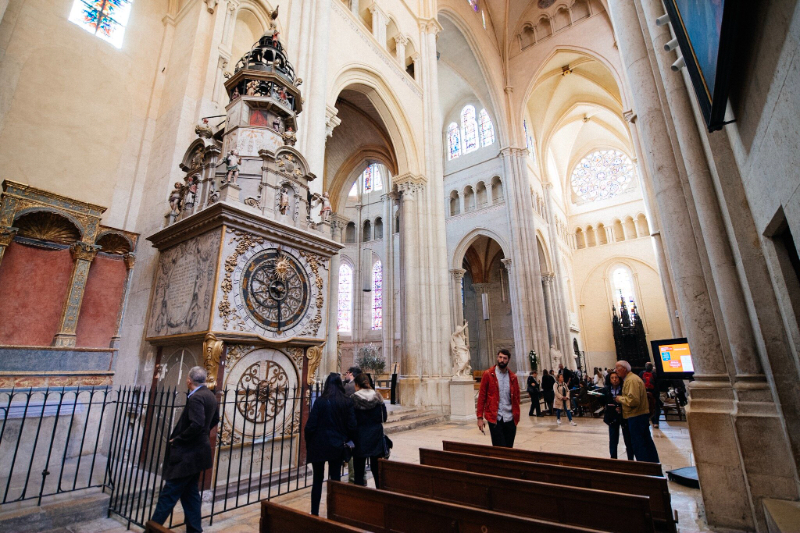
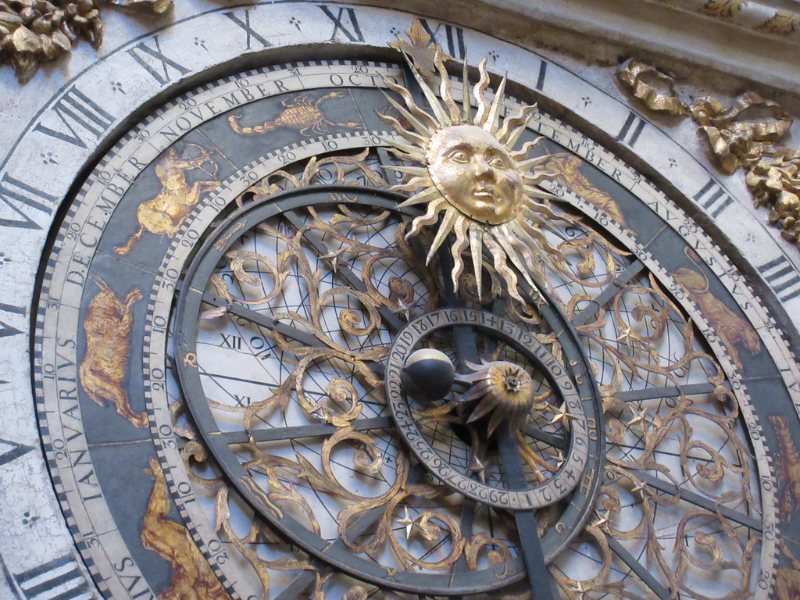
The Lyon astronomical clock is a seventeenth-century astronomical clock. The 9 metre tall clock is installed in the cathedral of Lyon. An astrolabe indicates the date and position of the moon, sun, and earth, as well as the stars. The first documentary evidence of an astronomical clock in the cathedral is from 1383 but this was destroyed in 1562. In 1661 it was reconstructed by Guillaume Nourrisson. During the French Revolution, all royal insignia was removed. The last restoration in 1954 reset the clock’s perpetual calendar of 66 years. It will be accurate until 2019.
The Lyon astronomical clock - Lyon | Secret World Trip Planner

The central tower octagon supports several automated figures. After the angel on the left turns the hourglass, an angel on the right keeps the time for the three angels who strike bells to sound the hymn of Saint Jean-Baptiste. The Virgin Mary kneels in a chapel, and turns to the Angel Gabriel as he opens the chapel door, while a dove descends, representing the Holy Spirit. A Swiss Guard rotates around the dome. Movement stops at the sounding of the hour.

In a western niche, a statue rotates at midnight. On Sunday, it is Jesus resurrected; Monday: his death; Tuesday: St. John the Baptist; Wednesday: St. Stephen (patron saint of the ancient basilica) holding the palm of martyrs; Thursday: a child with chalice and host; Friday: a child with the symbols of crucifixion; on Saturday: the Virgin Mary.

🗺 AI Trip Planner

Plan your visit to Lyon

Suggested itinerary near The Lyon astronomical clock

MAJ+
500.000+ travelers worldwide
  1. 🌅
    Morning
    The Lyon astronomical clock
    📍 Lyon
  2. ☀️
    Afternoon
    Discover the Cathédrale Saint-Jean in Lyon: a Cultural Gem
    📍 0.1 km · Lyon
  3. 🌆
    Evening
    The Basilica of Our Lady of Fourvière
    📍 0.4 km · Lyon

Buy Unique Travel Experiences

Powered by Viator

See more on Viator.com

Explore nearby · Lyon

Frequently Asked Questions

You should visit at the top of the hour when the automated figures come to life, with the most elaborate display featuring angels turning hourglasses and bells being struck to sound the hymn of Saint Jean-Baptiste. Additionally, visiting at midnight is special as a statue in the western niche rotates to display different religious figures depending on the day of the week.
The clock's perpetual calendar was last reset during a major restoration in 1954 and was accurate until 2019, meaning it may need recalibration if you're visiting after that date. The astrolabe displays the date and position of the moon, sun, earth, and stars, making it a remarkable feat of 17th-century engineering.
The western niche statue rotates daily at midnight, displaying Jesus resurrected on Sunday, his death on Monday, St. John the Baptist on Tuesday, St. Stephen (patron saint of the ancient basilica) holding the palm of martyrs on Wednesday, and children with religious symbols on Thursday and Friday, with the Virgin Mary appearing on Saturday.
The first documented astronomical clock in Lyon Cathedral dates back to 1383, but it was destroyed during religious conflicts in 1562 and later reconstructed by Guillaume Nourrisson in 1661. During the French Revolution, all royal insignia was removed from the clock, and it underwent its last major restoration in 1954.
The astronomical clock is installed in Lyon Cathedral and stands an impressive 9 meters tall, making it a dominant and visible feature within the cathedral. The central tower octagon supports the various automated figures and mechanisms that make this 17th-century clock a must-see attraction for visitors to Lyon.
